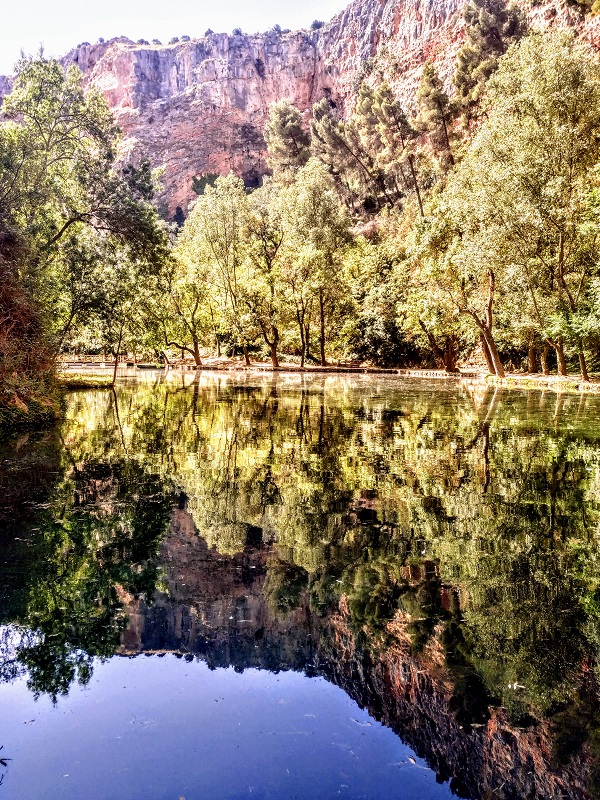
There is a wonderful place of sublime beauty in the northeast of Spain, located in Aragon, an old monastery from the Middle Ages, built in 12th century, during the time full of tales about knights and princesses. The whole area is surrounded by a spectacular natural setting and it is situated one hour by car from the city of Zaragoza. It is the Stone Monastery , in Spanish el Monasterio de Piedra, a fantastic site that undoubtedly leaves the visitors amazed and that even during the hot summer days, dominated by the scorching southern sun, offers a shelter of shade and freshness under the large branches of its trees and the crystalline waters that runs through this natural region. Would you like to take a walk through such a fascinating place?
A MONASTERY AS A REFLETION OF HISTORY OF SPANISH KINDOM
The Stone Monastery was built in 1218 architectural characteristics correspond to Cistercian architecture, typical of this religious Order founded by Roberto de Molesmes in 1098 in Dijon, France. Because of the color of their habit, the members of the Order are called the white monks and their motto is ora et labora (“pray and work” in Latin), which gives the importance to the manual work. Bernardo de Claraval was the most famous Cistercian, who considered among other aspects, that the majority of illiterate people at that time, including even the members of the nobility, should be educated through the images of art, hence the medieval art is so narrative, since its main objective in addition to the decorative one was to educate the faithful. Although there is a certain controversy over the arrival of the Order to the Iberian Peninsula, it is believed that the Fitero Monastery in Navarra, built around 1140, would be the first founded by the Cistercians. However, the Stone Monastery that mixes the architecture of Romanesque and early Gothic Art did not remain intact throughout the centuries. It was abandoned and most of it was destroyed throughout the 19th century due to the violent historical events in which Spain was succumbed. In 1808 the King of Spain, José I, Napoleon’s brother, dissolved the order and although in 1814 the new monarch, Fernando VII, allowed it to be reestablished, a few years later in 1820 it ended up being dissolved again. And after the confiscation of the Church’s assets in 1835, carried out by the State and the policies of Mendizábal, the monastery was put up for sale and its new owners ended up creating a hotel in this area. Due to this facts, today we only have the opportunity to appreciate some parts of this great architectural work, half in ruins, which perhaps is even more fascinating and creates at the Monastery an atmosphere full of mystery and romanticism that evokes bygone times.

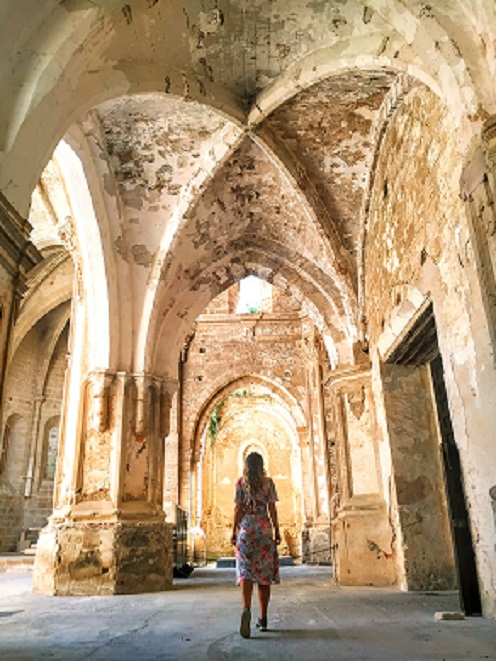
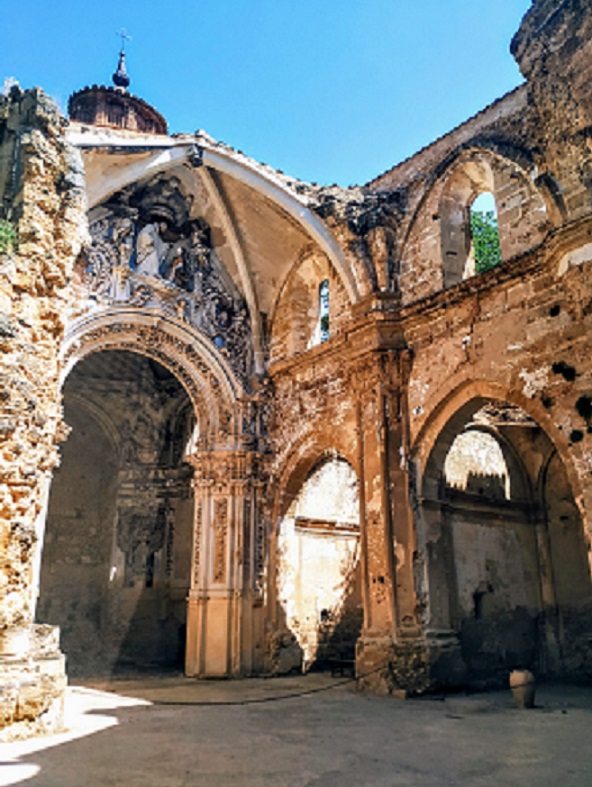
One of the best preserved places is the cloister, around which the cells of the monks and the most important rooms were distributed between two floors, such as the kitchen and the refectory with the oven to make bread or the chapter house, where the community of monks met, presided over by the abbot, who used to sit on a chair, called a mandatum. In this place the most important decisions related to the running of the monastery were made, as well as criminal activities committed by monks could be denounced. The cloister, which represents Jerusalem in the Cistercian ideology, is an interior courtyard with a square plan, surrounded in the case of the Stone Monastery by an arcade of pointed arches, used in Gothic Art, in the center of which there is a fountain, the symbol of the unification. Frequently, in the cloisters of medieval monasteries the four channels appear, representing the four rivers that passed through the Garden of Eden: Euphrates, Tigris, Gihon and Pishon, which also symbolize: truth, charity, strength and wisdom. These channels used to join in the center, at the main fountain. On the other hand, another of the important elements of a monastery is the Church, although in the case of the Stone Monastery, only some parts remain, while others have collapsed, creating a unique spectacle to contemplate. I invite you to see the photos so you can observe it for yourself. The church corresponds to the Romanesque Art, typical with a Latin cross plan, and a semicircular apse with four apse chapels.
A WALK THROUGH A WONDERFUL PARK OF THE MONASTERY
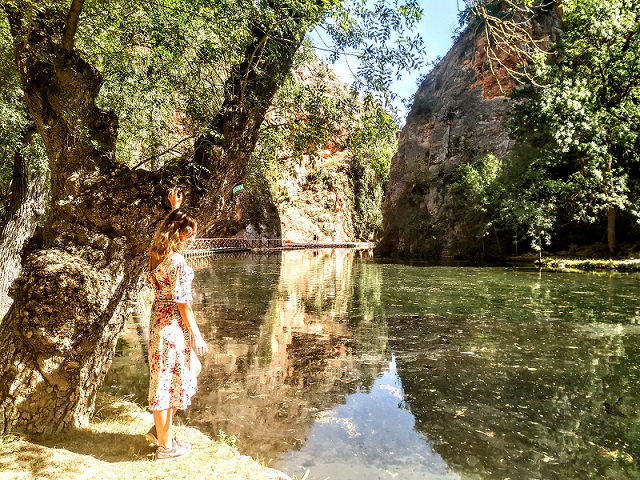

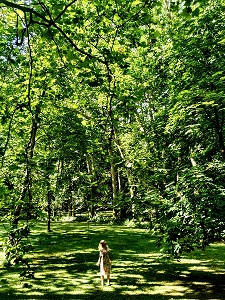
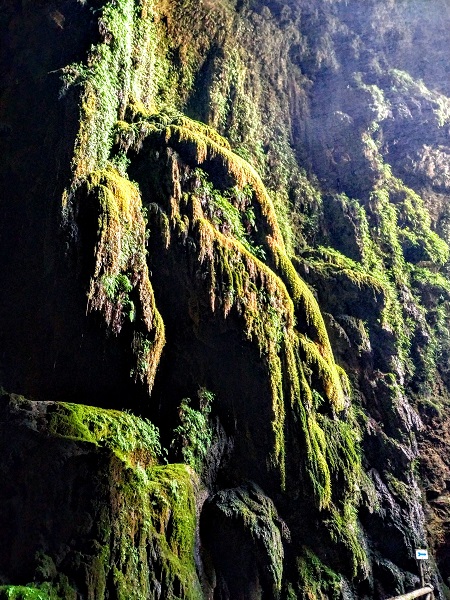

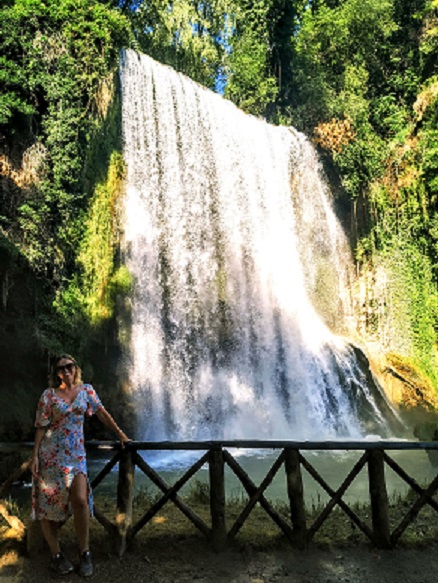

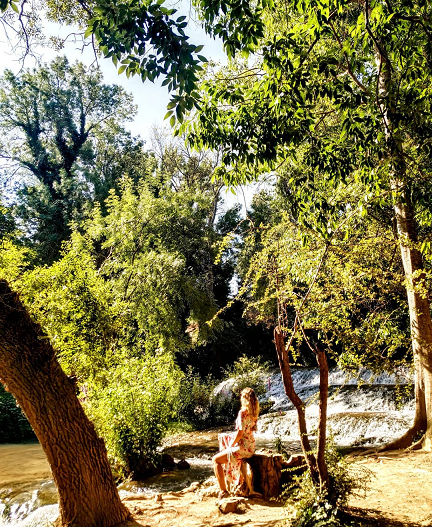
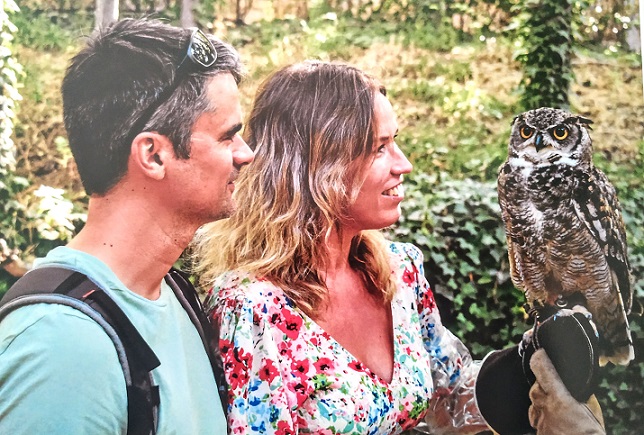
However, in my opinion the best thing about this place is the magnificent natural setting that surrounds the medieval architectural constructions and that draws the attention of visitors through its green gardens, populated with hundreds of centenaries trees, numerous and impressive waterfalls, the river Piedra, whose crystal clear water runs through the park and refreshes even on a hot summer day, and deep, dark caves that arouse the curiosity of tourists. Come on, to put it very informally: you are going to freak out about this awesome place. The park was designed and created after the sale of the Monastery in 1843 by Don Pablo Muntades Campeny, and offers an area to take a pleasant and refreshing walk that will leave you speechless by the beauty of its landscape. What has mostly impressed me about this place are the beautiful waterfalls that fall from the top of limestone rocks, which are constantly subjected to a process of karsification, that is, erosion by the action of water, which later petrifies again due to the aforementioned process, hence the name of Stone. Another curious aspect related to the Stone Monastery is the fauna and flora that inhabit this natural setting. In fact, during the journey you are going to make, especially in the Mirror Lake area, you will have the opportunity to appreciate the red river crabs, an invasive species, from the southeast of the USA, as well as the prawns, the rainbow trout… In addition to birds, such as owls, eagles, vultures…etc. Are you going to miss out on seeing this place?

Prawn 
Red river crab
TIPS:
- You can book the tickets in advance. There are discounts for the teachers – ask for them.
- The trekking clothes are not necessary, the route is pleasant and easy. However, I recommend you to use a good pair of shoes.
- Maybe after your visitation you would like to enjoy the hotel SPA area?
 all about eve`s journeys