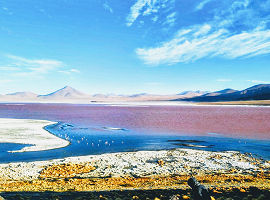
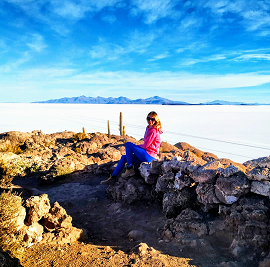
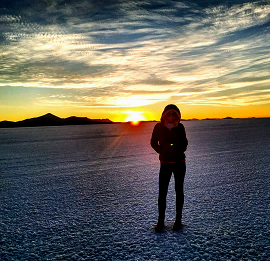
The infinite white of more than 10,000 km2 stretches across southwestern Bolivia, in the department of Potosí, the Salar de Uyuni seems endless and its grandeur can be appreciated even from the Space. Undoubtedly, it is an immense place where the feeling of loneliness cornered you, although, on the other hand, the sensation of peace also invades you while you relax as you direct your gaze towards the horizon that seems distant, where the deep blue of the sky melts with the milky hue of the ground in a fine line, and suddenly you stop understanding the difference between the heaven and the earth. How insignificant you feel!, as you walk “among the clouds” reflected in the puddles under your feet.
AT THE BEGINNING THERE WAS A LAKE
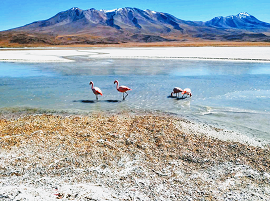
40,000 years ago the Salar de Uyuni was covered by Lake Minchin and later, 11,000 years ago, by Lake Tauka. However, as the climate in this area warmed and dried, the lakes ended up disappearing due to the evaporation of water, and currently we have the opportunity to enjoy the wonderful landscape offered by the impressive Salar de Uyuni, and the still unknown, the Salar de Coipasa. Both saline deserts are economically highly exploited, since each year the miners who work for the Colchani Cooperative extract up to 25,000 tons of salt, in addition to 21,000 tons of lithium, being the salt flats the largest reserve of this mineral in the world, up to 50% of the total world inventory, which is used in the construction of new technologies, such as mobile phones, computers, batteries, etc. Of course, this fascinating natural area is also a region of great tourist and cultural interest, in which visitors have the possibility of appreciating the magnificent fauna and flora, among others is the breeding place of South American flamingos: the Chileans, Andean and James, as well as the variety of 32 islands formed by corals and petrified stromatolites, the latter are bio-constructed mineral structures, arranged in sheets.
LET’S THE ADVENTURE BEGIN
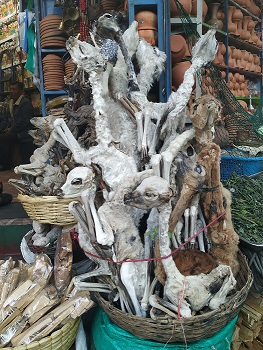
My journey to the Salar de Uyuni had begun in the capital of Bolivia, La Paz, distinguished for the fact that it was built at 3,650 meters above sea level, in this way, the Bolivian capital becomes the city located at the highest altitude among other cities in the world. However, I consider that the most striking thing about La Paz is, without a doubt, the sensational Witches’ Market, which is attended by thousands of people every day, both tourists driven by curiosity and locals who want to find the most suitable potion that perhaps allows them to get rid of the problems, such as, for instance, the lack of money, health or the unhappiness of an unrequited love. There is a wide variety of potions in the Witches’ Market, and maybe they solve the problems just as they promise. The good thing about this famous Market is its location, very close to the bus station, therefore, even if you have few hours to visit La Paz, I advise you to leave your luggage at a ticket office at the station and take a walk to the market. It is a unique place to behold.
Later, at night, you will take the bus that in less than 10 hours will take you to the town of Uyuni. I have to emphasize that the South American buses are the most comfortable in which I had the opportunity to travel. When you buy the ticket, you can choose between a semi-bed or a bed, they will also give you a warm blanket, and after a day of sightseeing and carrying the heavy backpack, I am sure you will sleep like a baby. I arrived at the town of Uyuni at dawn, it was deathly cold. Really, it was the middle of winter there, that is, the end of July, and all I wanted was to get into a warm place, so I decided to stay one night in a comfortable hotel and leave for the desert the next day. The town didn’t really catch my eye, so early in the morning it even seemed like a post-apocalyptic place, long deserted streets intersecting in straight lines. If you have read it in my previous article about Moroccan cities, you will already know that in the New World predominates the type of construction based on the Roman city, where the streets intersect at right angles. The truth is that in this way it is very difficult to get lost. Although, I got lost in several occasions, I suppose I have “the art” to do it… So when I stayed one day in the town of Uyuni, I had the opportunity to rest in a warm hotel, try the typical food and book the excursion that crossed the Salar de Uyuni and left me on the border with Chile to continue with adventures.
DISCOVERING THE SALAR DE UYUNI
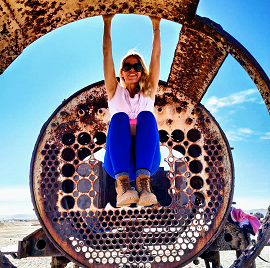
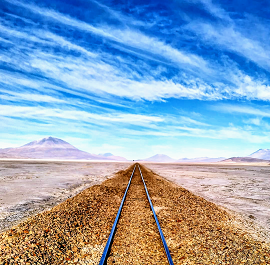
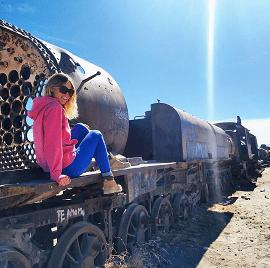
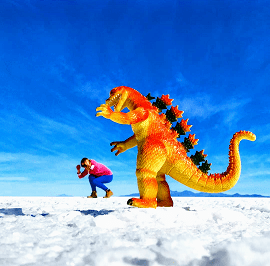
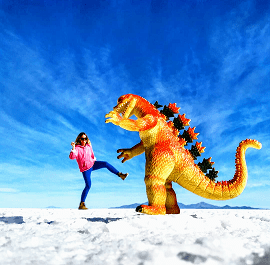
It is actually possible to make this trip on your own, but it is important to know the terrain well and bring adequate equipment in order to avoid any problems that may happen. Therefore, the most comfortable thing is to hire an organized trip, in addition the guides are very friendly, they tell you the history of the places where you stop, and above all, it is a great opportunity to meet new people who will share the journey with you. The first stop is an old train cemetery, a vestige of the economic boom of the 19th century. Formerly, there was a railway network that linked the town of Uyuni with Antagofasta in Chile in order to transport the various minerals, including silver and gold. However, after the war and the loss of access to the sea by Bolivia, the station, the largest in the country in its good times, was forgotten, as well as the old wagons and locomotives that survive the passage of time, subjected to the freezing temperatures of the plateau, the wind that sneaks in between the windows and the doors, and the travelers who browse inside and leave traces in the form of graffiti. Of course, it is an inspiring place endowed with romance. My journey continues, a stop in the middle of the saline desert. The whiteness of the salt is reminiscent of snow, and in the same way the light is so intense that it is difficult to endure without good sunglasses. The guide decides to make a stop for the photo shoot. The fun increases by the second… wow, these photos in which you play with the perspective are really great. Below I leave you some samples. If you travel in the rainy season, you will also have the opportunity to observe the sky on earth, reflected in the huge puddles that form in the salt flat. But don’t worry if you can’t travel specifically at this time, the Salar de Uyuni is a unique experience at any time of the year.
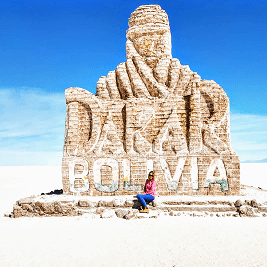
Did you know that since 2009 Bolivia together with Chile, Peru and Argentina have been part of the Dakar Rally route? In fact, the 2016 edition of the race was held only on Bolivian soil and the Salar de Uyuni was one of the main routes of the race. In the middle of the desert, near a refuge where you might stop for a drink, a commemorative monument has been built, made with large blocks of salt. By the way, throughout the desert you will stop at various hotels for the night and they are all built with bricks of salt! I guess you never had the chance to sleep in a salt house before … According to my guide, these buildings last only up to 20 years, however, their construction is relatively cheap, and so it is preferable to use salt instead of stone or bricks. The interiors are really cozy, especially if it is deathly cold outside during the long winter nights. Although, I also remember the adventure when I had to shower in ice water in one of the hotels, nevertheless, I consider that these experiences are part of the adventure, and even that at that moment I felt desperate, today the memories make me smile.
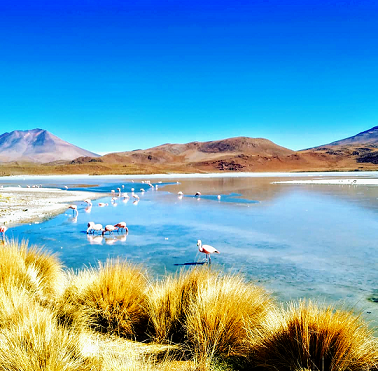
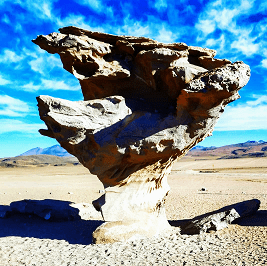
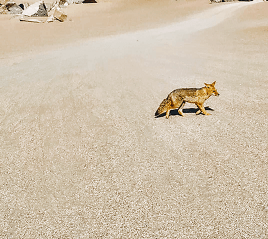
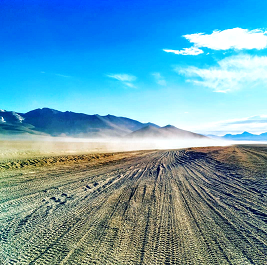
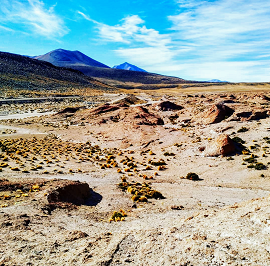
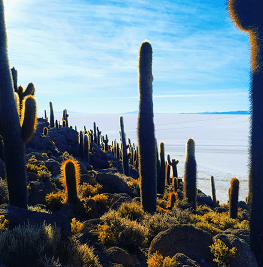
Finally, the desert is populated by some 32 islands, in addition there are also numerous lagoons, with unique fauna and flora, a real spectacle for the eyes. I had the opportunity to visit the Island of Incahausi, where the countless giant cacti grow up to 10 meters high. It is not possible to spend the night on the island, but after your visit you can try typical Andean food in the restaurant. The island has a circular route over rugged volcanic terrain. Cacti are truly extraordinary. You have to pay an entrance fee, but I recommend that you do it, you will really like visiting this island – an oasis in the middle of the desert. To end the trip through the Salar nothing better than to make a stop in a very beautiful place, the house of the Andean flamingos: the Laguna Colorada, located on the border with Chile. The intense reddish color of its waters is due to the sedimentation of rocks, full of minerals that dye them this tone, and some algae present in the lake. On the way to Laguna Colorada it is possible to stop at the Stone Tree, a lonely rock in the desert, whose shape resembles a tree and as you can imagine it was created due to the erosion of wind that blows strongly and frequently in that part of the world. Next to this natural monument I had the opportunity to see an Andean fox that seemed not to have any fear and was used to the human presence. I suppose he came “to hunt” some scraps of our food. It is an animal that lives alone and is very territorial. Formerly the Bolivian elders believed that he was like a mountain God who watched over theirs lost herd, although today new generations of shepherds consider him rather as a threat.
My trip ended at the Chilean border, where I took the bus to San Pedro de Atacama, ready for another adventure.
TIPS:
- It is easier to book an organized trip with a guide. It is possible to choose the option to leave at the Chilean border to continue your journey in South America.
- Bring some warm clothes for the winter cold nights.
- Bring glasses, without them it is impossible to see anything. The light is very strong.
- Maybe you will need some medicine for the altitude sickness or stomachache.
 all about eve`s journeys