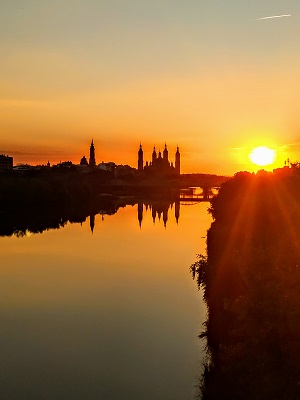
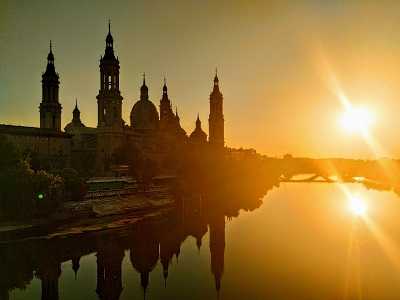
Few will know that the city of Zaragoza, located in the northeast of Spain on the banks of the Ebro River, was the city of origin of one of the most unprecedented Spanish painters, whose innovative spirit and love of freedom, mixed with the rawness of his life experience, were expressed in his artistic work, which gave him an exuberant popularity throughout the world. Of course I speak about Goya, an artist ahead of his times. However, Zaragoza also makes us fall in love with the beautiful corners, both full of arts and nature. There is nothing better than on a spring afternoon to take a walk along the Ebro and watch the sunset, which illuminates the Basilica of Pilar with its gold light. A true natural spectacle that you should not miss.
A CITY FULL OF HISTORY
The vestiges of the first inhabitants still date back to the Bronze Age, it is the case of the ancient Iberian peoples. However, the beautiful city of Zaragoza was also inhabited by the Romans, the Suebis and the Visigoths, who from the year 507 created an important Kingdom in the Iberian Peninsula, but its glory ended with the conquest carried out by the Muslims in April of 711, led by the Berber commander Tariq. In this way the Visigothic Kingdom ended and a new stage in the history of the Peninsula began, of which legends remain today, full of mystery, about the bloody medieval battles between the Christian Kingdoms, refugees at that time in the north and the Muslims. Returning to the subject that concerns us in this article, Zaragoza was even besieged by the Franks and Charlemagne himself, thus, it is not surprising that it draws our attention so much through its captivating history that it is possible to observe, among others, through the magnificent artistic constructions that evoke past time, which is not always so idyllic, but rather stormy and violent.
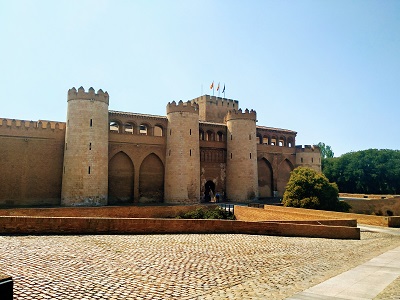
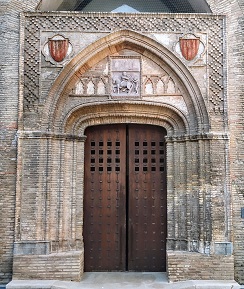
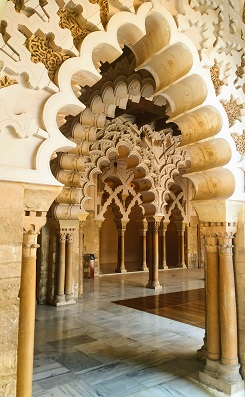
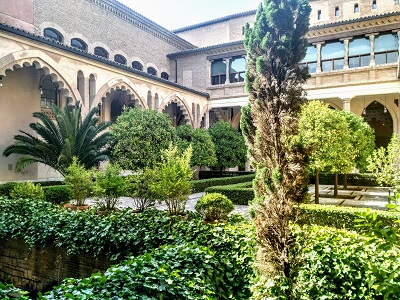
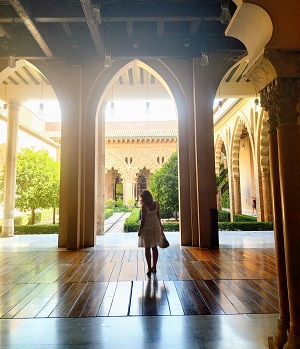
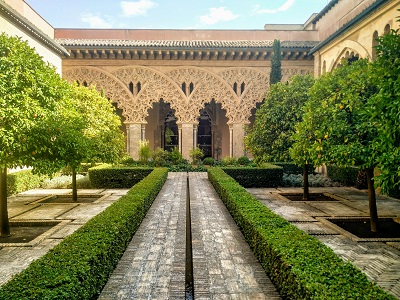
If you have ever traveled to the south of Spain, to Granada, which “excites to the point of undoing and melting all the senses”, and you had the opportunity to visit the magnificent Muslim palace that dazzles through its beauty, the Alhambra, I have good news for you. Zaragoza also has a majestic palace, built during the time of its greatest splendor, the Taifa of Zaragoza, which was established after the fall of the Umayyad Caliphate of Córdoba in the 11th century. And although the The Palace of Alfajería began with an architectural work of Islamic art, later after the Christian conquest the Palace had Mudejar influence and was expanded on several occasions. It even served as Headquarters for the fearsome Inquisition, established in the Peninsula during the time of the Catholic Monarchs, Isabel I of Castile and Fernando II of Aragon. On the outside it surprises with its fortress-type construction, it is more like a medieval defensive castle and is architecturally related to the Ribat of Susa, inhabited by the warrior-monks who watched over the Islamic faith. Its interior, however, offers a more palatial character as it is filled with the innumerable mixtilinear, horseshoe, semicircular, interlaced, pointed arches, etc., which together with a magnificent patio, full of pools and plants that cool off in a sunny summer day, they will seduce you and make you imagine the life that once existed within its thick walls, full of circular towers. A way to travel in time.
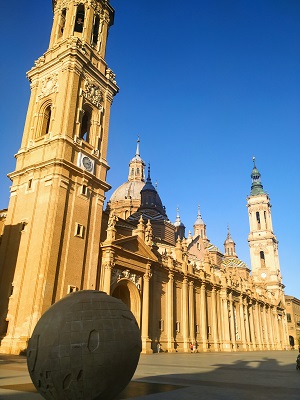
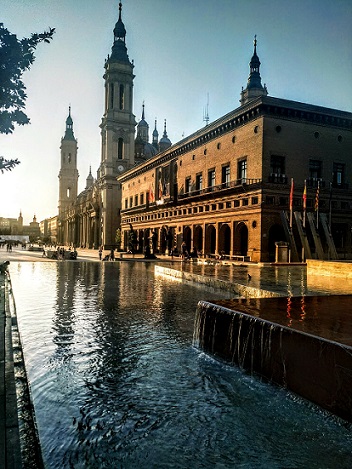
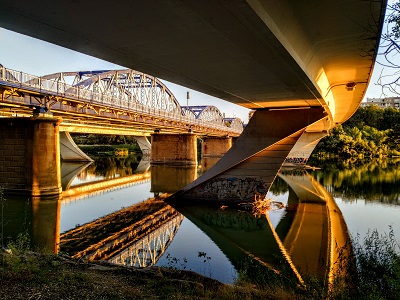
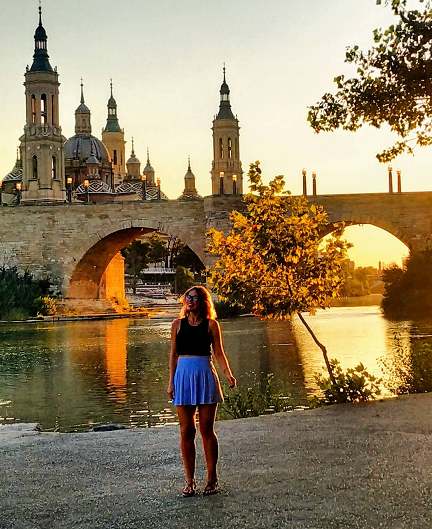
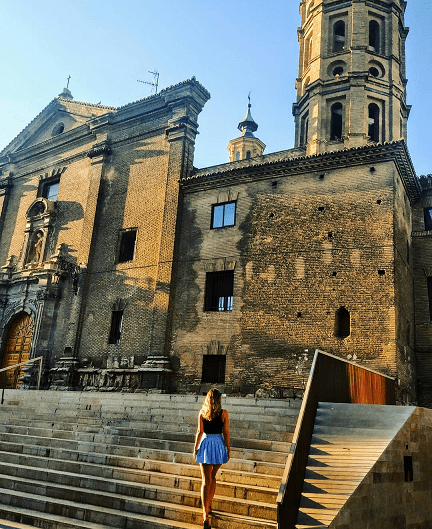
On the other hand, one of the highly recommended activities to enjoy Zaragoza is a walk along the Ebro River, especially during the golden hour, at sunset, when the reddish sun illuminates and enhances the beauty of the Basilica of Pilar, built together to the largest river in Spain. By the way, did you know that in the Basilica you can find the most outstanding work of the painter Goya, created in this city? It is about Regina Martyrum, who represents the Virgin Mary, surrounded by saints and martyrs, raised on a cloud, against an orange sky that gives it a certain degree of mysticism. In a simple spectator it produces the sensation to be directly contemplating the sky. Perhaps the wonderful sunsets of Zaragoza were the inspiration to paint the sky in shades of orange? Whatever the source of his inspiration was, in carrying out the work he had a strong argument with his brother-in-law, Francisco de Bayeu, another prominent Spanish painter, and a priest had to intervene to calm the matter. To finish the walk, don’t forget to have a drink in the old part of the city, maybe you should try some typical sweets from the area.
HIKING IN THE GALACHO OF JUSLIBOL
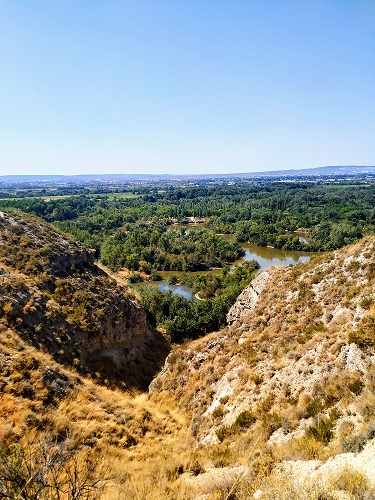
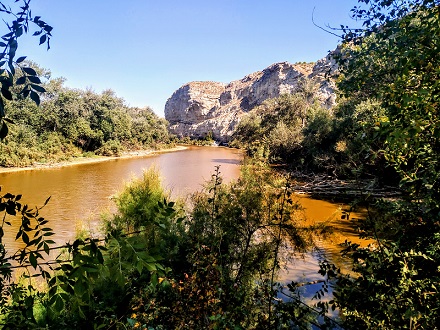
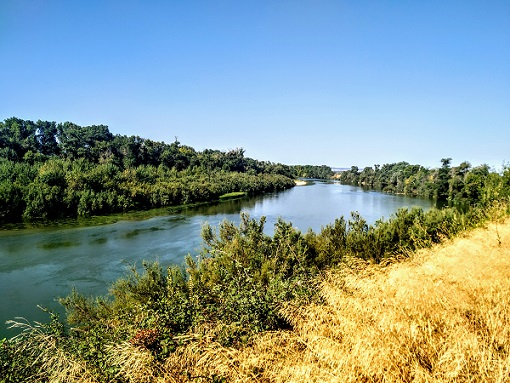
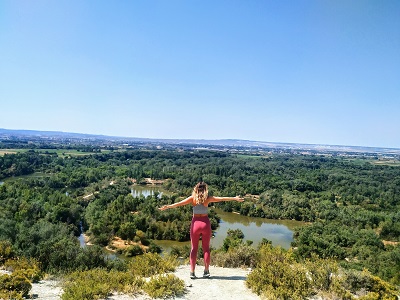
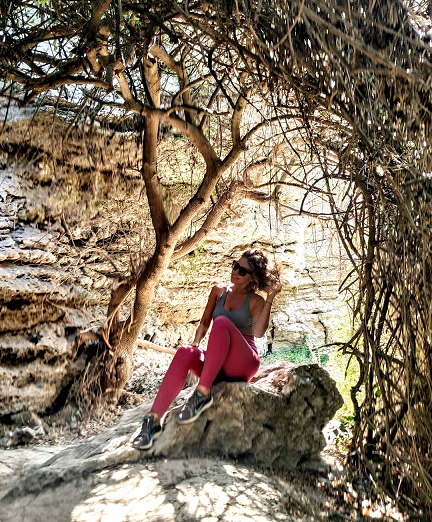
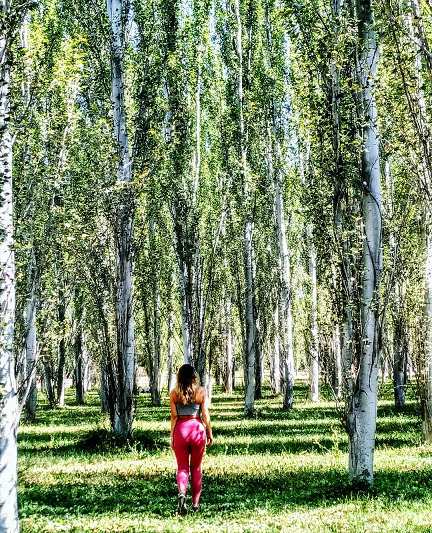
In the outskirts of the city there is a natural area that combines a walk along the Ebro River, the forest, the lagoons and the gypsum mountains, the steppe area and the urban gardens, it becomes an ideal place to make a hiking route and to disconnect from the urban life for a while. It is the Galacho de Juslibol, a very unique area, where the Galacho stands out, that is, in the Aragonese dialect it is an old meander abandoned by the river. By the way, meander means a pronounced curve of a river, which is formed in areas of little slope, especially in the central part of it. It is a very interesting natural setting, where you have the possibility to spend a day, since next to the visitor center there is a picnic area with various tables. If you come with children, they will surely love to play there among wooded spaces. Although there is also the possibility of resting by the water and perhaps you can take a dip in the Ebro. What I loved the most in the summer season, were the blackberries that grow along the path and are really delicious, much richer than bought in a greengrocer.
TIPS:
- Take a walk by Ebro River in Zaragoza at sunset. The reddish sunlight envelopes the city and makes look astonishing.
- The route in the Galacho of Juslibol is very easy, so you can bring your kids and spent a nice they around.
- If you have more time, investigate the vestiges of the Spanish Civil War in Aragon (1936-39), not far from the city there are several places that I explain in may previous Blog Post.
 all about eve`s journeys