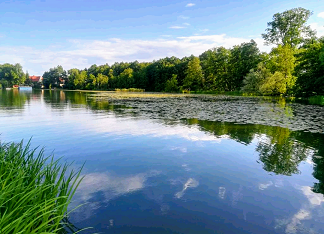
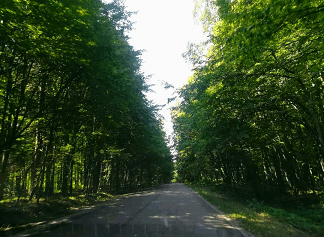
In the northeast of Poland, in the lowlands, there is a place of sublime beauty, called Masuria. The inhabitants of Poland know this wonderful place with its nickname: “the Land of a thousand lakes”, although in reality their number is almost three times greater than the nickname indicates, since the official figure reaches up to 2,600 lakes. It is a fantastic place for people who love spending time outdoors, enjoying water activities or long walks in the green forests that predominate in this area of Poland. Likewise, in the depths of the forest the vestiges of the past are still hidden, some of them related to the most chilling historical events…
ABOUT MASURIA
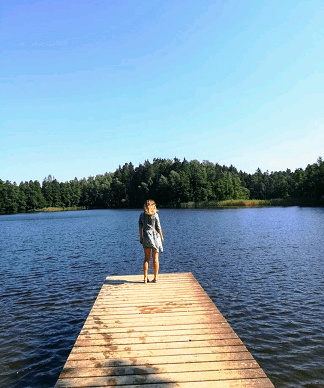
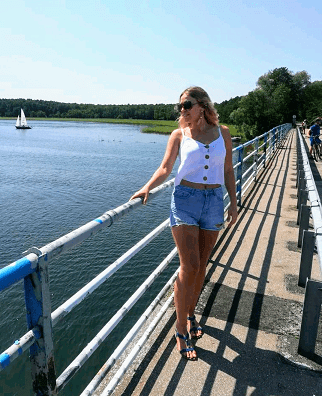
The name of the Masuria region refers to the fact that since ancient times it was a heavily wooded area, where tar was easily obtained from resinous wood. In this way, this beautiful natural area has obtained a peculiar name, related to the work carried out by the workers to obtain the tar. However, today few remember this fact, and when people visit Masuria, the impression caused by the beauty of nature, full of forests and lakes, which were formed more than ten thousand years ago, after the last glaciation of the Baltic Sea, is the main reason they fall in love with this area. The largest of all is Lake Sniadrwy which has about 113km2, behind it Jeziorak and Niegocin also stand out for their size. In addition, thanks to a network of channels of about 150km, many of the lakes are linked and give the possibility of navigating along Masuria between lake and lake, and even reaching the Baltic Sea.
WHAT SHOULD YOU VISIT IN MASURIA
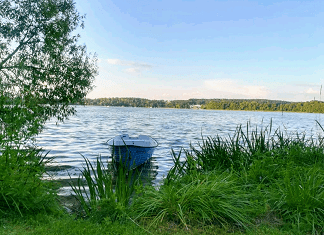
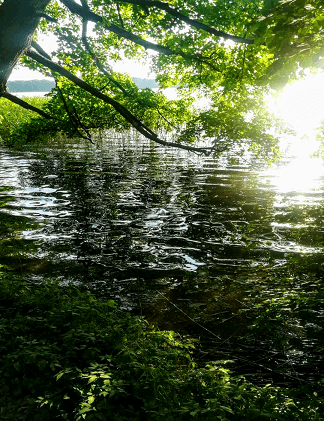
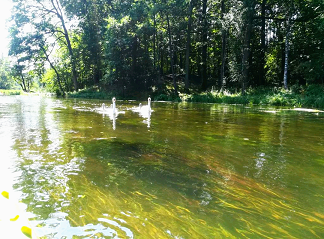
In Masuria, lovers of water sports have the possibility of finding numerous opportunities to enjoy their free time by the water. In addition to sailing on a boat in the different lakes of the region, linked by channels, there is also another option. It is a route through the Krutynia River that travelers can do by kayak. The route is suitable even for children and it is a beautiful area with a very varied fauna and flora, which of course you should not miss. I recommend you bring some water and food, although there is also the possibility of eating in a restaurant, located on the river bank where they serve the delicious typical dishes. My favorites from Poland are the Pierogi.
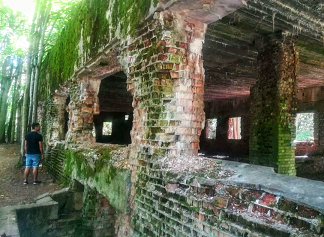
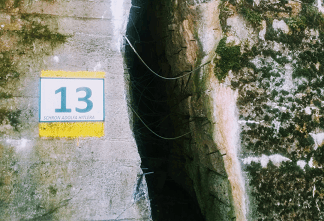
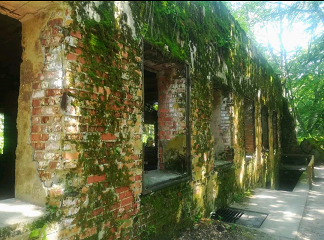
In the depths of the forest Wolf’s Lair (“Wilczy Szaniec”) is hidden, a place whose history takes us back to a shocking stage of the past, that is, World War II. It is one of the largest military barracks of Adolf Hitler, which had about 80 buildings in total of which 50 were bunkers. The complex was built for the offensive against Russia, however, as the Soviets approached the border, the Nazis abandoned the facilities. It was also there that on July 20, 1944 Claus von Stauffenberg had planned a failed assassination attempt against Führer, for which he was later executed. Today it is possible to visit the historic complex by buying tickets directly at the ticket office and the visit offers a walk through the old abandoned bunkers, where nature predominates. Some of these buildings were converted into museums that explain in detail the events of the past. Among other buildings of historical interest that are located in this part of Poland is the Boyen Fortress created between 1843 and 1855. During the First World War it was used in order to stop the Russian troops, after the war the Fortress was converted into a hospital and During the Second World War the German troops were gathered for the occupation of Poland, carried out on September 1, 1939.
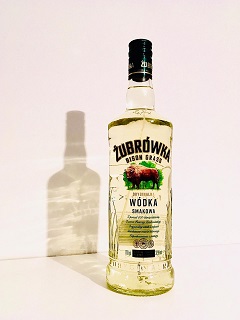
Another curiosity that you should not miss when visiting this part of Poland is a visit to Puszcza Borecka, exactly a farm in Wolisko, where bison live. These animals are really amazing. Until the seventeenth century, bison lived in the wild, but their numbers began to decline due to hunting and other causes. Since the Second World War, the bison recovery policy was established, which made it possible to increase the number of these animals, and at present in Puszcza Borecka up to 80 specimens live and the vast majority of them in the wild. At the Bision Farm (“Zagroda Zubrów”) you can see these majestic animals up close, the entrance to the farm costs around € 1. By the way, did you know that in Poland they drink a yellowish vodka that has a leaf inside it that bison usually eat? The vodka is called “Zubrówka” and I think you are going to like it, since its flavor is somewhat milder. I love mixing it with apple juice!
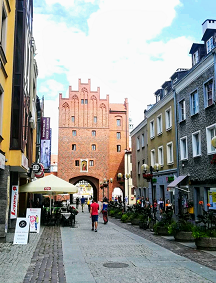
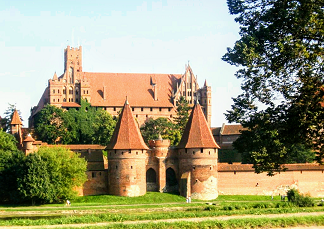
Finally, you should not miss the visit in the city of Olsztyn, it is the capital of the Polish Voivodeship of Warmia and Masuria. The highlight of this city is the castle built in 1334 by the Teutonic Order, another of great importance is located in the city of Malbork, in northwestern Poland. Olsztyn Castle is located in the Old Town from medieval times which is accessed through the High Gate (“Wysoka Brama”), also of Teutonic construction. Between 1516 and 1521 the famous Polish astronomer lived in the castle, who stopped the Sun and moved the Earth. Surely, the name of Nicolas Copernicus is familiar to you.
TIPS:
- Maybe while visiting Masuria you should learn how to sail?
- Bring bug repellent. Damn mosquitoes bit me more there than when I visited Tanzania. Of course, they are not so dangerous obviously.
- Try some typical Polish dishes. The food is delicious.
 all about eve`s journeys
How many great memories !!! and the Pierogi are really delicious.
LikeLike
I thought that maybe you hate them after one week eating Perito for breakfast, lunch & dinner 😆😆😆
LikeLike