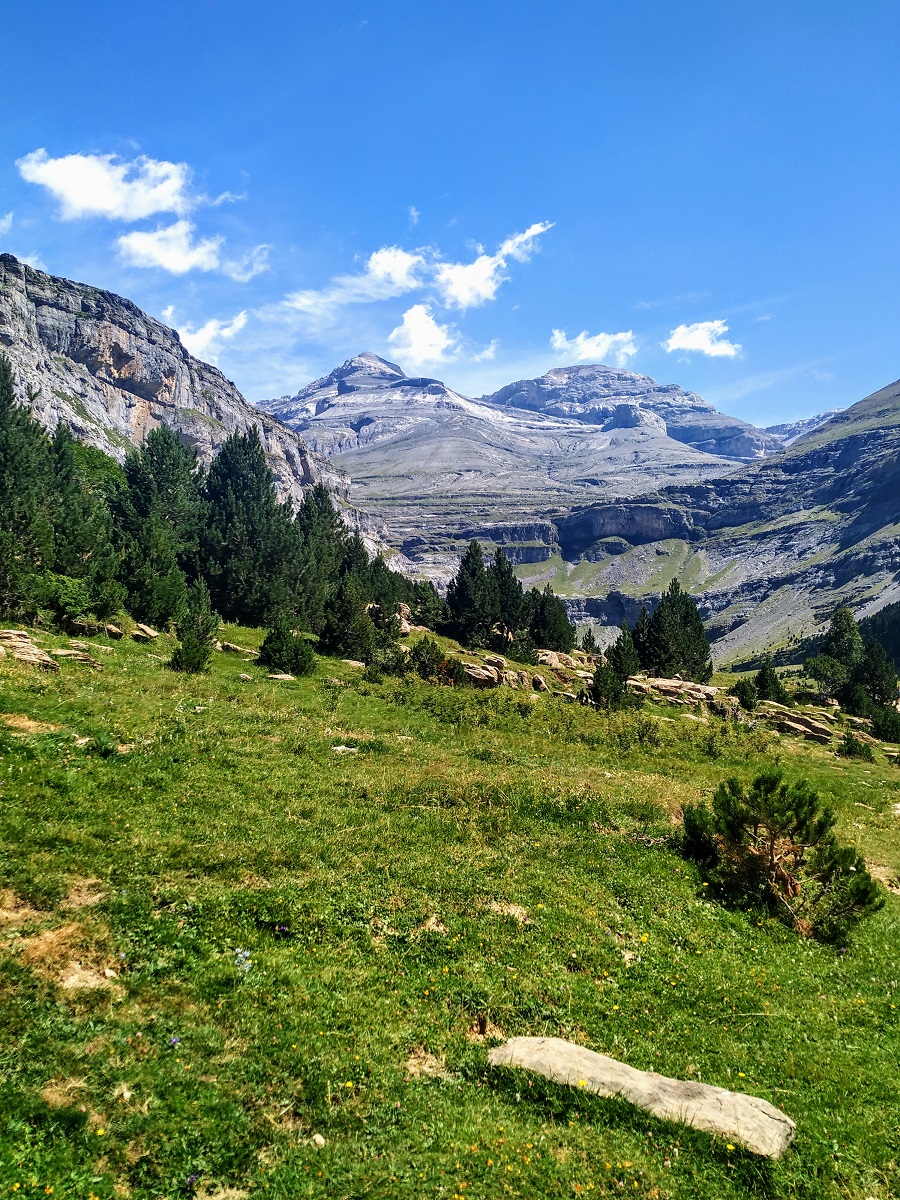
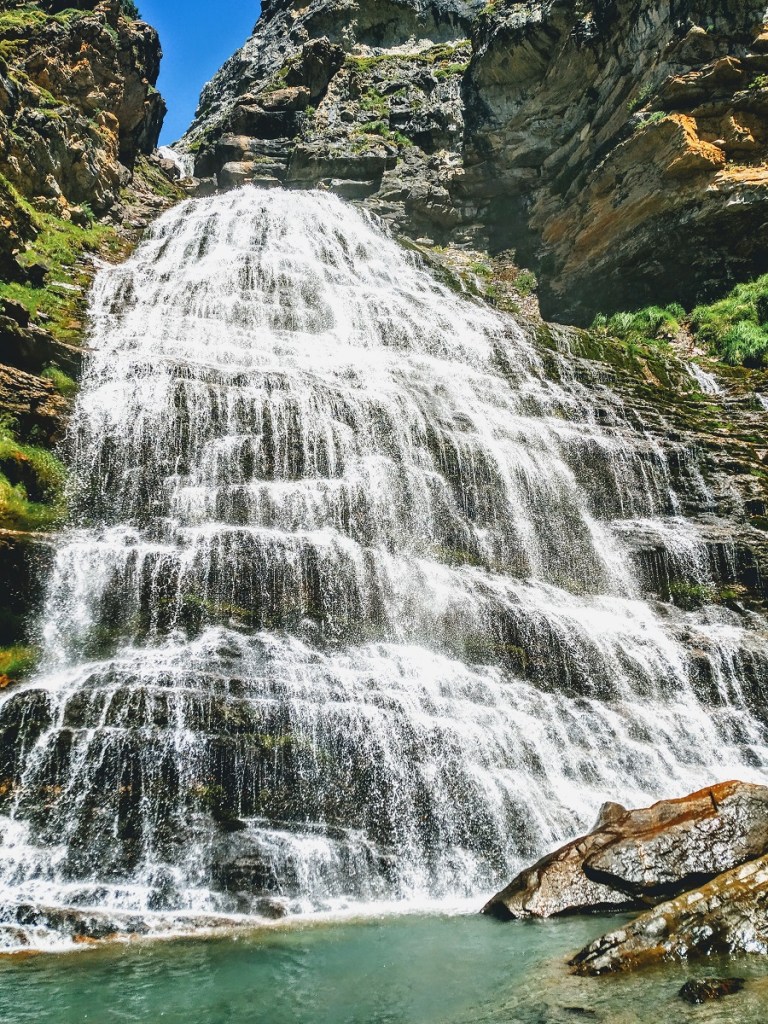
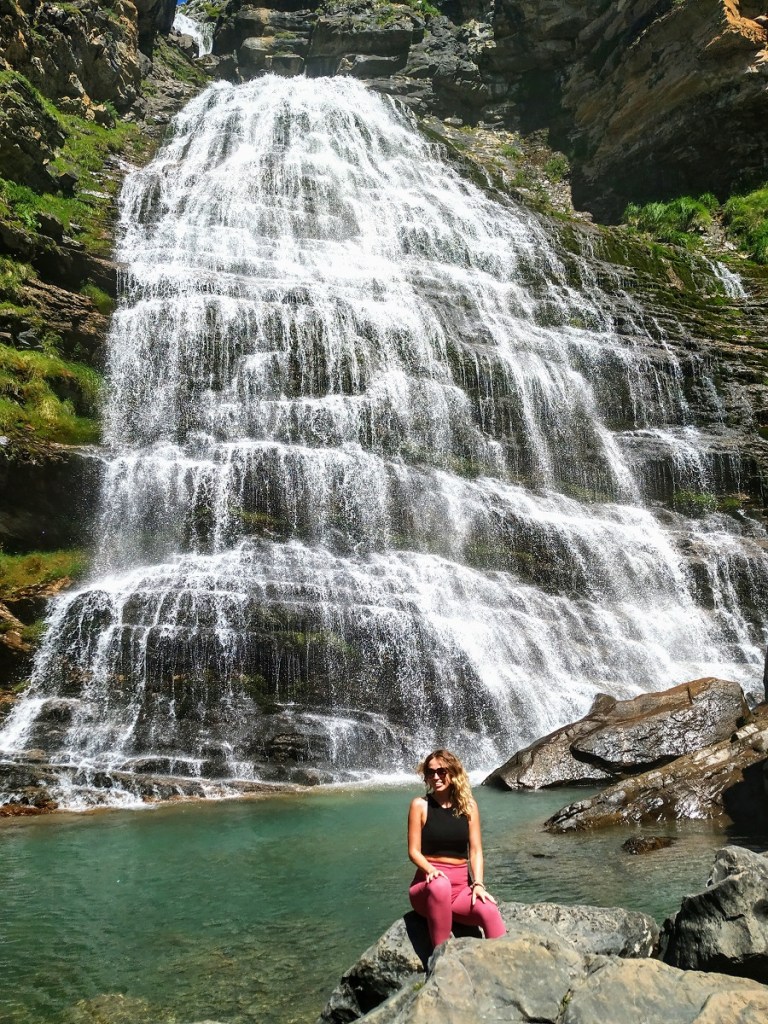
In the province of Huesca, located in the northeast Spain, the magnificent Pyrenees Mountains are located, whose origin is related to the princess Pyrene, the beloved of Hercules, who was brutally murdered by Gerión, the monster of Eritea. Among the mountains, the Ordesa Valley stands out, a place of exquisite beauty that, without a doubt, will leave you speechless, especially the most famous route in that area that ends at the magnificent waterfall, called Cola de Caballo (Horse Tail Waterfall).
THE PYRENEES
The Pyrenees Mountains go from east to west for about 491km on the border between Spain and France. They are relatively young mountains, created due to the Alpine-Himalayan orogeny, caused by the collision of the Eurasian and African plates during the Cenozoic period. As a consequence, the Pyrenees are quite high mountains and with few transversal passes, among which the Roncesvalles stands out, a historical place, in which Charlemagne’s nephew, Roland, was attacked by surprise, who lost his life in the battle against the Vascones, a native people of the Iberian Peninsula. The whole story is represented in the famous book from medieval times: The song of Roland.
ORDESA VALLEY – COLA DE CABALLO WATERFALL
Since 1918 it has been a Natural Park, also known by its nickname of the Monte Perdido Massif. One of the most famous routes that will take you to discover beautiful forest landscapes and will allow you to refresh yourself in its crystal clear waterfalls is the so-called Ruta de la Cola de Caballo.

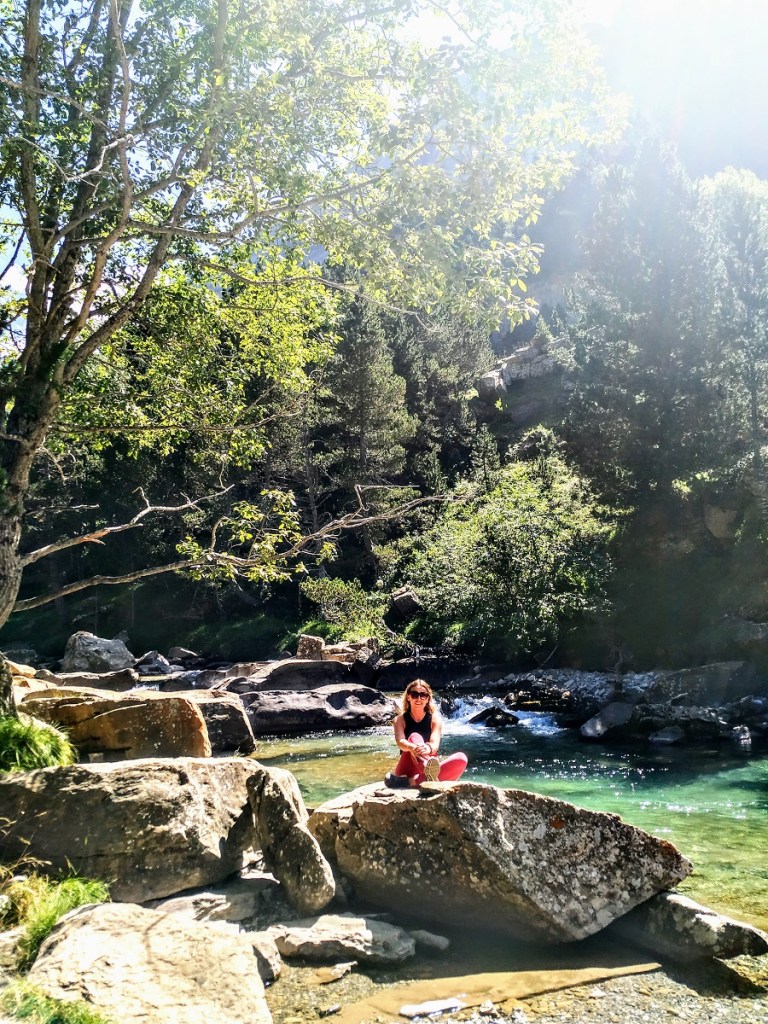
HOW TO START
For this route I advise you to get up early in order to enjoy without crowds that usually arrive early, especially in the summer period. In Torla, an incredible town of medieval origin, you can park your car in a large parking lot prepared for visitors, and take a bus to the beginning of the route, which I remember cost about € 5. This is the only way to get to the trail, since driving in a private vehicle is prohibited. However, I think it is a fairly comfortable option, since it allows you to rest a bit, especially when returning from such a long walk. Trust me, you’re going to need it!
The bus will drop you right at the beginning of the trail. There is also the tourist office, where you can obtain the necessary information, although in general the route does not have great mysteries, since it is a straight path and very well marked.
THE TRACK
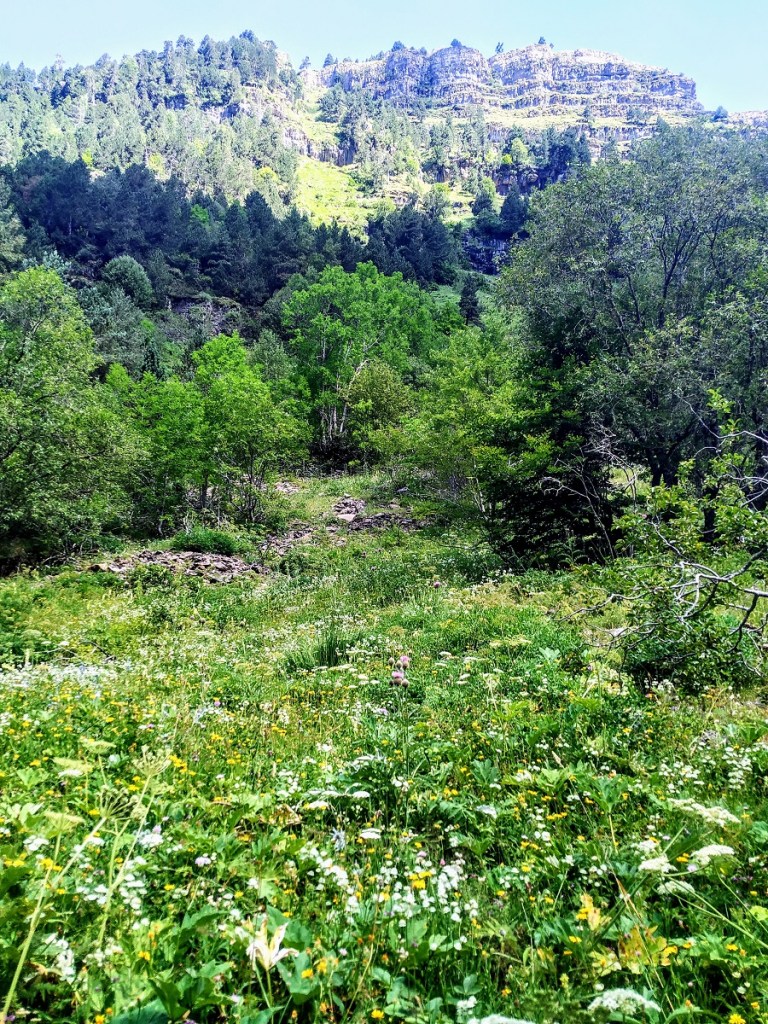
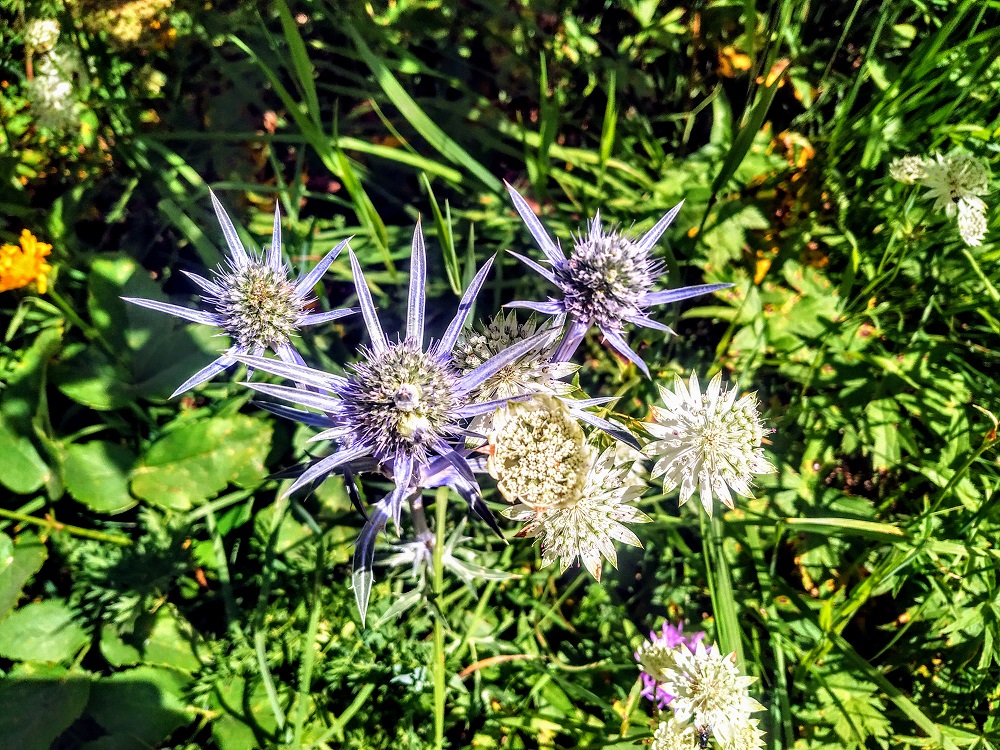
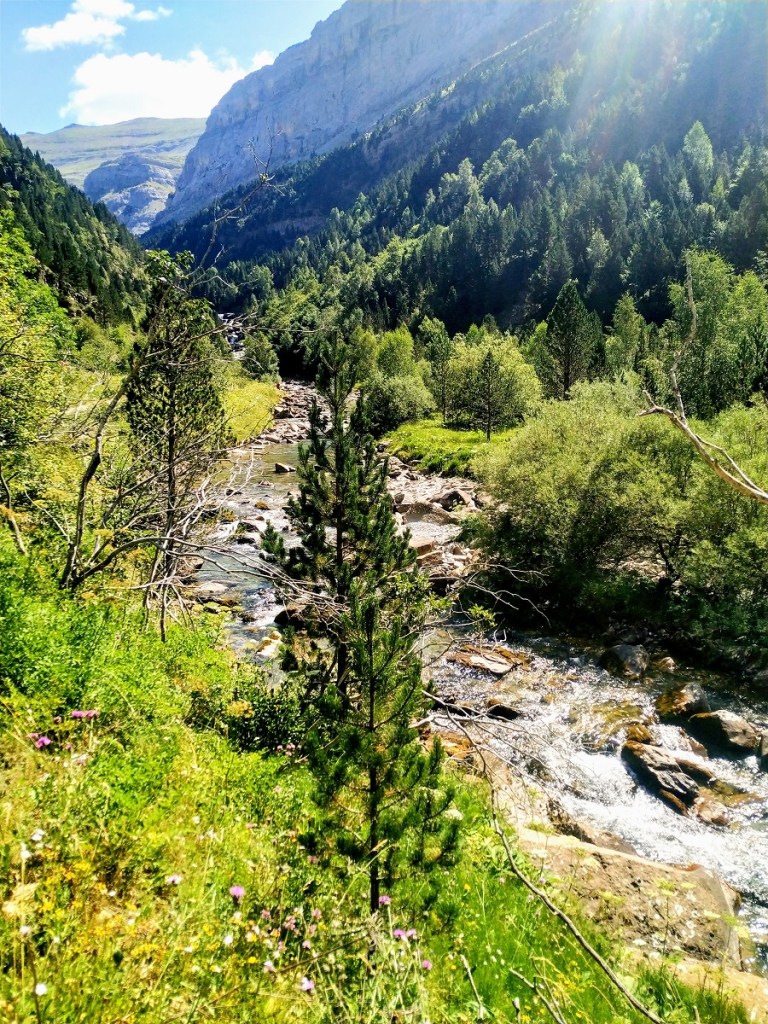
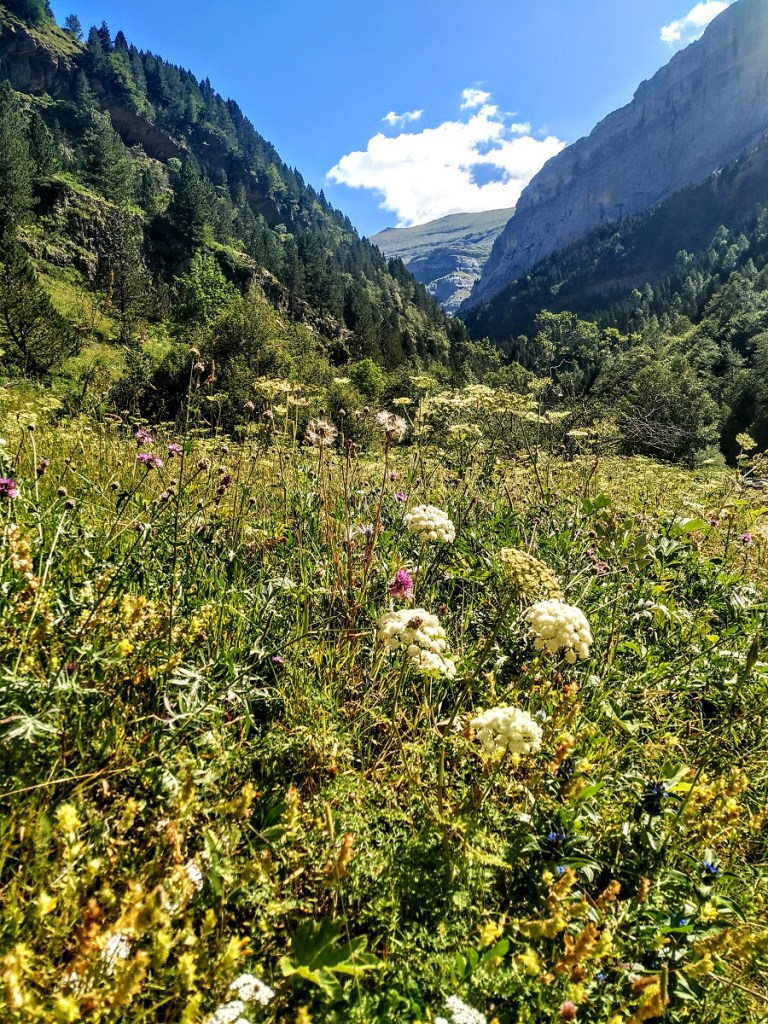
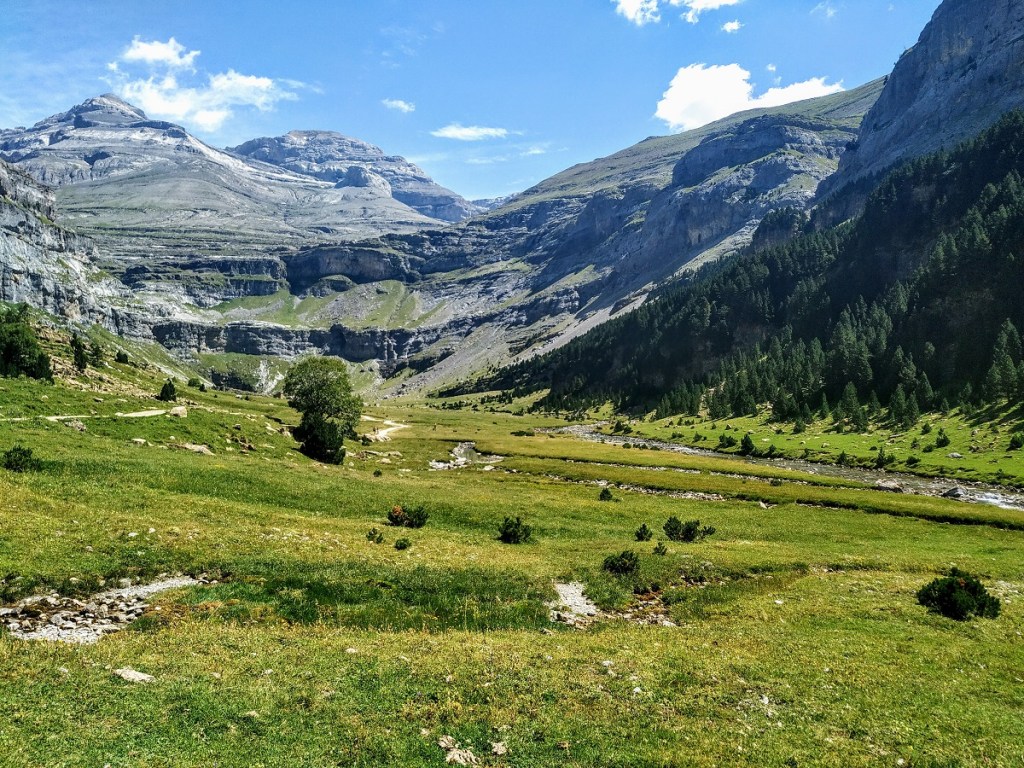
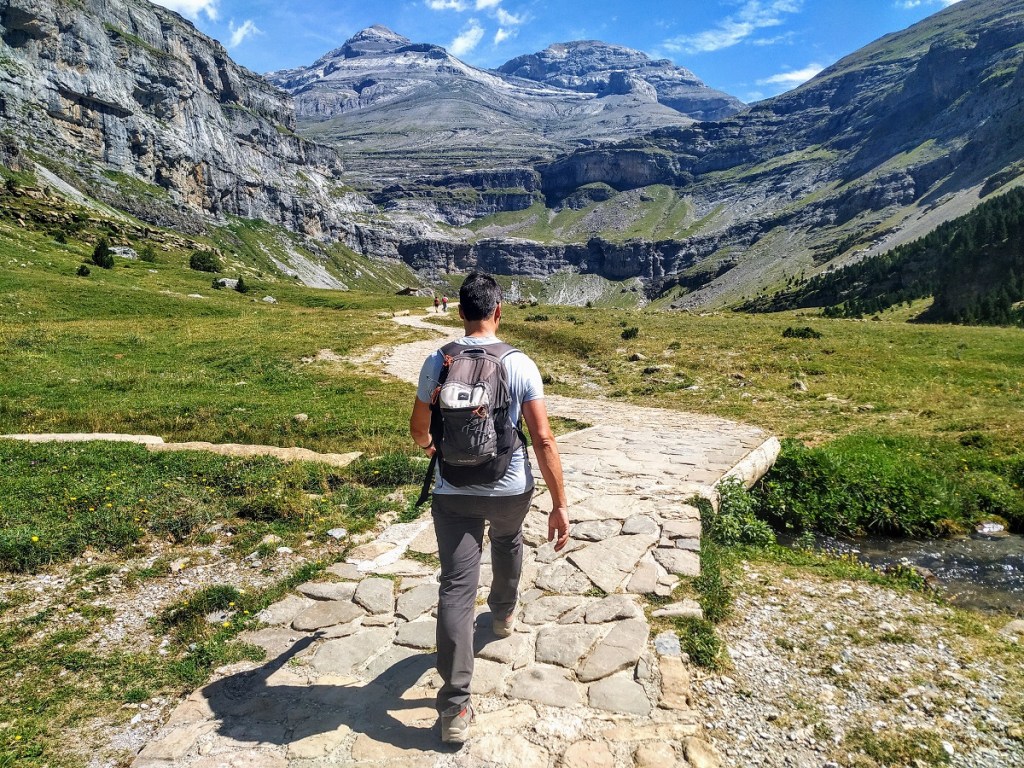
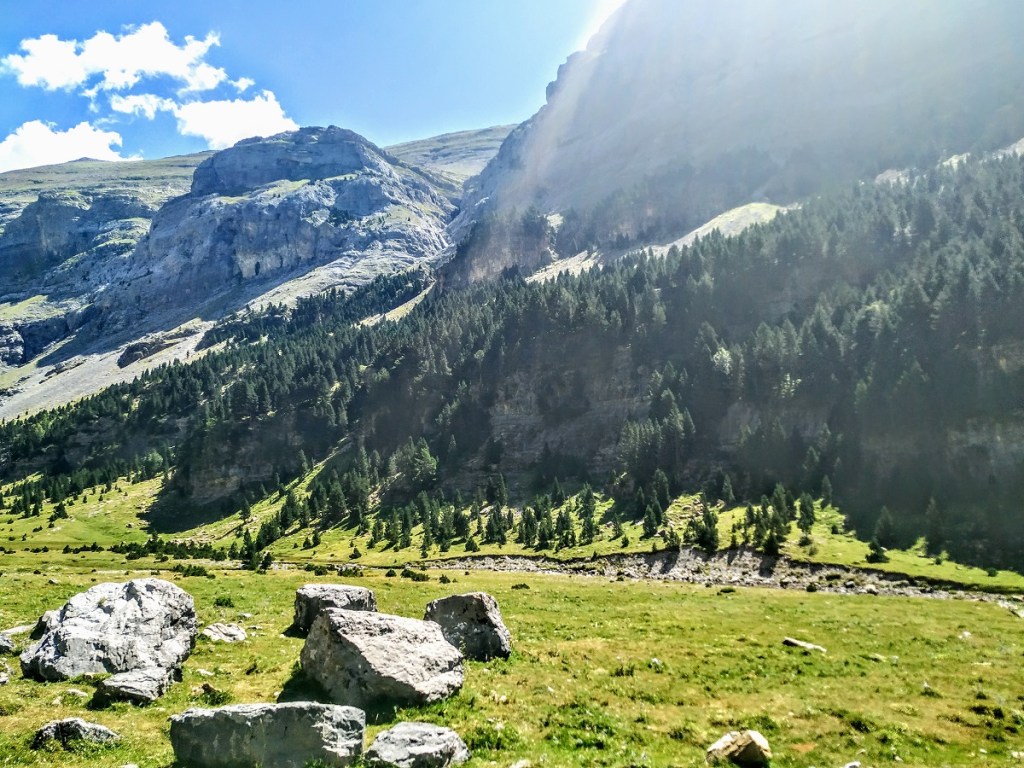
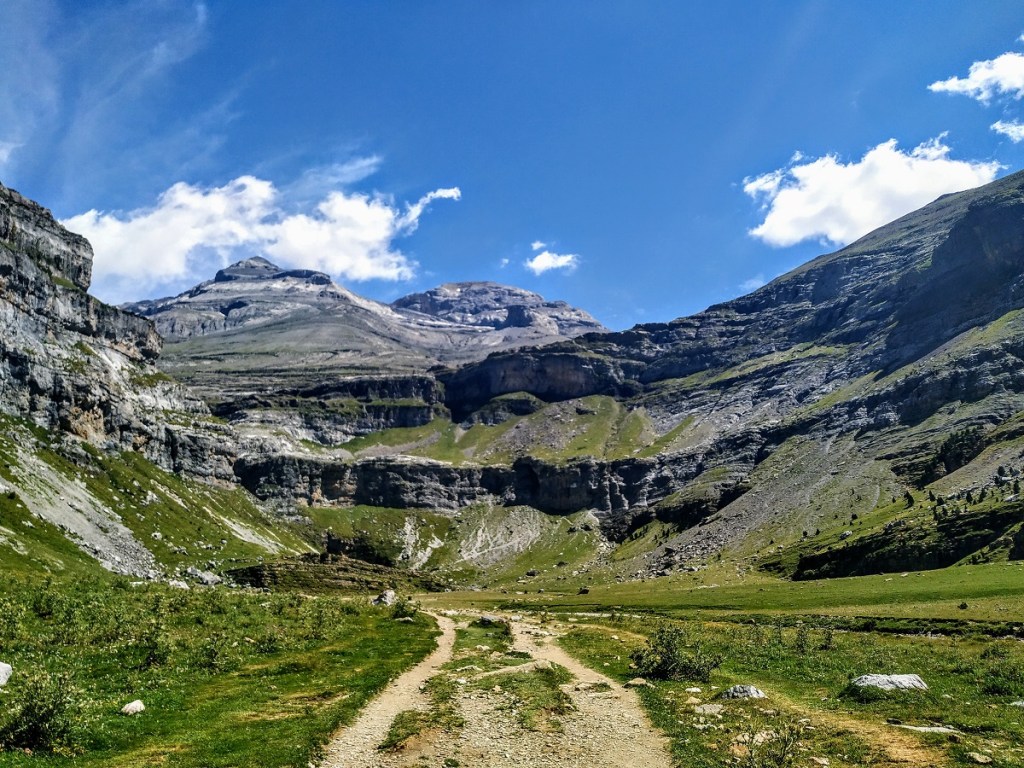
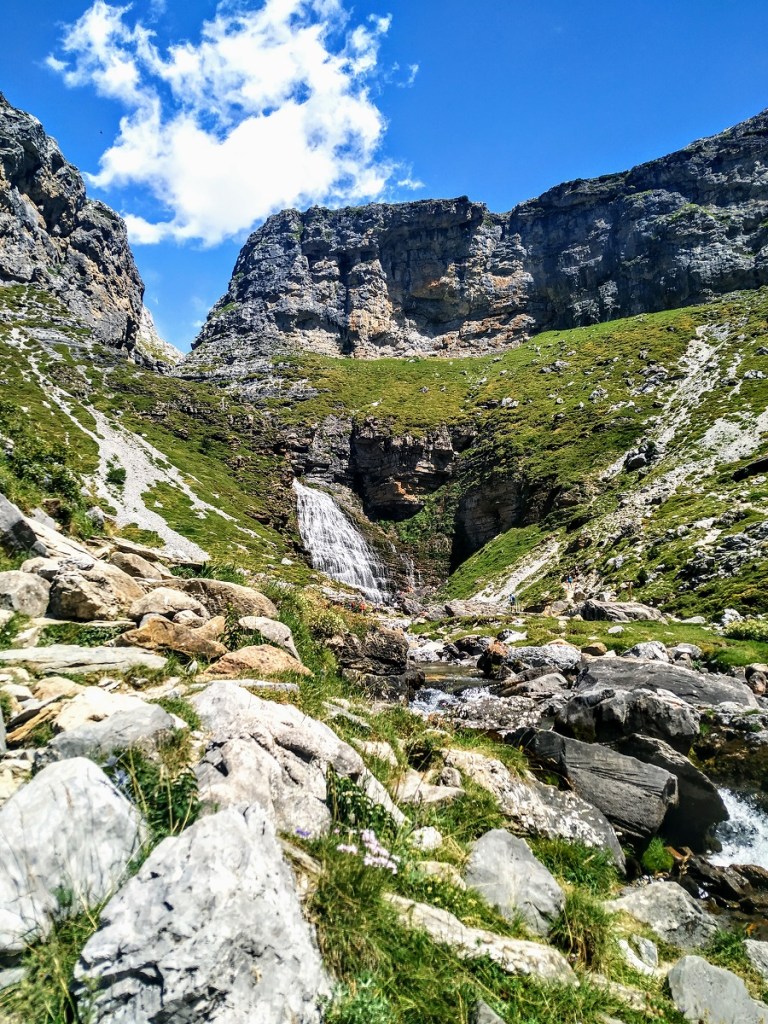
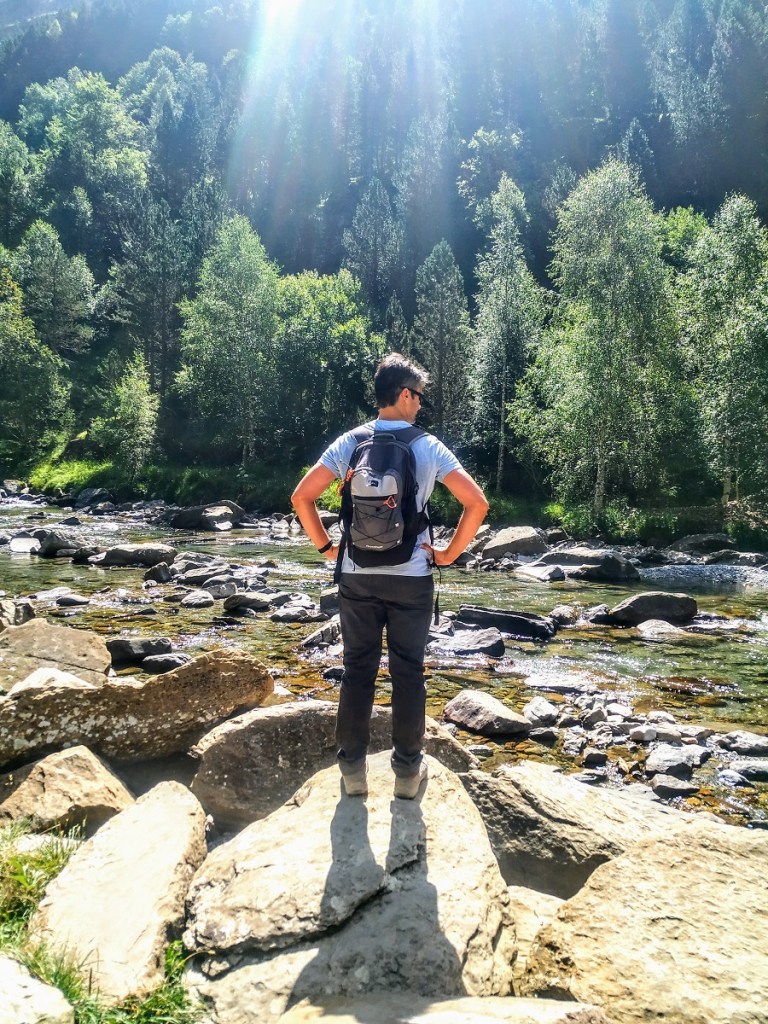
The road is not difficult, by this I mean that you do not need to climb anything, you can do it with your children. The difficulty consists solely in the fact that the route mostly much of the beginning is uphill and you will likely have to make several stops to catch your breath a bit. Although do not worry, along the way there are several viewpoints with beautiful views that I think you will love and so you can recover a little to continue on your way. Great news is the fact that even if you come in the summer, the route is surrounded by magnificent forests of fir, black pine and beech, which protect from the sun and offer refreshing shade to hikers. If you come in autumn, you will be impressed by the beauty of ocher colors that surround the crowns of beech trees. It is a spectacular sight.
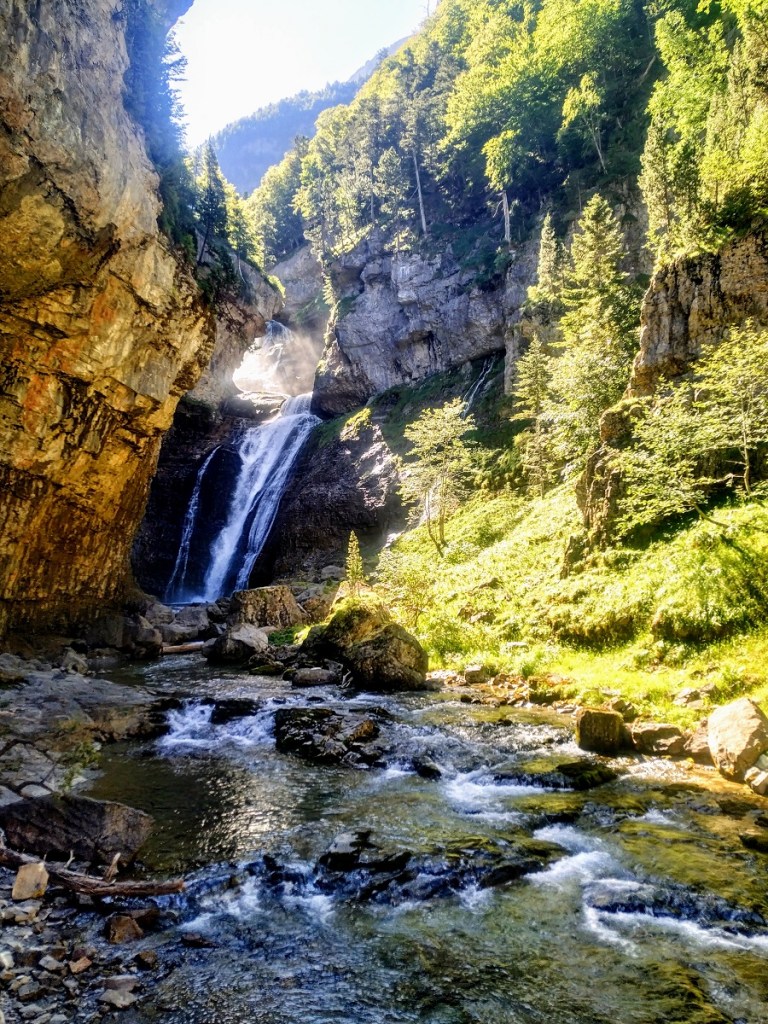
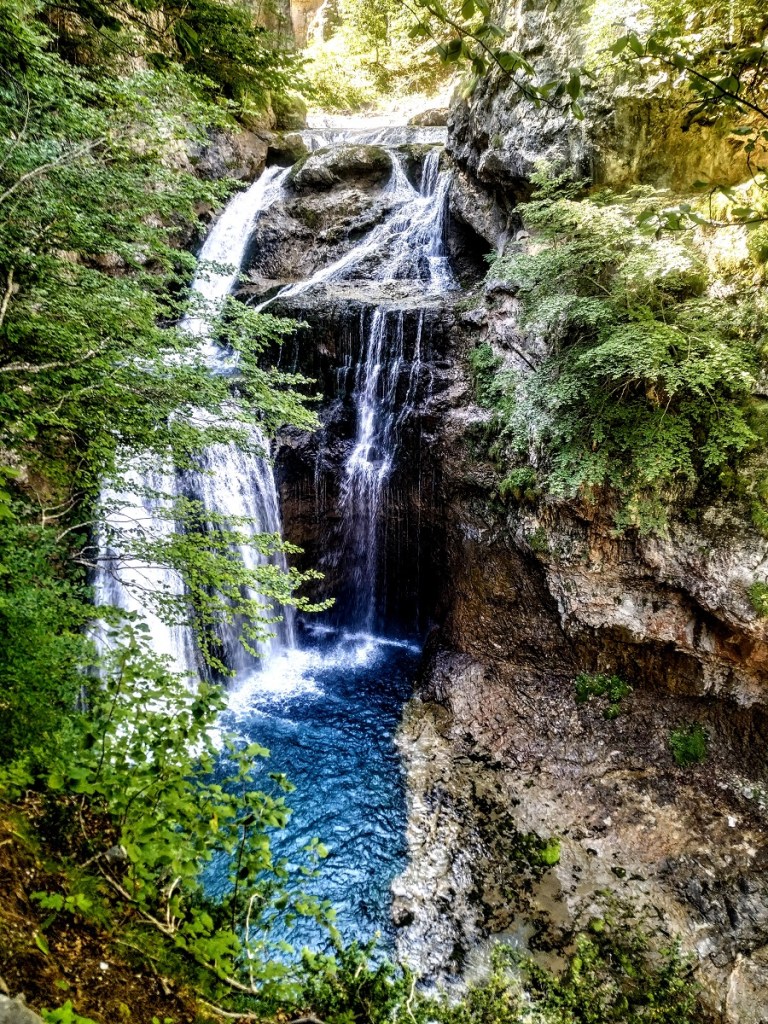
Along the way, you will find some incredible waterfalls, such as the Arripas, Cueva and Estrecho. I cooled off in them a bit, I really feel like it, especially during the summer. Also, one of the most impressive areas of the path is the final valley that ends at the Cola de Caballo Waterfall. Being surrounded by the gray peaks of limestone as you walk through a green meadow, crossed by several streams of crystal clear water is an extraordinary sensation… What else do you need to fell happiness?
THE LEGEND OF PYRENE & THE ORIGIN OF THE PYRENESS
Once upon a time there was Princess Pyrene, daughter of King Tubal and great-granddaughter of Noah. He fell in love with Hercules when he visited the Iberian Peninsula in order to complete one of the twelve jobs assigned to him. It was a reciprocated love, but when her father, King Tubal, found out what had happened, he forbade her to see her lover and they were separated.
Meanwhile, the three-headed monster, Gerión, who lived in Eritea, currently the city of Cadiz, sought revenge on Hercules, since the Greek hero had stolen his flock, but when he did not find him, he decided to kill King Tubal and his daughter. The princess was going to die, so she hid in the forest to prevent the monster from finding her, however, Gerión set fire to the forest. Poor Pyrene cried as she died devastated by the fire, from her tears the glacial lakes were formed, which are called in local language: ibones. When Hercules, warned by an eagle, came to rescue her it was too late. He found his lifeless body and built a tomb of infinite stones, thus forming the Pyrenees.
TIPS:
- It is not a very difficult route, but a long one, so bring enough water and food.
- You can do the route with the children, but they may not walk on their own until the end.
- Visit Torla, an excellent medieval village.
 all about eve`s journeys