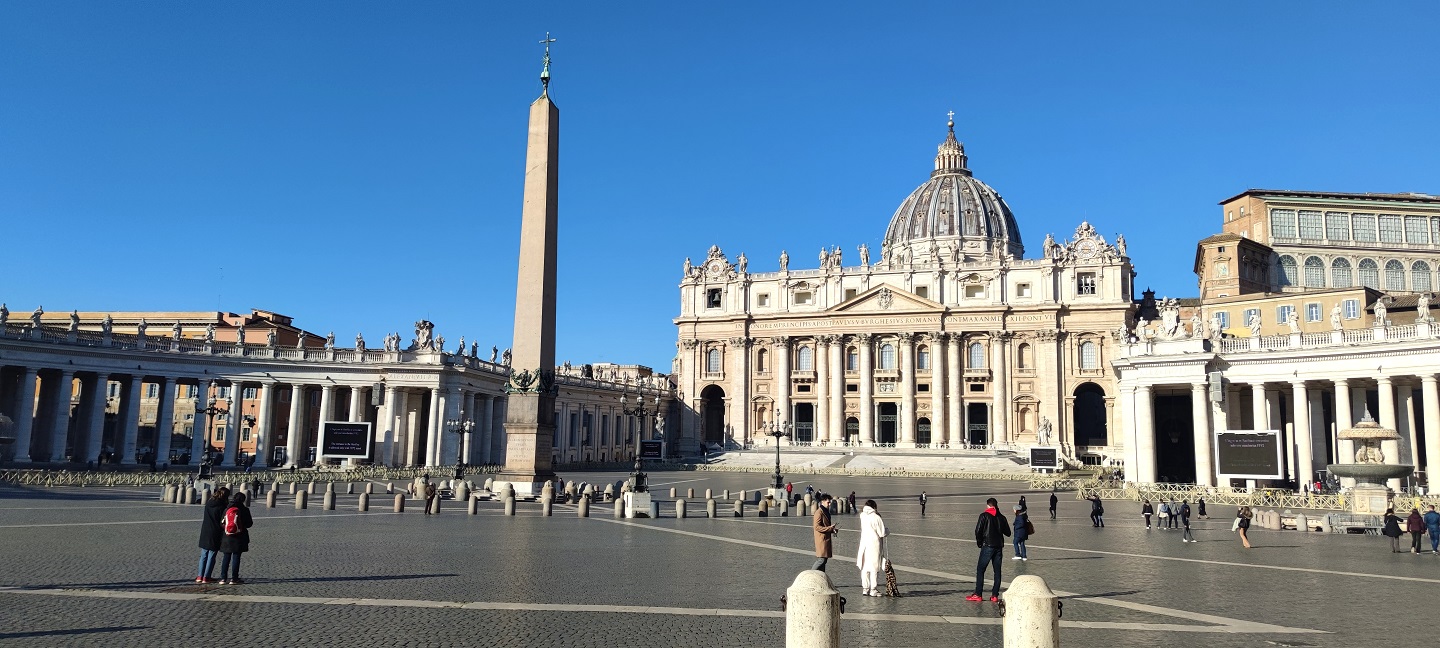
I was recently visiting the eternal city of Rome. What a wonderful place! Art is the essence of this city. I started my trip by visiting the Vatican City. As you know, the Vatican is a sovereign state within Rome and one of the six European microstates, along with Monaco, San Marino, Andorra, Liechtenstein and Malta. The existence of Vatican City is due to the Lateran Pact of 1929 between Italy, which at that historical moment was under the power of Mussolini, and the Holy See, then led by Pope Pius XI. Since the highest authority in the Vatican is the Pope, it is considered a theocracy, that is, state policies coincide with the norms of the dominant religion.
In this article I describe the most fascinating places in the Vatican, as well as the masterpieces that you have the chance to see in its Museums. I warn you, there will be a lot of HISTORY OF ART.
Next article about Rome soon.
THE MUST-VISIT IN VATICAN CITY
ST. PETER’S BASILICA
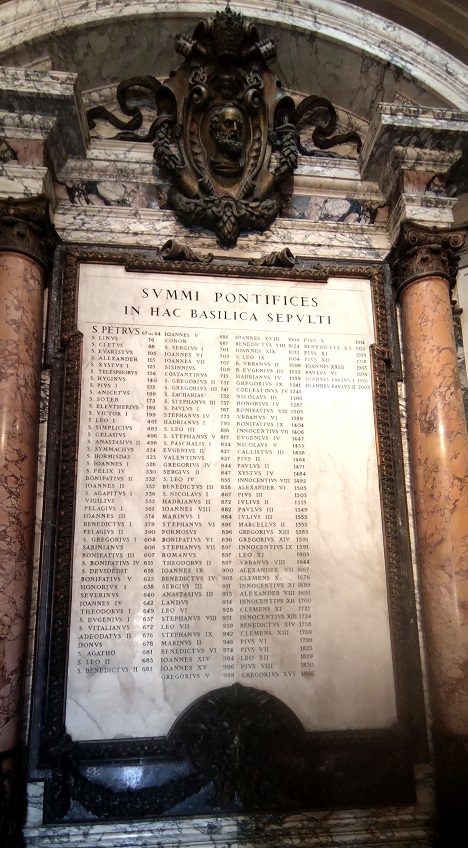
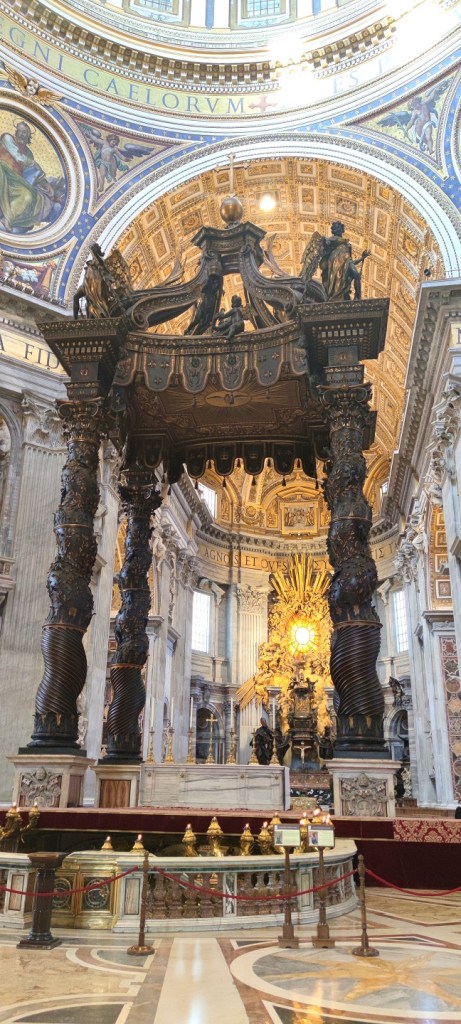
Among the most outstanding places in the Vatican is Saint Peter’s Basilica, the largest Christian church in the world of about 193 meters in length and 44.5 meters in height. According to Catholic tradition, the Basilica is built on the tomb of the apostle Saint Peter, who was the first pontiff of Rome. His tomb is located under the wonderful bronze Baldachin made by Bernini for Pope Urban VII in the 17th century. It is said that bronze from the statues of the Pantheon of Agrippa was used to make the Baldachin, which stands out for its twisted columns decorated with natural motifs in gold. The entablature has curved lines and is crowned by four scrolls that support a large cross on the ball that represents the World and symbolizes the victory of Catholicism and Christ over heresy. Let us remember that only a few decades before, the separation took place within Catholicism, giving rise to new branches of Christianity, such as Lutheranism or Anglicisism.
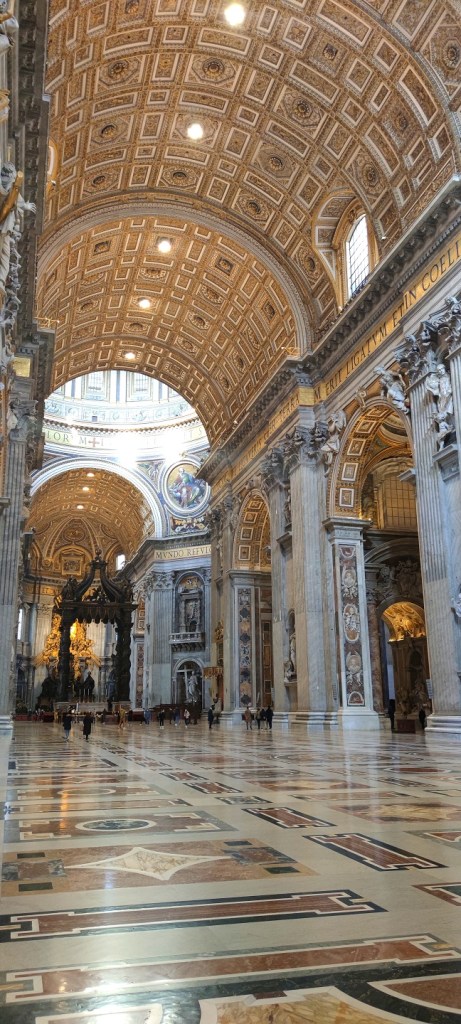
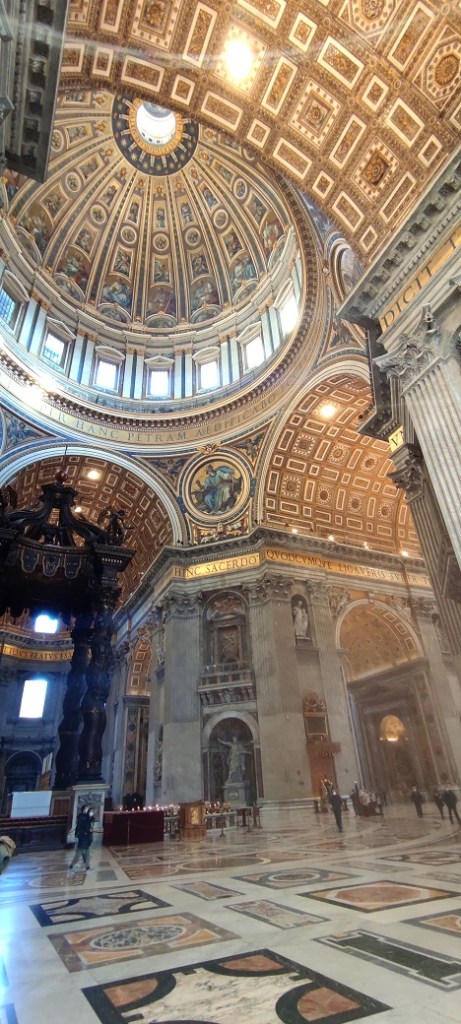
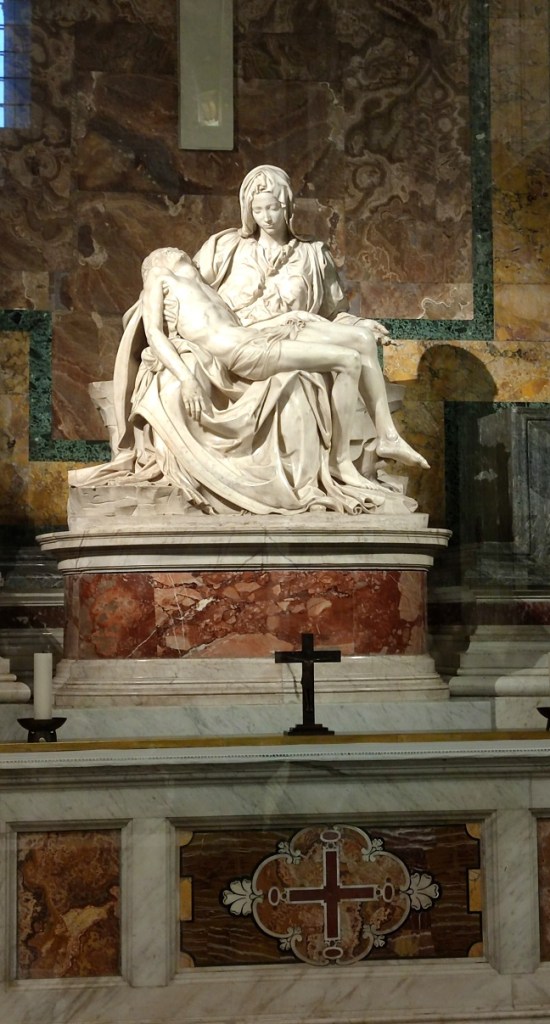
Although the first basilica already existed in this place since the 4th century, the current church began to be built from the year 1506 at the orders of Pope Julius II. It’s possible to contemplate there the artistic wonders, such as the Pietà by Michelangelo or the tomb of Alexander VII made by Bernini. The Pietà represents the Virgin with a young, neo-Platonic appearance, for which the artist was harshly criticized since at the death of her son Maria was old. On her lap lies the body of the deceased Christ, naked and covered only by the short cloth of purity. The magnificent work of the folds of the pompous dress of the Mother of God stands out, and here face shows a serene and simple beauty.
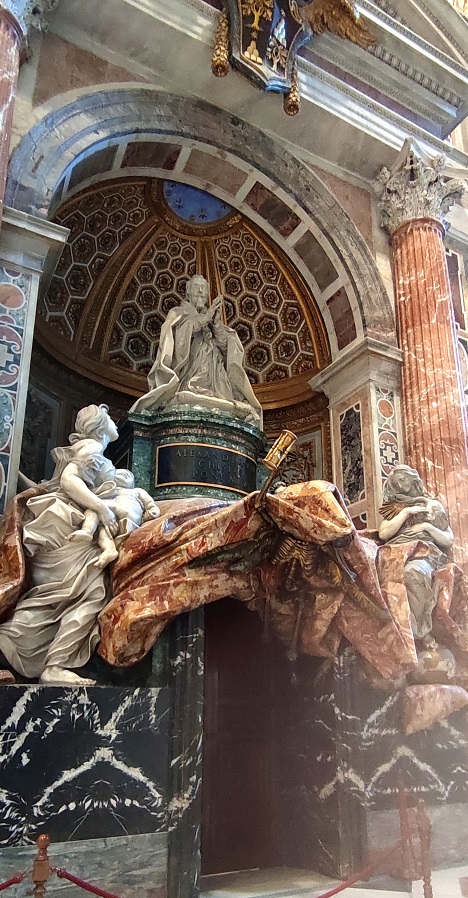
On the other hand, the tomb of Alexander VII, located in a niche in the side nave, establishes a valuable relationship between architecture and sculpture, by including a door to the old sacristy, a new meaning was given to the funerary monument. It is like a portal to death itself. The Pope is sitting on the throne, alive, which symbolizes his victory over death, surrounded by four virtues: Prudence, Justice, Truth and Charity.
Likewise, the construction plans had varied considerably throughout its realization. According to Bramante’s original plan, which was never carried out, Saint Peter’s Basilica would have a Greek cross plan, covered by barrel vaults and a powerful dome on a transept on a drum. Finally, it was Sangallo who became the author of the Basilica. He proposed a Latin cross plan, capable of accommodating a greater number of faithful, with a majestic head covered by a dome on a double drum. Michelangelo took charge of project after Sangallo’s death, and he went back to Bramante’s idea of the majestic dome over the transept that became the great protagonist of the Basilica. Maderno completed St. Peter’s Basilica by adapting Michelangelo’s Greek cross plan back to a Latin cross, which offered more space for faithful pilgrims, although the view of the dome over the square was lost.
SAINT PATER’S SQUARE
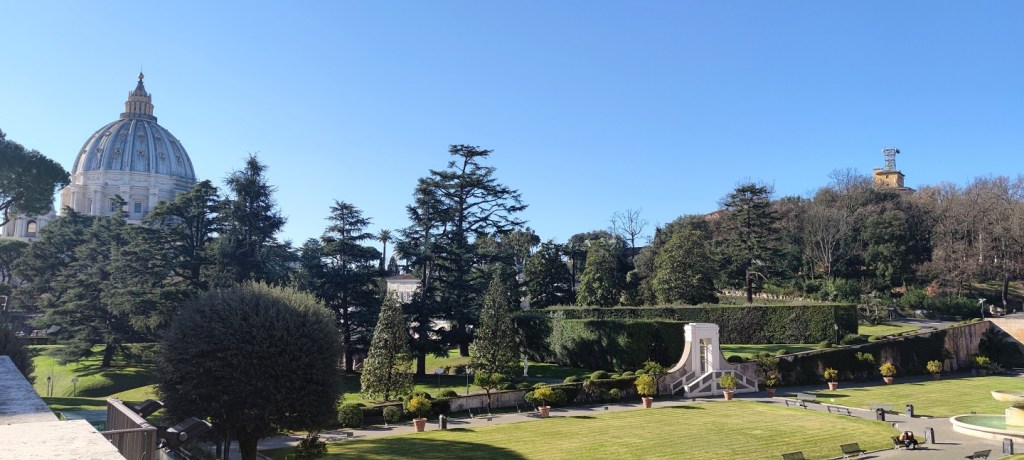
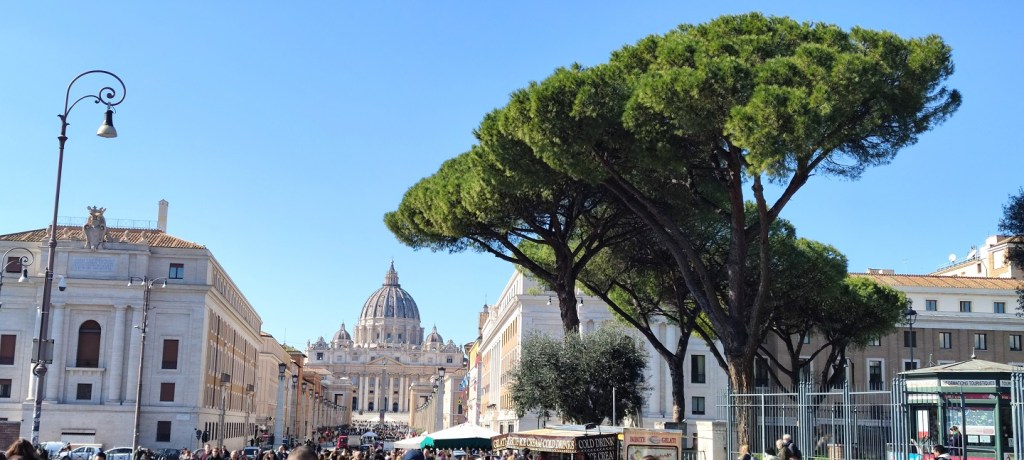
Leaving the Basilica we find the Saint Peter’s Square. This space that combines a trapezoidal plan with an elliptical space and is surrounded by a large colonnade, which was also the work of the great Bernini, Baroque architect and sculptor. The Square is a kind of allegory, the great colonnade is like the open arms of the Church to welcome its faithful.
VATICAN MUSEUMS
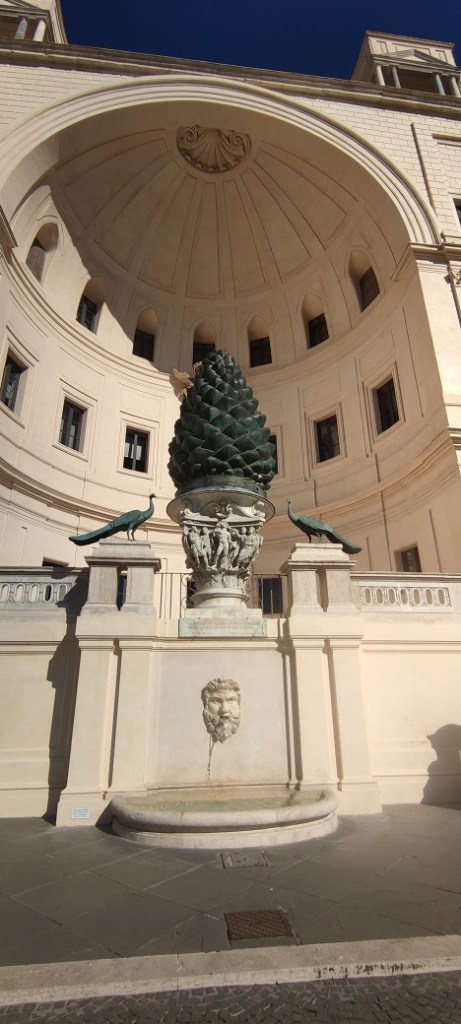
Without a doubt you should not miss the Vatican Museums. The visit is long, since it requires at least four hours if you want to know the different museums and galleries that are part of the complex. Its origin is due to the donation of Pope Julius II in 1503 from his private collection in order to decorate the Courtyard of the Belvedere Palace. It is a great museum with different rooms that hide the most fascinating artistic treasures of the History of Art.
PAINTING GALLERY: made up of 18 rooms in which you will have the opportunity to discover the works of great artists since medieval times, such as:
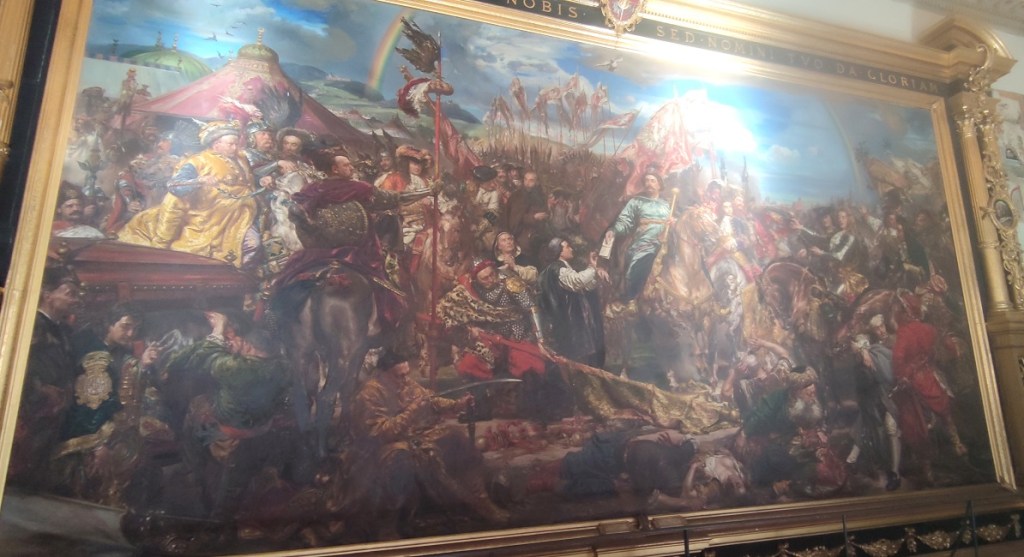
–Giotto was a true revolutionary. He anticipated the figures of the Renaissance, and signed most of his works, vindicating the importance of the painting. Likewise, he inaugurated the plastic sense of painting, since his figures were arranged with their backs to predominate the mass of solid blocks, they were wrapped in clothing and showed a tendency to attract attention to the dramatic moment. His painting is full of strength and dynamism.
–Fra Angelico attempted to integrate modern culture with Christian tradition. His painting was made for educational purposes to save the humanity. His style was direct, simple and conservative, although his figures were also solid and three-dimensional, but with a Byzantine concept of beauty.
–Leonardo da Vinci was known as a great master of History of Art, who also highlighted the field of science, botany, geology and aeronautics. A true genius.
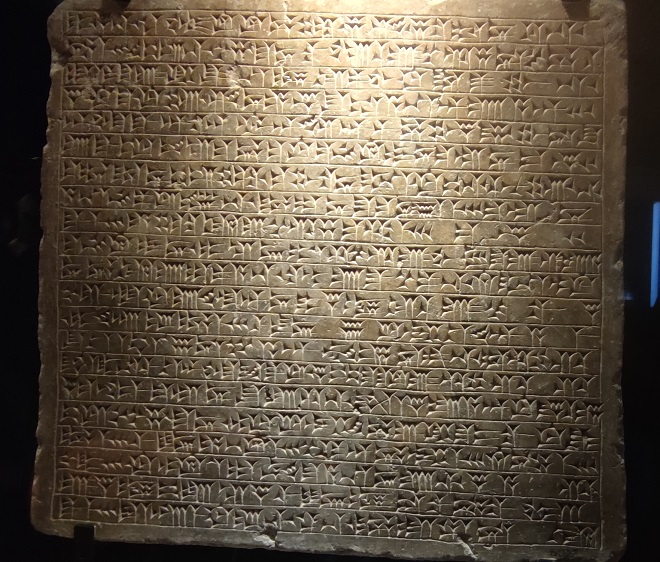
EGYPTIAN MUSEUM: it is made up of nine rooms, of which the last three are dedicated to Art from the Near East. You will be able to contemplate the epigraphic tablets, funerary remains and the sculptures of the Antiquity of the area of Egypt and the Near East.
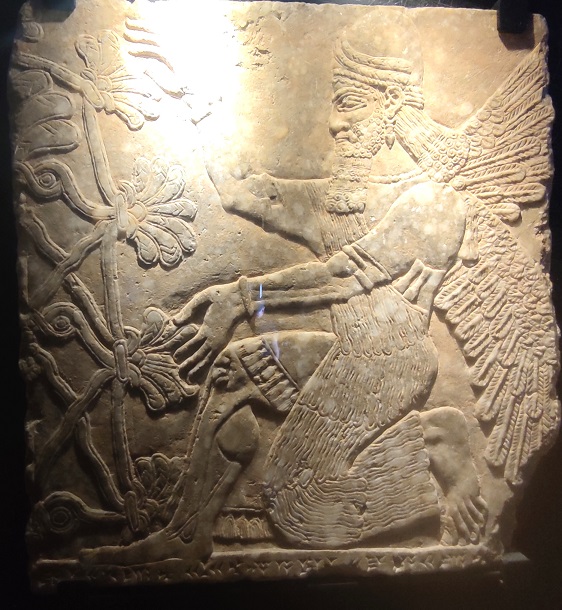
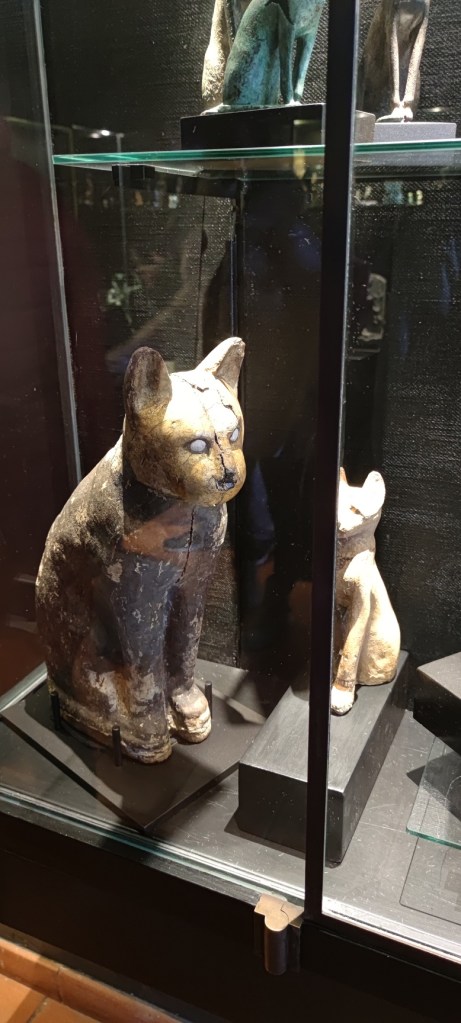
GREGORIAN ETRUSCAN MUSEUM: in which the works of the Etruscan Culture stand out. The Culture was located in the area of Tuscany and called by Greeks Tirenos. Etruria was made up of twelve federative cities, united by strictly religious ties.
CHIARRAMONTI MUSEUM: this museum took its name from Pope Pio VII Chiaramonti. In it you will have the opportunity to contemplate the most outstanding works of classical antiquity, such as:
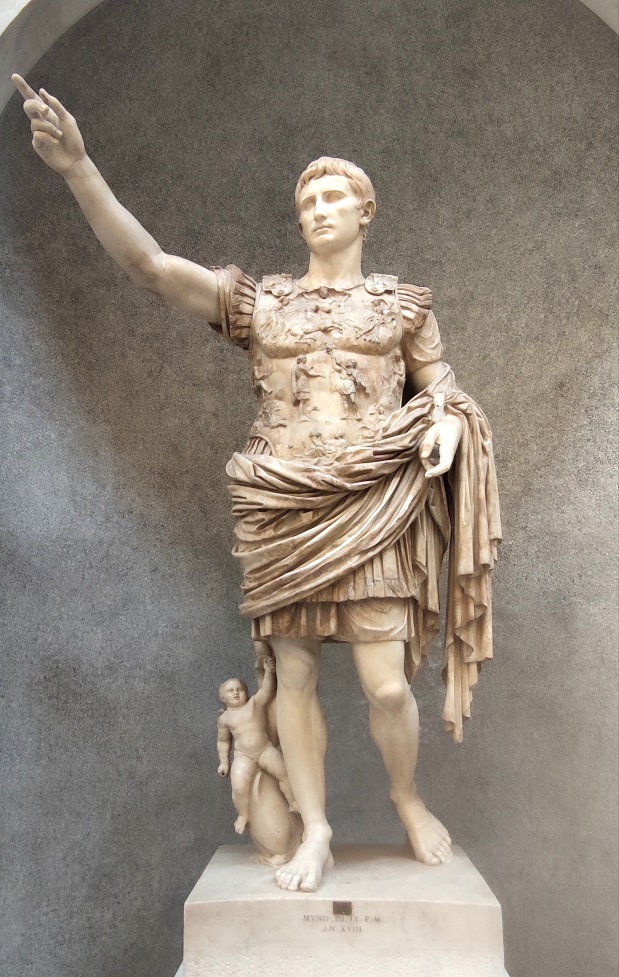
–Augustus of Prima Porta: it is the full-length portrait of the first Roman emperor. It is a bartered sculpture, since Emperor Augustus wears a military suit. In his armor in the center there is the god of war, Mars, accompanied by the Capitoline Wolf. He receives the imperial eagles snatched in battles. On the flanks appear the personifications of Hispania and Gaul surrendered to Rome. Above Aurora guides a horse cart, which is preceded by the Morning Star and the Dew, all under the vault of heaven. Below, Apollo on a griffin and Diana on a deer, and further down the Earth with the Horn of Plenty, which means the allegory of the Augustinian Peace. At the feet of Augustus there is small Eros, symbol of Venus, the goddess from whom the Augustus dynasty came.
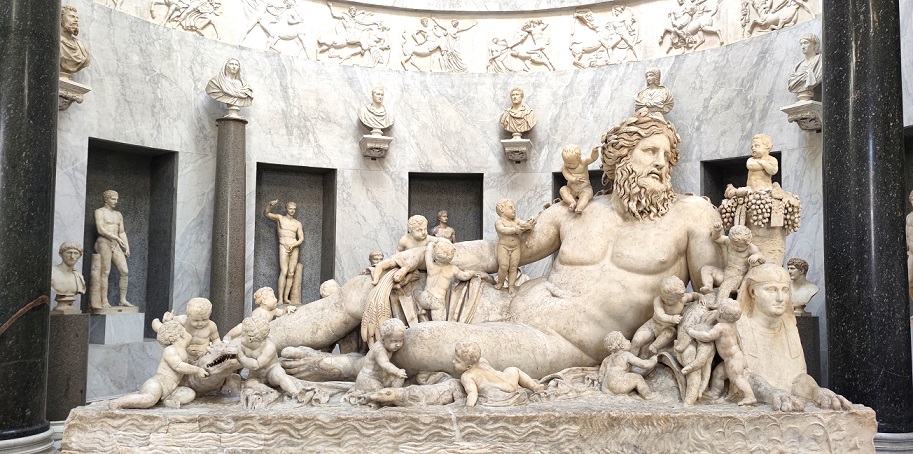
–Allegory of Nile: it is a sculpture that represents an old and powerful man who carries the symbols of land that he fertilizes. The number of children that accompanies him represents the meters that the river can rise. In addition, there is a sphinx as a symbol that the elements of different cultures are merged.
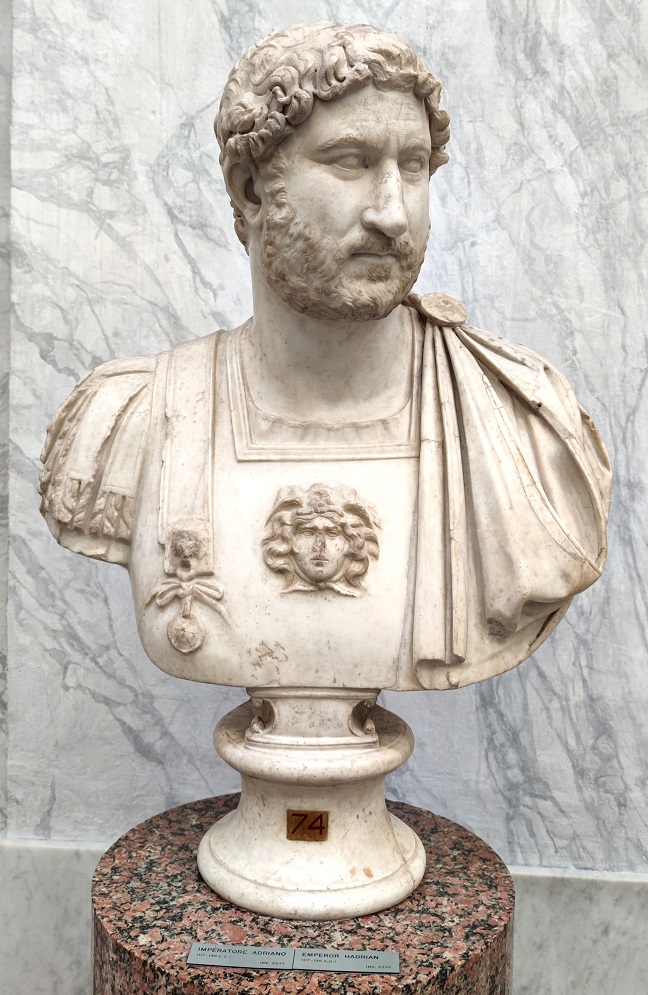
–The bust of Hadrian: in which the emperor appears in military dress, and in the center of his breastplate it is possible to contemplate the head of Medusa, whose name means “guardian”. According to Mythology, her gaze was capable of petrifying people, however, she was finally beheaded by Perseus, who offered her head to the goddess Athena.
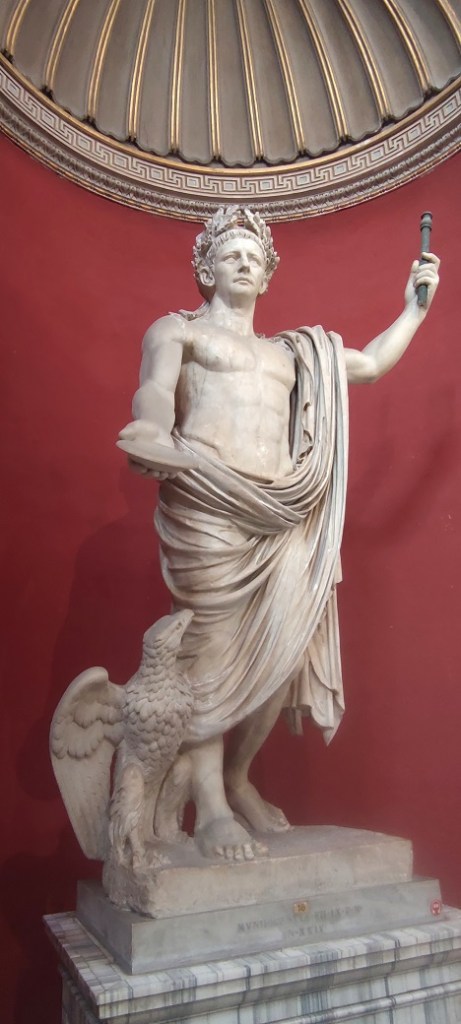
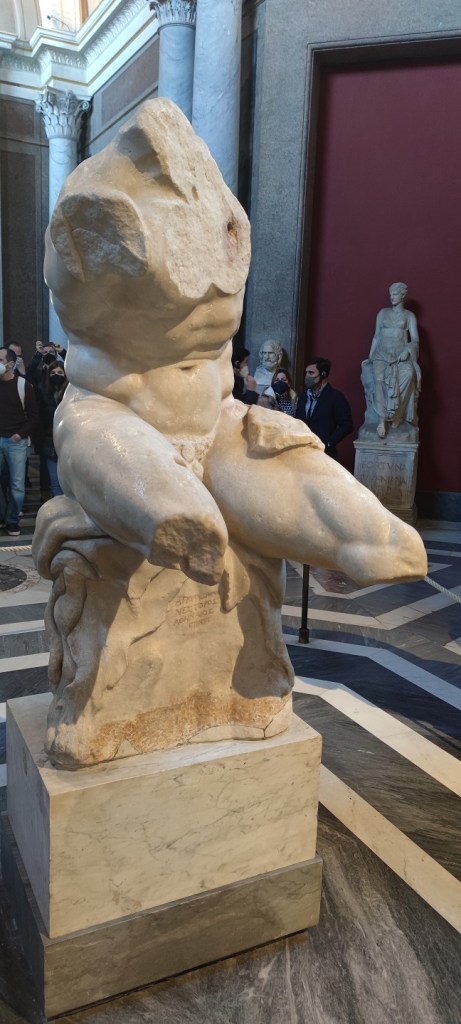
PIO-CLEMENTINO MUSEUM: created by Clement XIV and Pius VI. There is possible to contemplate different copies of classical sculptures:
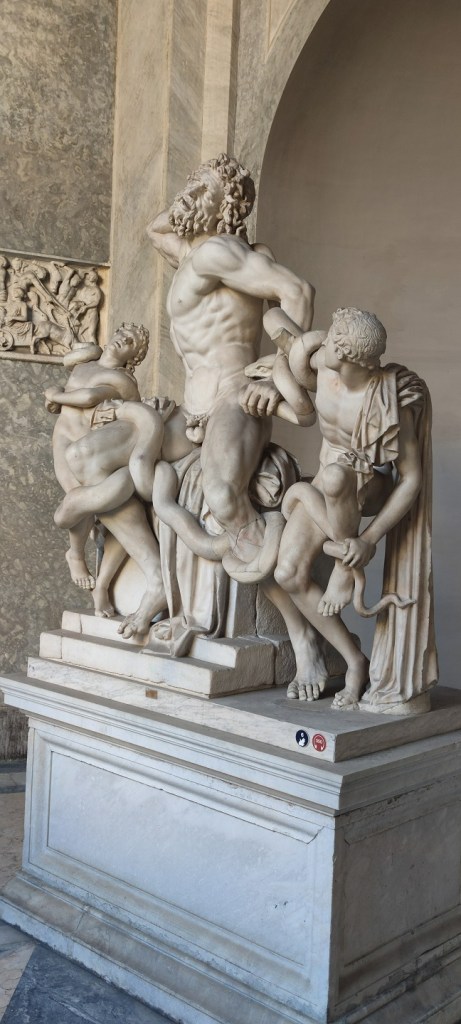
–Laconte: the sculpture was discovered in 1506 and bought by Pope Julius II. It represents a story of Virgil, in which Laconte, a priest of Apollo, was punished for not making the proper sacrifice to the god. Apollo in revenge conspired with Poseidon, who sent the snakes to kill Laconte and his two sons. It is an almost Baroque work, which expresses great suffering, pain and mental torture of the father, who contemplates that his children are dying.
–Apolo Belvedere: presents a stylized and subtle body with an elegant pose. It has a contrapposto posture, that is, one leg serves as support, while the other is slightly flexed giving movement to the sculpture. It is thought that he held in his lacking left hand a bow with which he intended to kill the Python serpent that was blocking access to the sanctuary of Delphi.
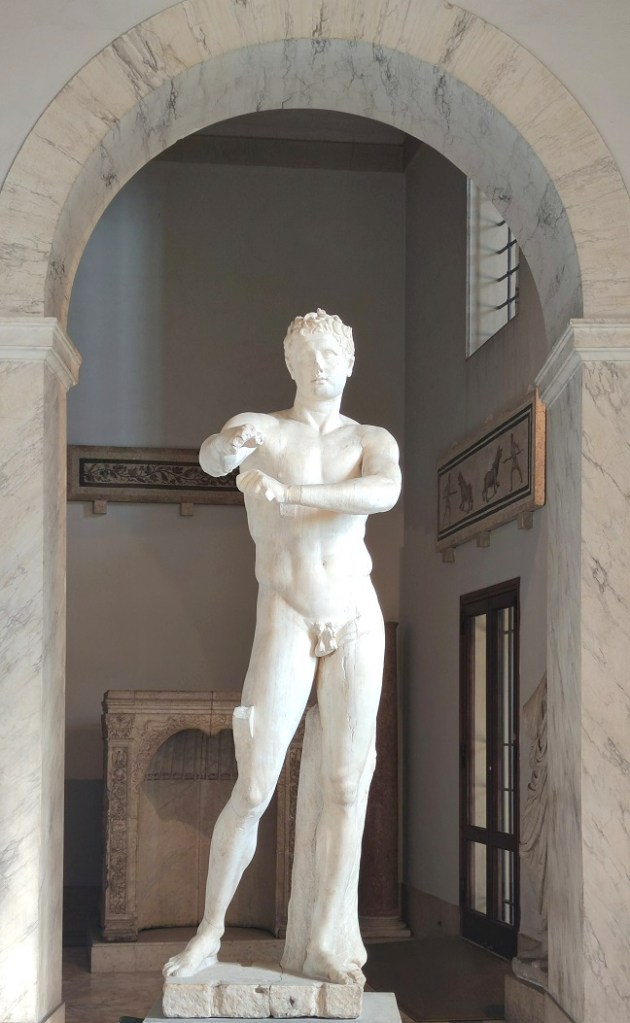
–Apoxyomenos: made by the sculptor Lysippus, a great Greek naturalist. It is about an athlete in the attitude of wiping the dust off his skin. The sculpture is idealized and represents the canon of 8 heads, that is, the total height of the body is equal to eight times the size of its head. The position of the right arm is in a strong foreshortening and the left one cuts the right arm at a right angle and interposes itself between the spectator and the plane of the figure.
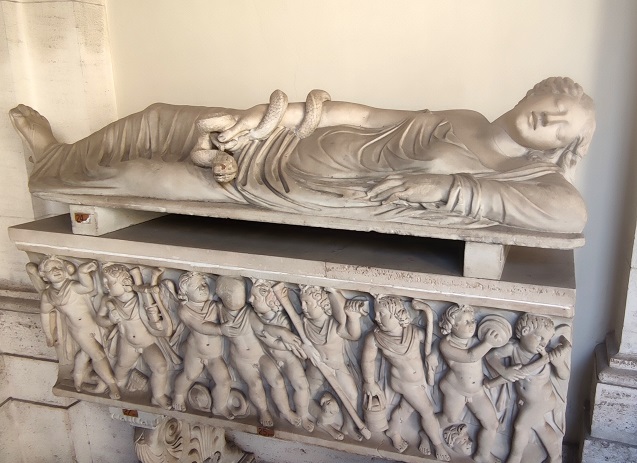
LAPIDARY GALLERY: it is an interesting display of more than 3,000 pieces of sarcophagi.
GALLERY OF THE TAPESTRIES: with numerous tapestries in which the theme of the Massacre of the Holy Innocents stands out.
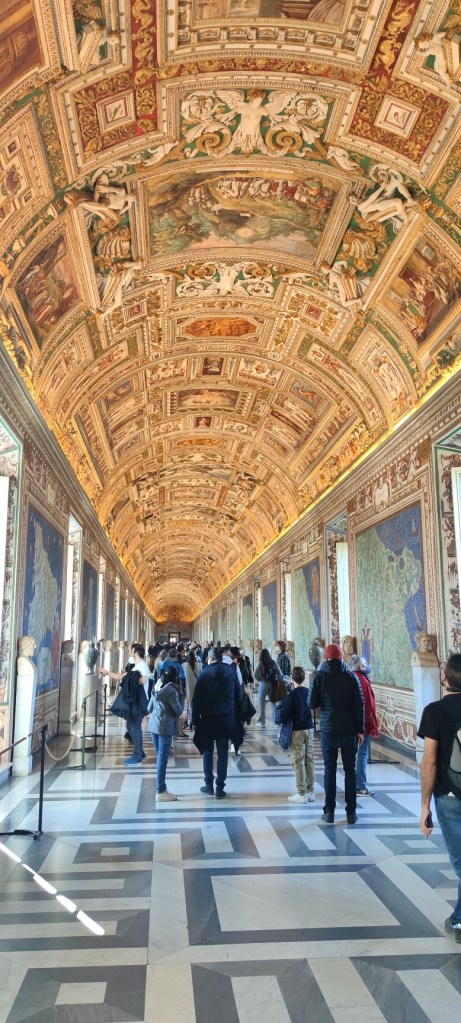
GALLERY OF CARTOGRAPHIC MAPS: contains 40 frescoes of maps of Italy and possessions of the Holy See.
SISTINE CHAPEL: few will not know this room, restored at the orders of Pope Sixtus IV, in which you can contemplate the great work of Michelangelo, called The Last Judgment. I am sorry to tell you that it is not possible to photograph it. Although I will explain the paintings that are located in it.
–Vault of the Sistine Chapel was commissioned from the artist by Pope Julius II and completed in just four years. The four pendentives narrate the salvation of the Jewish people from different threats: Judith and Holofernes, David and Goliath, the bronze serpent and Haman’s punishment. In the spandrels and lunettes there are the ancestors of Christ, painted in order according to the Gospel of Saint Matthew. To separate the various scenes, false pilasters and fajon arches are painted imitating marble, and on the start of each arch there are the ignudi, sculptural and nude youths in a variety of postures. In the central rectangles are the themes of Genesis from the Old Testament: separation of light and darkness, creation of the stars, separation of waters, creation of Adam, creation of Eve, original sin, Noah’s sacrifice, Flood, drunkenness of Noah. As for the technique used, it is a fresco, where the human, sculptural figure stands out, which demonstrate the artist’s great knowledge of human anatomy.
–Last Judgment was commissioned by Clement VII in 1533. This enormous fresco includes almost 4000 figures, of which only 50 could be identified. The upper celestial part is presided over by Christ who acts as a judge, appears naked and foreshortened, and he raises his right hand to dispense Justice. The Virgin accompanies him in a bright blue and red tunic (colors of the Virgin Mother). Both figures are surrounded by a group of saints, apostles, martyrs, blessed, confessors. In the upper lunettes, angels carry symbols of the Passion of Christ. At the feet of the son of God appear Saint Lawrence and Saint Bartholomew, the second one with features of the artist himself. It is also possible to contemplate two groups of the judges who ascend to Heaven and the condemned who descend to Hell, where Charon awaits them in his boat to take them before the infernal judge Minos.
THE RAPHAEL ROOMS: these are four rooms with magnificent frescoes: Constantine Room, Heliodorus Room, Signatura Room and Borgo Fire Room. They were created between 1504 and 1508. Some of the most outstanding representations are:
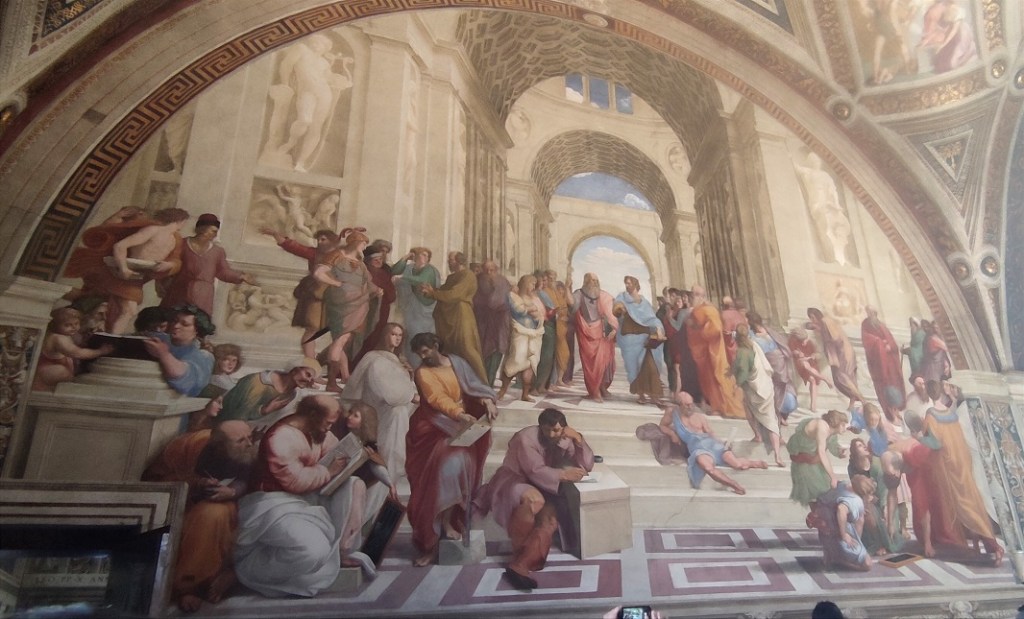
-School of Athens (in the Signature Room) which, together with other works in this room, sought to reflect the three highest categories of the human spirit: Truth, Goodness and Beauty. In the center of the painting the Greek philosophers are distinguished, Plato with the features of the old man pointing to the Sky, and Aristotle who points to the Ground, it is about the contrast of their ideas: idealism against materialism. The school is full of other wise men with the faces of artists from Raphael’s time. For example, Heraclitus, seated and pensive, rests his head on his arm and presents the features of Michelangelo. The mathematician Euclid with features of Bramante rests the compass on a tablet, Pythagoras is writing in a book, Averroes wears a white turban, Zoroaster is represented with the celestial sphere in his hand. The disposition of the wise men is the representation of the liberal arts: grammar, arithmetic, music, geometry, astronomy, rhetoric and dialectics. Furthermore, by granting the factions of contemporary artists to philosophers, Raphael elevates the plastic arts to a higher category.
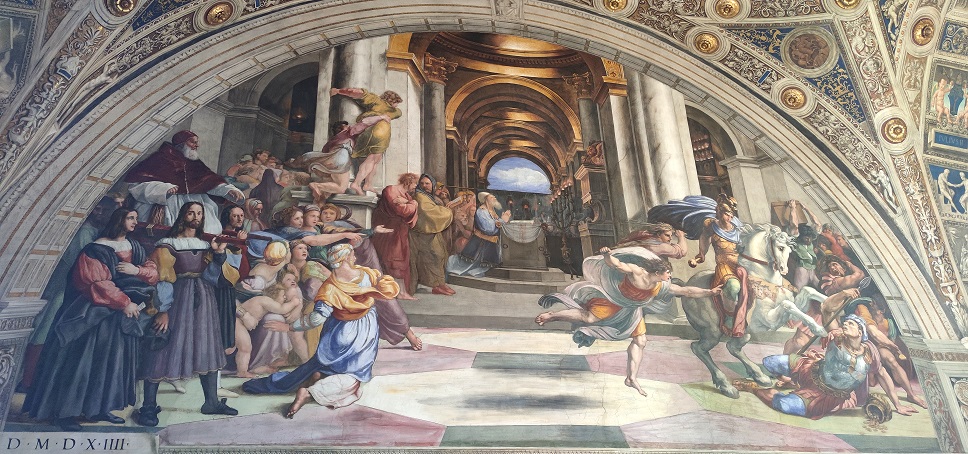
-The expulsion of Heliodorus from the second room reproduces an episode in which General Heliodorus is attacked by supernatural forces, when by order of King Antiochus IV he intends to take the Treasure of Jerusalem, he is represented in the foreground. In the background, the priest Onís prays, thanking the divine help. The anachronistic image of Julius II stands out, he is seated on his throne and accompanied by the court, observing the action from one side.
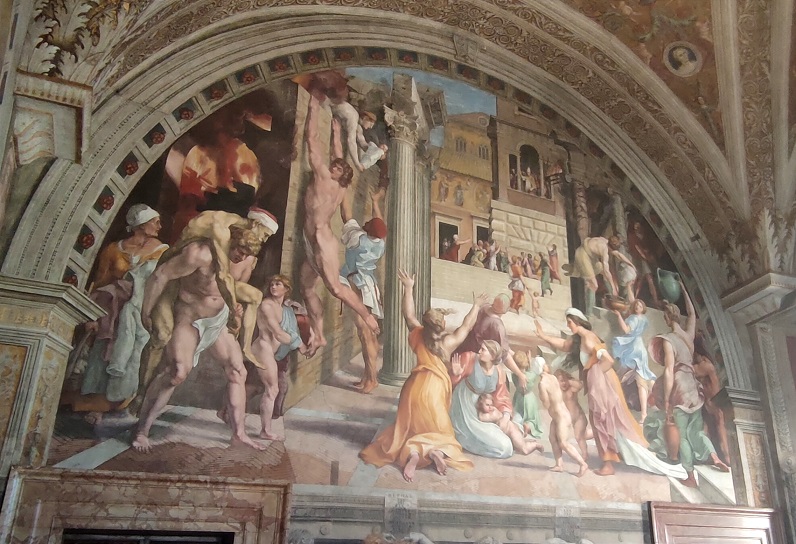
–The Fire of Borgo in the third room recounts an episode from Liber pontificalis according to which Leo IV imparted a miraculous blessing miraculously extinguishing the fire of 847. In the first term thre are the characters directly affected by the fire, we observe several women who gather frightened children and try to protect them from what is happening. On both sides, citizens try to put out the fire, carrying water in vessels of great archaeological interest. In the background, the characters seek the help of the Pope who blesses them from the Basilica.
BORGIA APARTMENTS AND THE COLLECTION OF CONTEMPORARY ART: they were used as homes for Pope Alexander VI, currently the works of 20th century artists are located in them, among which we can contemplate:
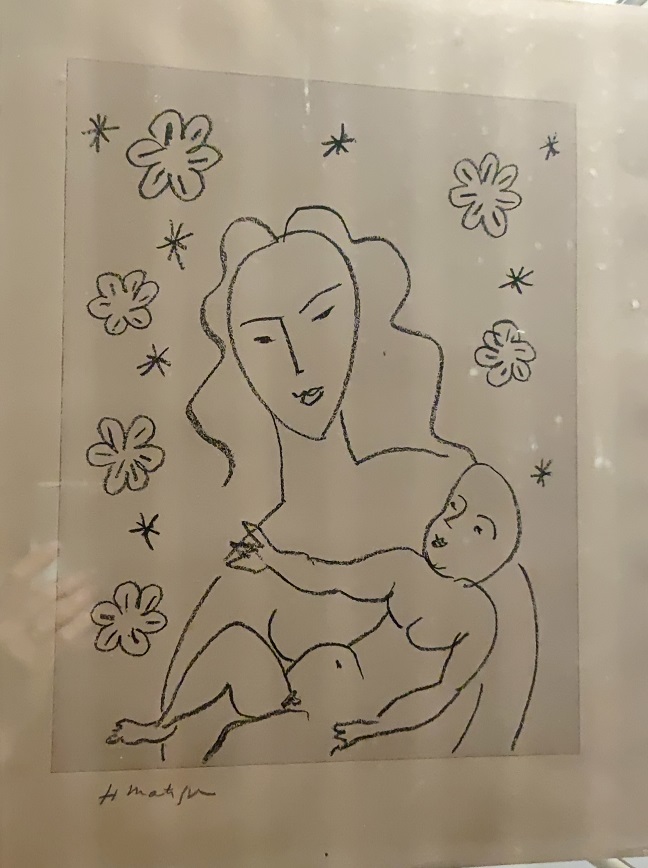
–Matisse: who participated in the Autumn Salon in 1905 in an exhibition of works characterized by chromatic violence, which gave them the wild look, the favue. His style was independent and versatile in terms of the use of techniques and means of expression. The Virgin with the Child is part of a study carried out by Matisse in his last years. It is a charcoal sketch in where the iconography is reduced to the essential strokes, in order to go beyond beauty to the essence of love.
–Marc Chagall: the wonderful and suggestive symbolist painting of the Russian-French painter is a portrait of the painter next to the Crucified Christ. It is a schematic painting with the figure of Christ on the cross in the center of the scene, which unites the act of sacrifice of the son of God with the painter’s own action. Figures are almost supernatural and there is also Jewish symbology (the chandelier), they complete this suggestive religious work.
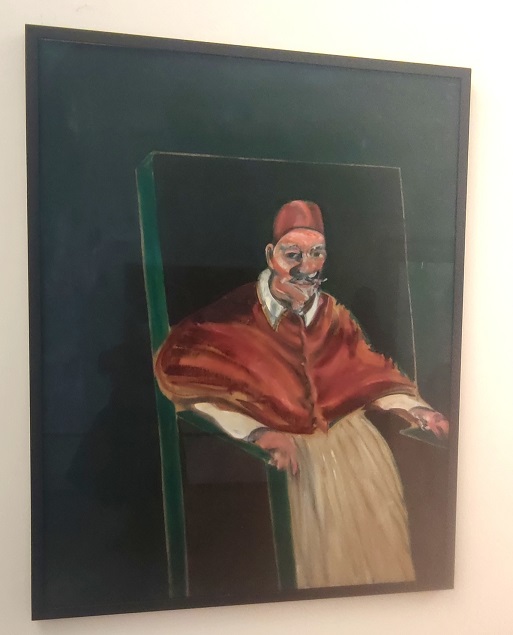
–Francis Bacon: an Irish painter with an idiosyncratic figurative style, characterized by the use of pictorial deformation and great ambiguity in the intentional plane. Pope Vlezaquez II demonstrates his obsession with Diego Velázquez’s painting of Pope Innocent XII that is in the Doria Pamphili Museum in Rome.
-Van Gogh, an artist with a strong temperament and a difficult character in his work Pietá, represents the figures distorted in sinuous strokes illuminated by bright and vivid colors that had never been used to deal with themes of pain. However, to what might be expected, the colors do not detract from the feeling or the intensity of the work.
–Gerardo Dottori: the futurist, from an avant-garde movement that posed a militant attitude in favor of the modernism. His work the Crucification is a deep and colorful painting, in which stands out the poetry of the composition, the cross and the sinuous figures of the female bodies at its base chromatically merge with the crucified Christ.
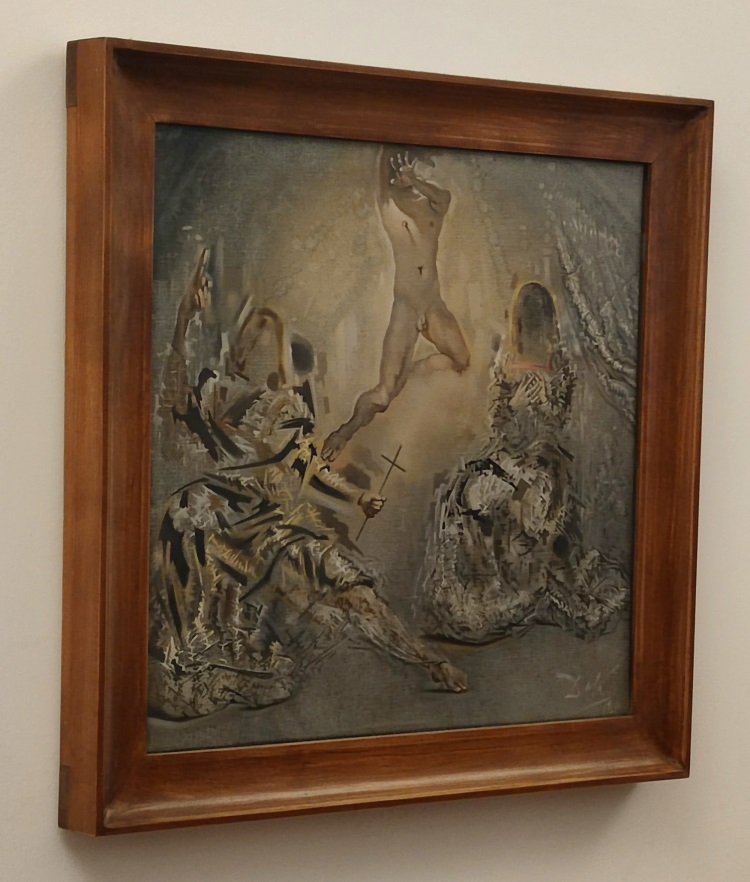
MISSIONARY ETHNOLOGICAL MUSEUM: represents the works of Art from the different areas where the distinct missions of the world are located.
PHILATELIC AND NUMISMATIC MUSEUM: it represents the collection of stamps and coins of the Vatican City.
TIPS:
- The opening hours of St. Peter’s Basilica are from 7:00 a.m. to 7:00 p.m. in summer and from 7:00 a.m. to 6:30 p.m. in winter. Admission is free. It is highly recommend arriving early in order to avoid the crowds.
- It is recommended to book the tickets to the Vatican Museums in advance, as they will allow you to avoid endless queues that can be created at the doors of the museum. Admission costs €17, but if you order the tickets in advance the price is €21.
- It is important to come with appropriate clothing, it is a religious place.
 all about eve`s journeys