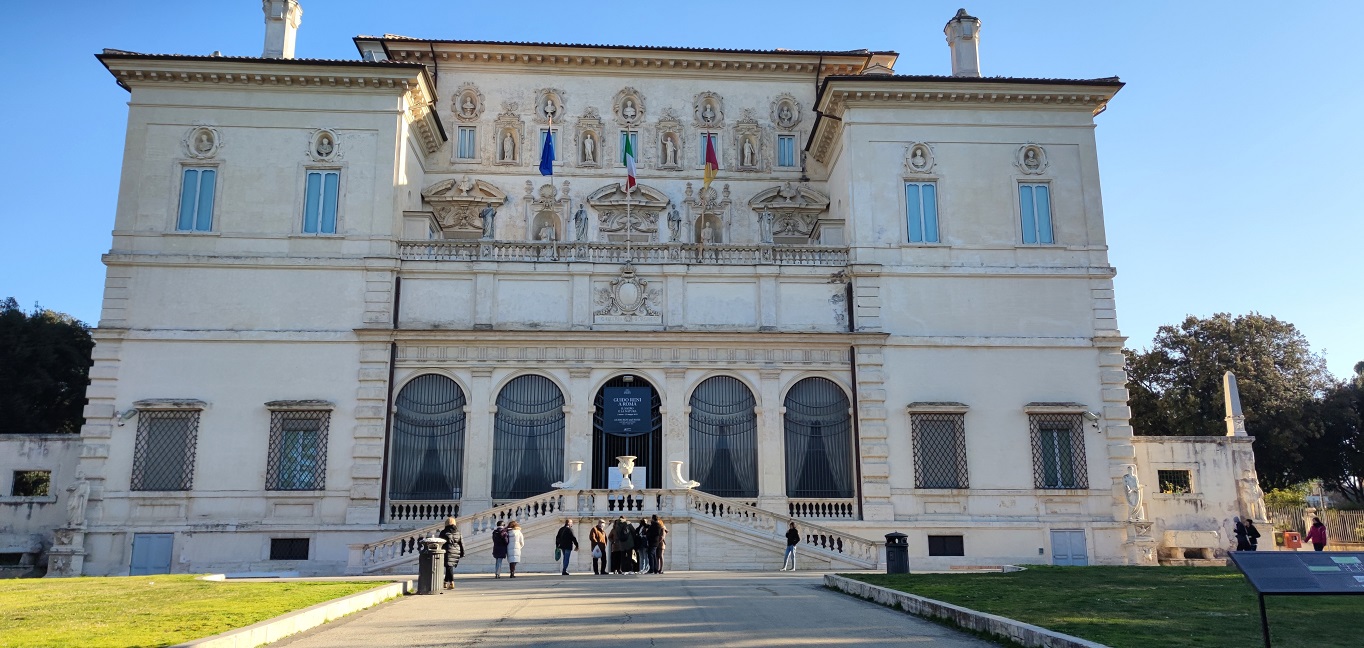
Undoubtedly, the most fascinating thing about the Eternal City, Rome, founded in 751 BC, according to an ancient legend about the twin brothers Romulus and Remus, is the fact that practically everywhere in this imperial capital hides true jewels of art that evoke past times. In this article, I will take you to one of the most interesting museums in the Italian capital full of extraordinary beautiful works of Art. The Borghesse Gallery, it’s a must-see on your tour of the city, since it houses the most important sculptural and pictorial works from the collection of Cardinal Borghesse, nephew of Pope Paul V. And I must say that the works of art are truly magnificent.
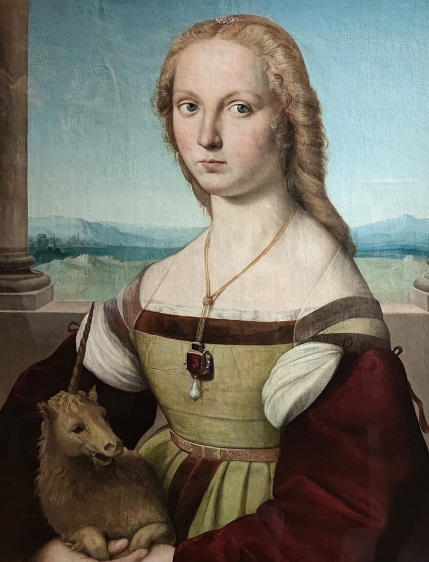
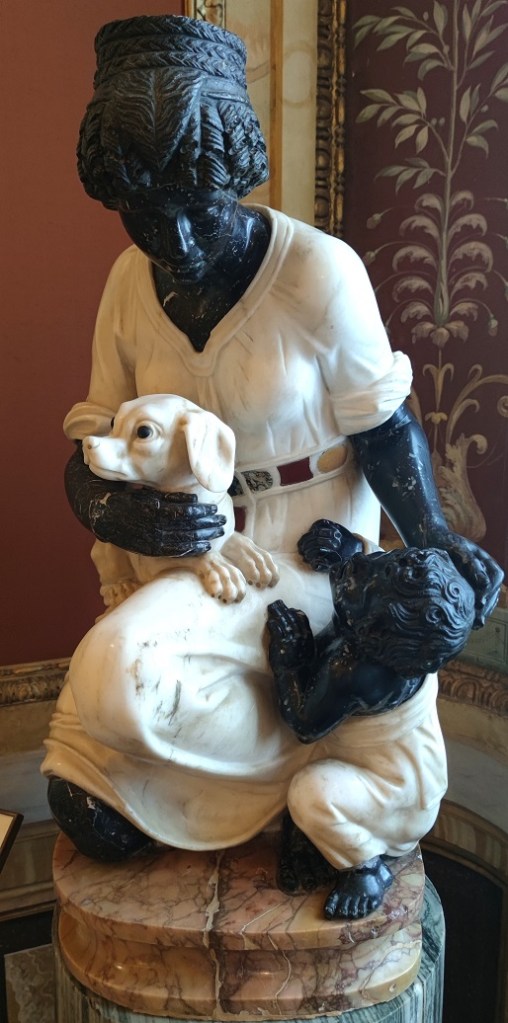
THE BUILDING
The building was built in 1612 and designed by Flaminio Poncio, as a suburban villa, although today it is completely incorporated into the city, surrounded by beautiful gardens. Since 1902 the Borghesse family sold the house to the Italian State because of high maintenance costs, and since then the public has been allowed to enter. Although due to its small size and the restrictions due to COVID, it is necessary to make a previous reservation.
THE ART IN THE GALLERY
BERNINI
One of the most outstanding artists of the Italian Baroque was the great architect and sculptor Bernini, who knew how to create magic with marble, molding it as if it were soft plasticine instead of hard rock. Among his works in the museum we can find:
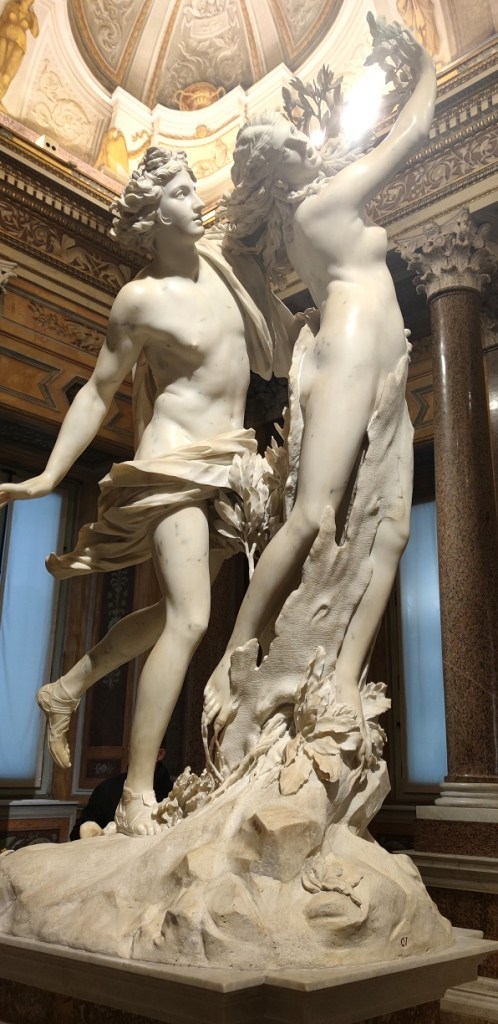
–Apollo and Daphne is a sculpture that represents an episode of Ovid’s Metamorphosis. In it, the god Apollo, passionate about love, chased the nymph Daphne, who fled in torment, begging to be transformed into a laurel so that she could avoid Apollo’s love. From then the laurel became the symbol of the god Apollo. It is an open composition to be contemplated from different points of view. It is asymmetrical with curved and spiral lines, of great dynamism and vigor. The nymph appears at a transitory moment in which she becomes the tree, a very common feature in the Baroque era that evokes the fragility of time.
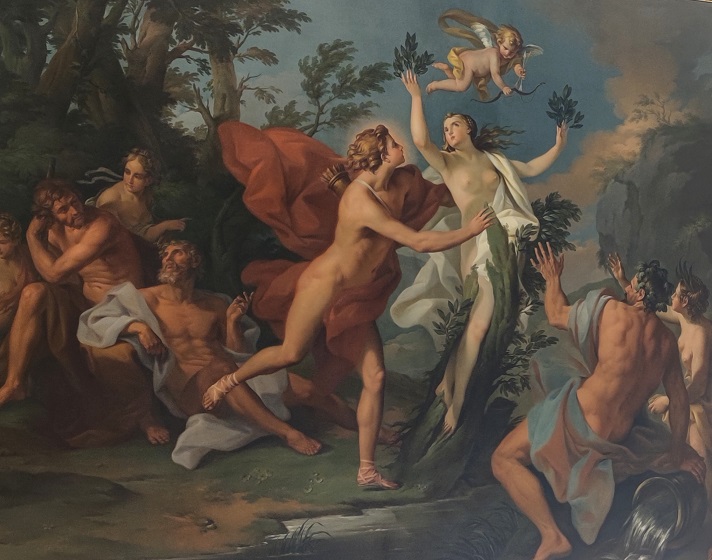
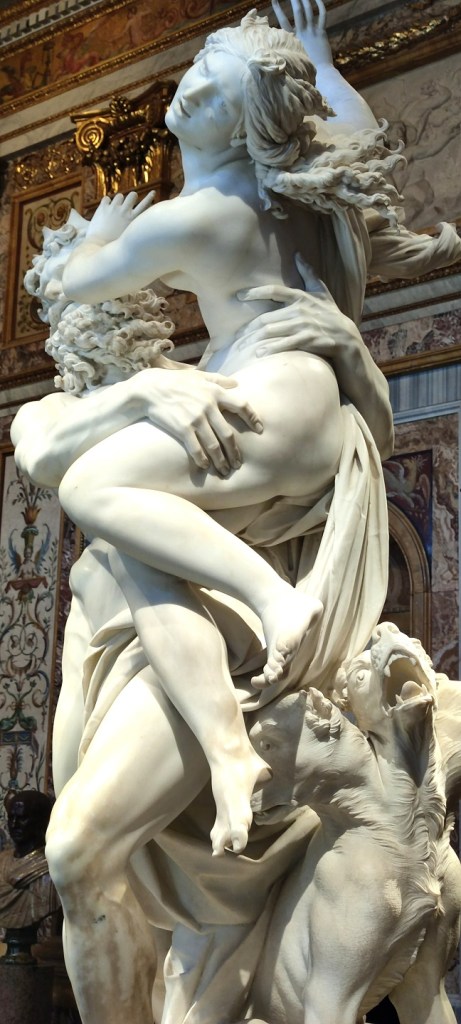
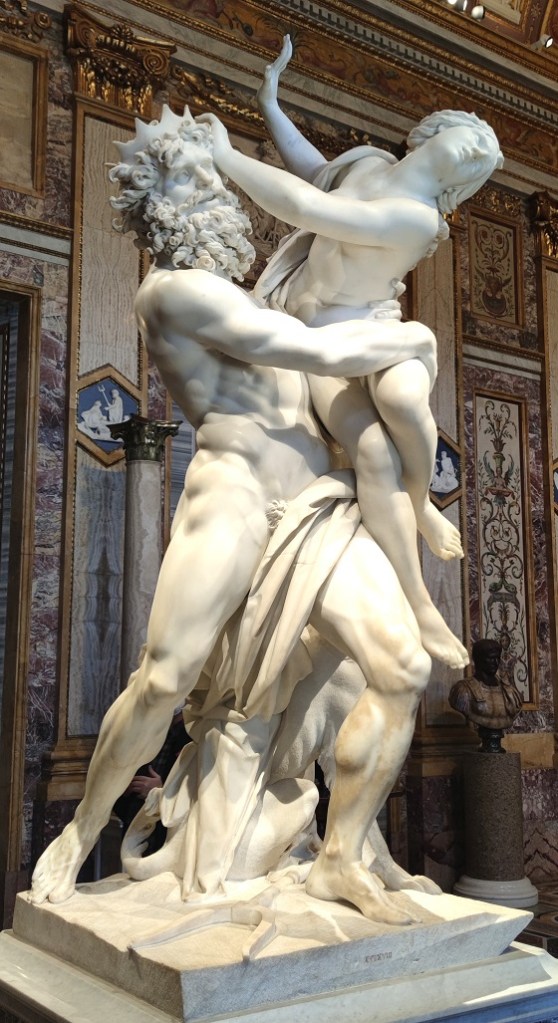
–Pulto and Prosperina is another episode of Ovid’s Metamorphoses, which explains the existence of the 4 seasons. In the spring and summer, when Proserpina returns to her mother, Ceres, the goddess of the Earth, life returns to nature. Whereas when Prosperina returns to the underworld with the god Pluto in autumn and winter, the world loses its colors and joy due to Ceres’ anguish. This work stands out above all for the texture of the marble, a hard material that here seems to be made of soft, smooth meat instead of stone. What great genius of the artist!
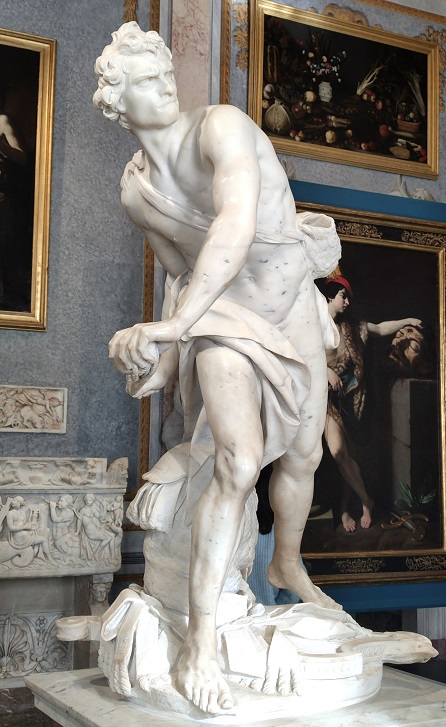
– David was one of the Old Testament characters who defeated the giant Goliath by throwing a stone with a slingshot. The body of the figure is shown at the moment when it is about to throw the stone, both feet are resting on the ground and the body is half turned. The figure is in tension; movement and power are implicit. His face shows concentration and effort, he looks very human. The impetuous gesture of the work is accentuated by the serpentine movement, with which the author demonstrates his. The representation of movement is characteristic in the Baroque.
CARAVAGGIO
On the other hand, one of the most outstanding Italian painters, whose works are located in the museum, is Caravaggio. He is the creator of tenebrism, a pictorial technique that consists of painting in dark tones, only illuminating some parts of the work through the use of artificial light, generally yellow. Tenebrism was a technique widely used in the Baroque by different artists, among others, by the magnificent Spanish painter Diego de Velázquez, in his first artistic stage.
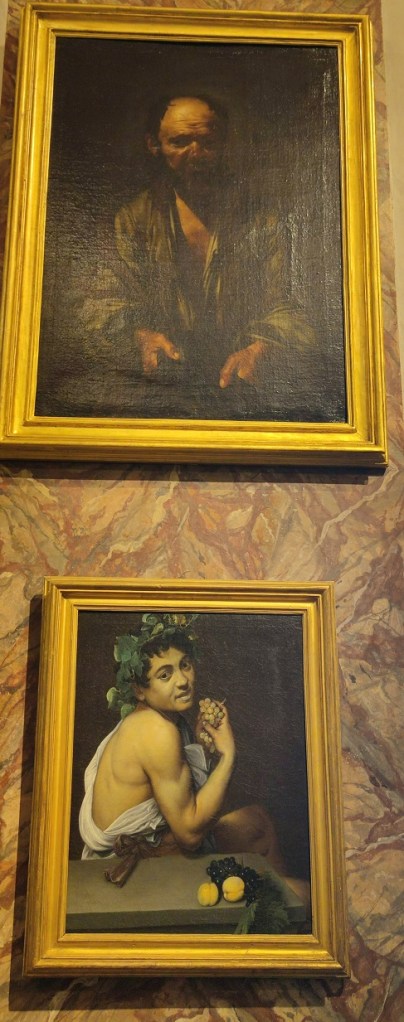
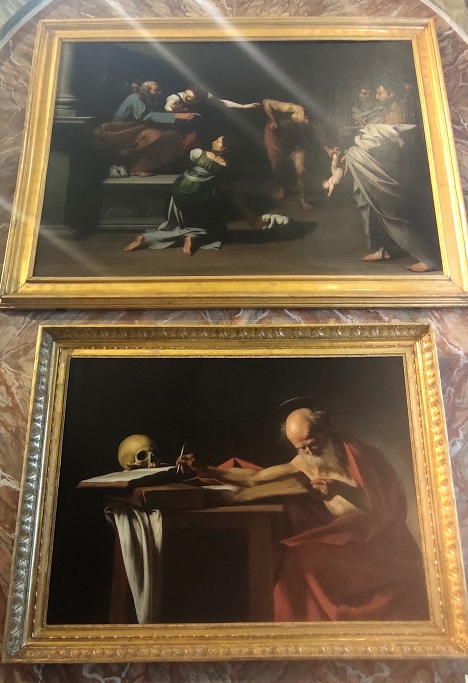
– Sick Bacchus represents the young god of wine, semi-naked and with a muscular and attractive complexion, although his skin is somewhat yellowish and his lips discolored. It is possible that the artist portrays himself in this work while ill and admitted to a hospital. The pose, Bacchus sitting on the side, and the gaze of the god convey a sense of nostalgia and shyness.
– David with the head of Goliath is the last work of Caravaggio. In fact, the melancholy that emanates from the work fits the dark thoughts of the artist in his last years. It is a work that the painter relied on to win the forgiveness and help of Cardinal Borghesse to return to Rome, after years of exile because of a crime he committed in the Eternal City. The painting has an element of disgust with himself, Goliath, enemy of God, is condemned to eternal night.
– Saint Jerome, this Saint was represented on numerous occasions by the artists of the Counter-Reformation, because he spread the cult of the Virgin Mary, something that the Protestants disdained and that was a sign of Catholicism. Here he is depicted in a much more austere setting, with his books, studying, as a scholar. We must remember that Saint Jerome translated the Bible into Latin, a version known as the Vulgate. The skull that appears next to the Saint is the symbol of memento mori, a reminder of the transience of life and the inexorable end of everything earthly.
TITIAN
Titian stood out in Venice, since he handled the use of color in a way that Michelangelo dominated drawing, creating grandiose compositions, full of color and diversity of gestures. Through air, light and color he unified scenes and returned to Antiquity to paint female nudes.
– Sacred Love and Profane Love, this title was put in the 17TH century, since previously it was called Beauty without ornamentation and Beauty adorned. In the painting two women appear seated on a fountain, but it is only one model, Violante, the artist’s young love. Among them, Cupid is playing with the water of the fountain that symbolizes life. One of the women wears a magnificent silk dress, while the other is nude, covered only by a white loin cloth and a red tunic that barely covers her left arm. Let us remember that female nudity until the end of the 19TH century was intended for mythological goddesses and represented virtues and idealism.
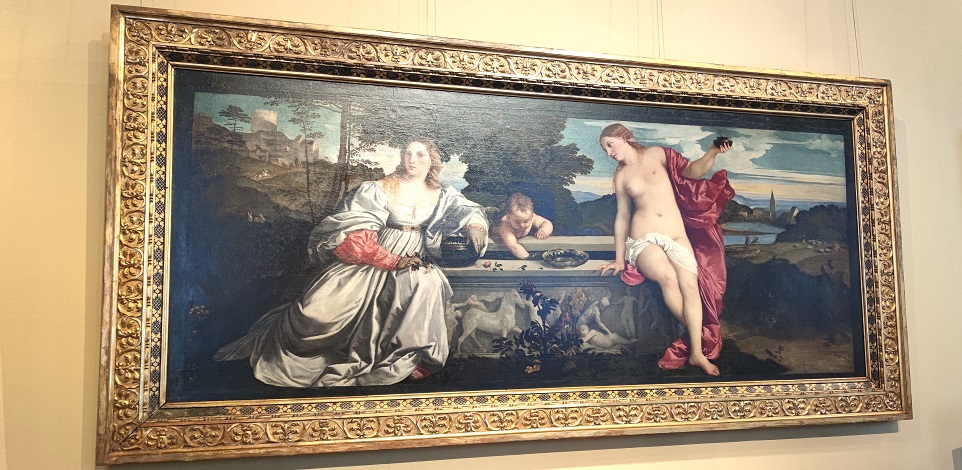
The dressed young woman carrying a pot of gold represents materialism, love for the ephemeral and empty. The naked young woman with an oil lamp in her hand represents the ideal, spiritual and eternal. Despite the contrasts, there is a relationship between the two women, both through Cupid and the gaze that the naked young woman directs at the other. Likewise, the sarcophagus-fountain is a contrast between life and death, on the reliefs that represent several standing characters, who symbolize freedom, while the punishment of one man to another would be slavery. Finally, the landscape also joins this game, on the one hand, behind the dressed young woman there is a gloomy city, almost dead, while behind the other young woman a country landscape, made with a brighter palette and full of life.
CANOVA
Antonio Canova was an Italian neoclassicist painter, whose source of artistic inspiration was the classical period. He is considered one of the best European artists since Bernini. In the Gallery we can appreciate his work:
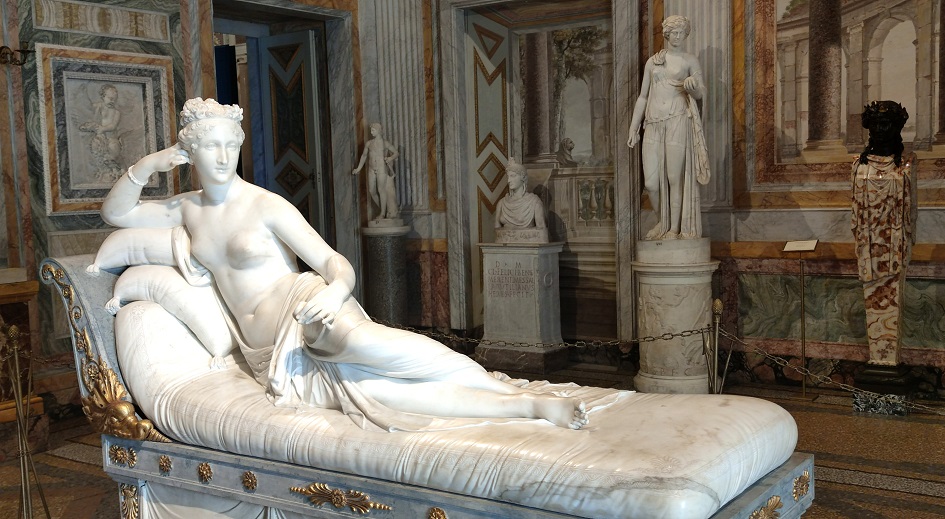
– Venus Victrix representing Polina Bonaparte, married to Camillo Borghese. The model posed nude. The sculpture was in another villa and arrived at the Gallery in 1838. It caused such a stir that it is said that there were queues at night to see the nude statue of Paolina Bonaparte and that the servants charged admission. Look at all the details: the folds in the sheet, the fingers and toes, the marks on the mattress from the model’s weight…etc. When Paolina was asked why she had posed nude, she replied that the room was hot. Although Canova said that she did nothing but complain when the temperature dropped and he had to stop to stir up the fire.
CORREGIO
Corregio was an Italian painter who developed work at the court of the Farnese family at the end of the second century of the Renaissance, Cinquecento.
– Danae is lying on a bed, while Eros undresses her under the gold rain coming from a cloud. At the foot of the bed there are two putti, little angels, checking if it’s really gold. It’s an erotic work. The painting represents the figure of Danae, daughter of Acrisio, king of Argos. An oracle predicted that Acrisius would be killed by Danae’s son, he had locked his daughter in a bronze tower so that she could not have children. However, according to the Roman poet Ovid, in his Metamorphoses, Zeus approached her in the form of a gold rain and made her the mother of Perseus.
TO END…HAVE A WALK
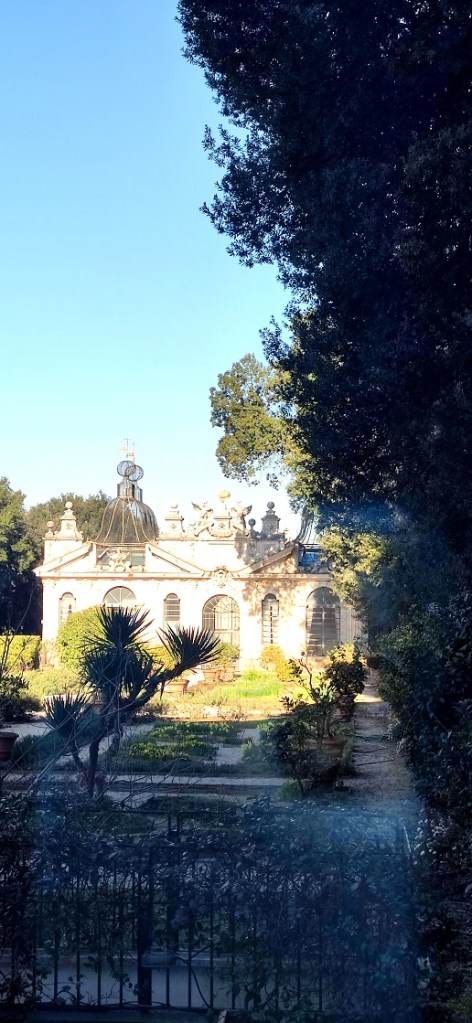
When you leave the Gallery, I recommend you get some fresh air by strolling through the magnificent and beautiful gardens that surround the building, formerly also possessions of the Borghesse family. The gardens hide numerous paths that will take you to other areas of interest near the Gallery, such as the Civic Museum of Zoology, the National Gallery of Modern Art, the Porta Piniciana, the Temple of Asclepius, etc. And from the Pincio Terrace you will have the opportunity to contemplate the Eternal City. The views, as always, are splendid.
TIPS:
- Book your tickets in advance for the Gallery. With RomaPass you have a discount on the price.
- To get there you can take the metro to Plaza de Popolo and from there walk to the Gallery through its fantastic gardens. It is a very pleasant route and it is not very long.
 all about eve`s journeys