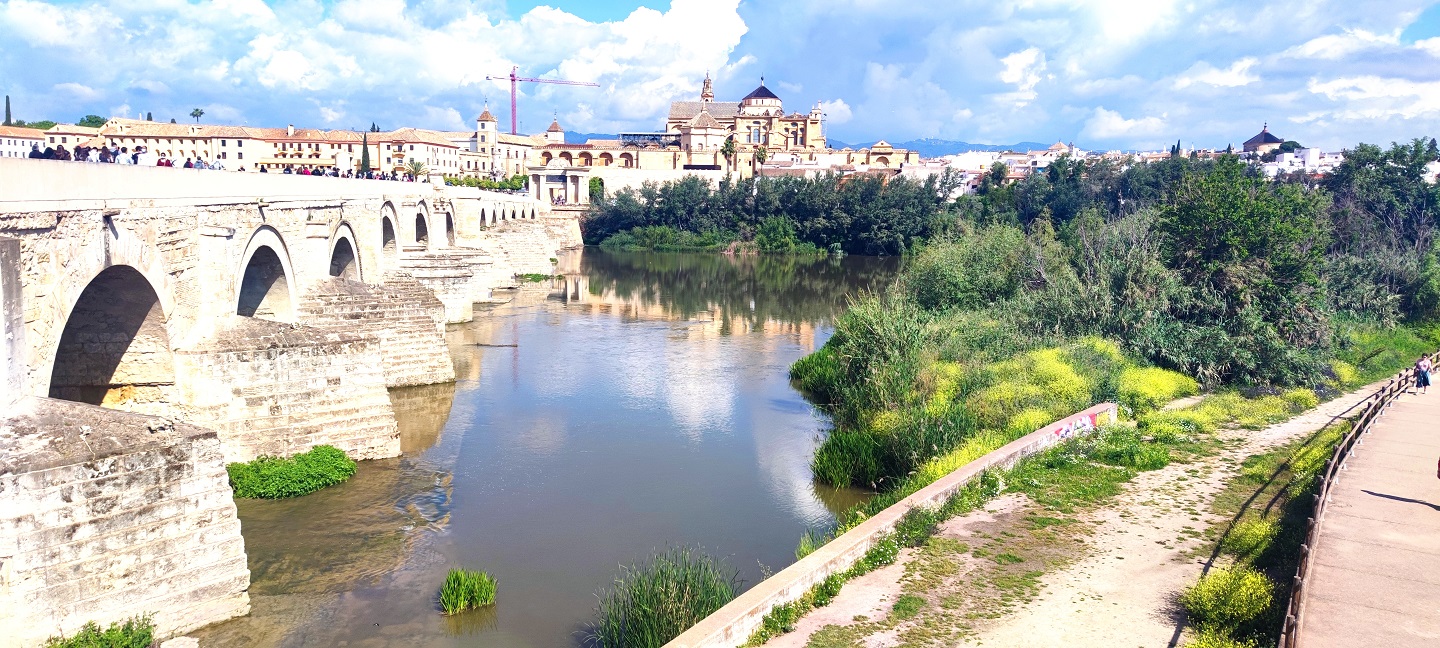
Along the banks of the Guadalquivir River, which means “the Great River” in Arabic, stands a beautiful city, Córdoba, which during medieval times under the rule of the Umayyads became one of the cultural, artistic, political and most important economies cities in the world, being surpassed only by the capital of the Byzantine Empire, Constantinople. Its beautiful streets, full of history, still recall the time of the Three Cultures, during which Jews, Christians and Muslims lived together in the city. Currently it is one of the most visited cities in Spain since it is possible to contemplate the wonderful artistic constructions that evoke past times. In this two-part article, I would like to focus on Islamic art that leaves its visitors speechless.
MUSLIM CONQUEST OF THE IBERIAN PENINSULA
To understand the rich culture of medieval times in the lands that currently belong to Spain and Portugal, we must take a brief tour of the historical events that gave the Iberian Peninsula a very peculiar character. After the fall of the Roman Empire, the Peninsula became the Kingdom of the Visigoths in 507. However, his power was weakened by internal disputes in order to obtain the throne and this way the Muslims took advantage of the situation. They came to the Peninsula from North Africa led by Tarik in the year 711 and defeated the last Visigoth king, Don Rodrigo in the Battle of the Guadalete River. Shortly after, the Muslim conquest of the Iberian Peninsula began.
These first Muslims were sent by the Umayyad Caliph, whose headquarters were in Damascus, however, the Umayyad family ended up assassinated by a new powerful family, the Abbasids, who seized power and moved the headquarters of the Caliphate to Baghdad. Only the grandson of the last Umayyad caliph, Abderramán I, had the opportunity to escape with his life. He was able to reach the Iberian Peninsula, where he was crowned emir by the followers of his family in Archidona in the year 756. Shortly after, he established the Independent Emirate of Córdoba that lasted until 929, when the emir Abderramán III officially became caliph, thus breaking the last ties with the Abbasids. You may wonder what the difference between emir and caliph is. Here the answer, the emir is a king who has political, economic and military power, while the caliph also acquires religious power, a kind of Pope.
THE MOSQUE THAT IS NOT FACING MECCA
After the declaration of the foundation of the Independent Emirate of Córdoba, the construction of an Islamic temple began in the year 786 on an old Visigoth church of San Vicente. I had already mentioned it before that in art and religion nothing disappears, rather it is transformed, and places adapt to new cults. Perhaps this is the fastest way for the population to get used to a new culture?
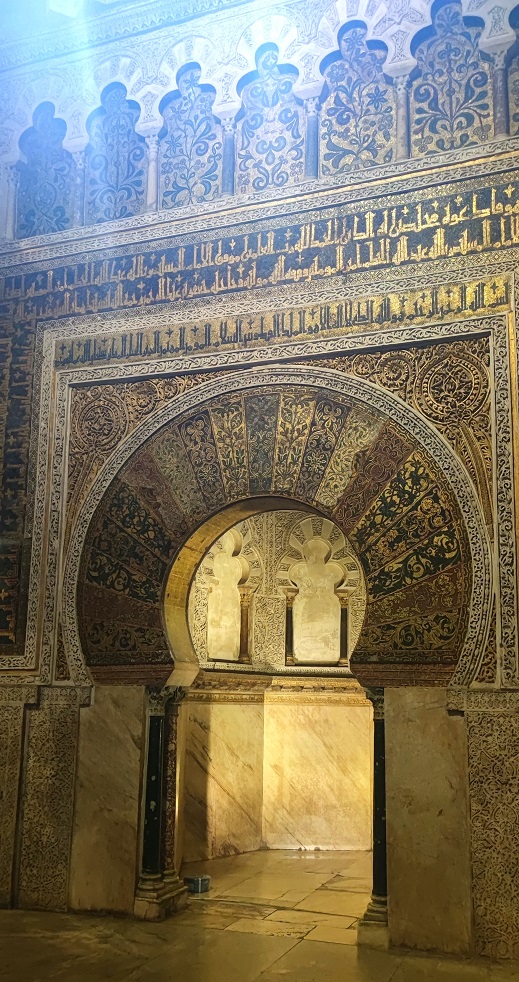
The construction of the Mosque, which took place in several stages and over several centuries, gave rise to the second largest Mosque in the World, even today. It is said that the city of Cordoba once housed more than a million inhabitants, hence such a large place of worship.
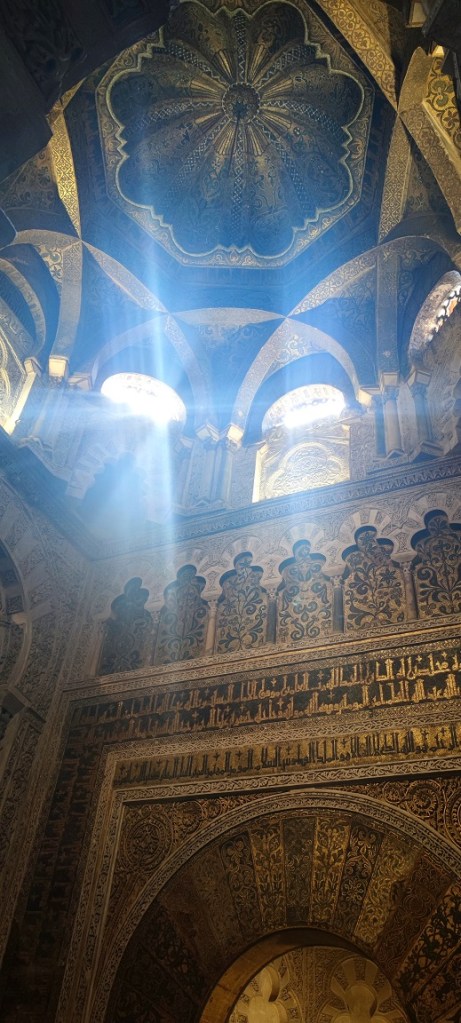
This Mosque is a unique construction for various aspects. Perhaps one of the most striking is the fact that the mihrab, the most sacred place within the temple, a kind of altar, is not oriented towards Mecca, which would be in this case in the southeast direction, but towards the south, where the Guadalquivir river is located. There is no clear explanation for it, some claim that it was built that way to better adapt to the terrain, others that it was a kind of rebellion on the part of the emir Abderramán I against the Abbasí Caliph.
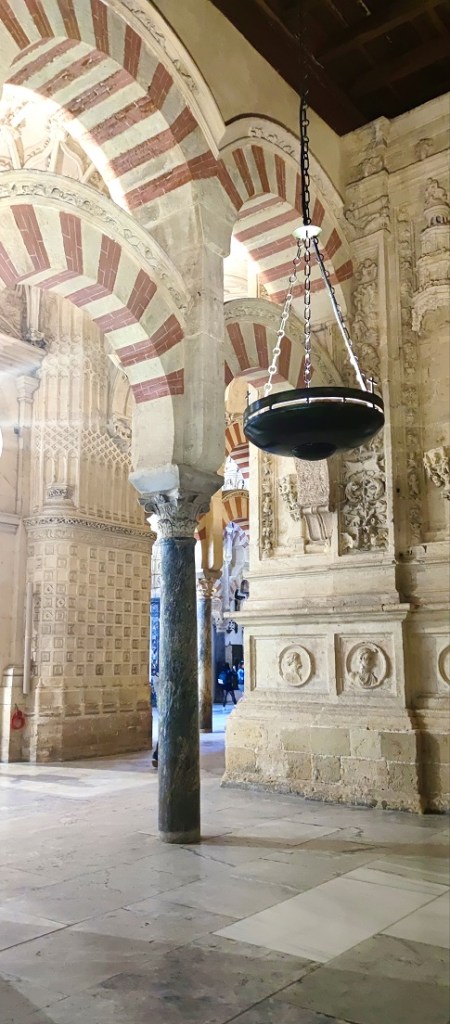
Another curiosity is the fact that in the oldest construction of the Mosque marble columns were used from other temples, Roman and Visigoth (in art everything is reused) for which it is possible to affirm that each one is “from its mother and father” (a Spanish expression), each one is different from the other. Therefore, to equalize their size, a piece called a cyma was placed on top of them, which allowed the creation of a first arcade with horseshoe arches and a second with semicircular arches. For the construction of the arches, red bricks and white limestone were used, a technique later widely copied in medieval times, also in Christian temples, such as the French pilgrimage Vezelay Abbey.
The Mosque of Córdoba is also an aljama, that is, the temple destined for Friday prayers, a tradition that has its origins in the time of Muhammad, when the Prophet met with his followers in his house on Fridays to pray.
THE MOSQUE BECOMES A CATHEDRAL
How?! Mosque and Cathedral in the same place? It may sound strange, but History takes many turns…
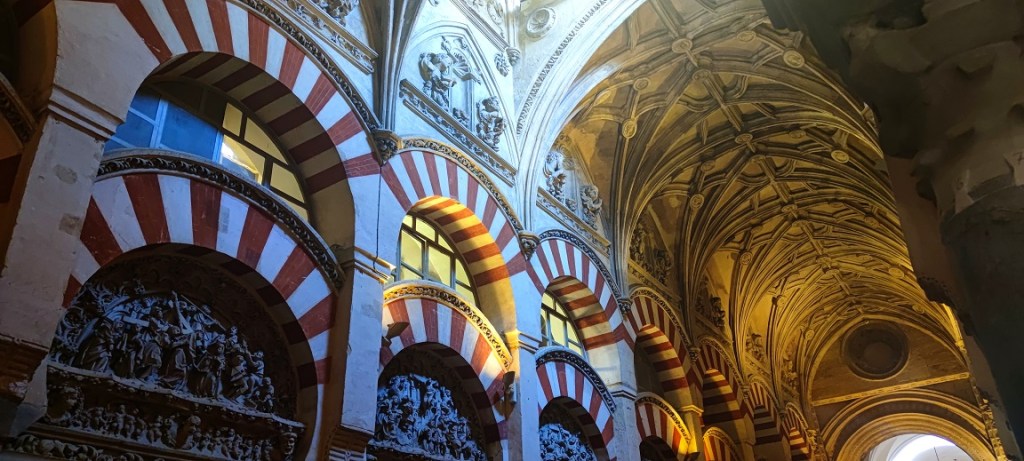
“You have destroyed what was unique in the world, and put in its place what can be seen everywhere. In all the important cities there are beautiful cathedrals, but only Córdoba has such a unique Mosque”, Emperor Carlos V had commented after his visit to the Mosque of Córdoba. Indeed, after the Christian conquest of the city in 1236, the construction of a Christian church began inside the Mosque. It has taken several centuries to carry out this important work, and as far as possible they have tried to preserve the Islamic architecture, although there were important changes made in the central part of the Muslim temple.
However, when one enters the Mosque-Cathedral realizes that precisely this coexistence of a Muslim and a Christian temple in the same place makes this peculiar sacred place unique in the entire World.
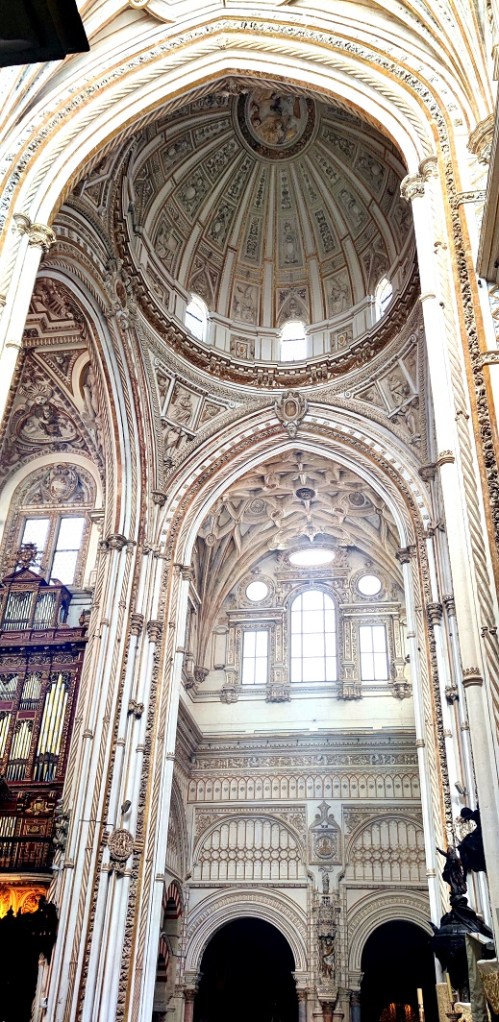
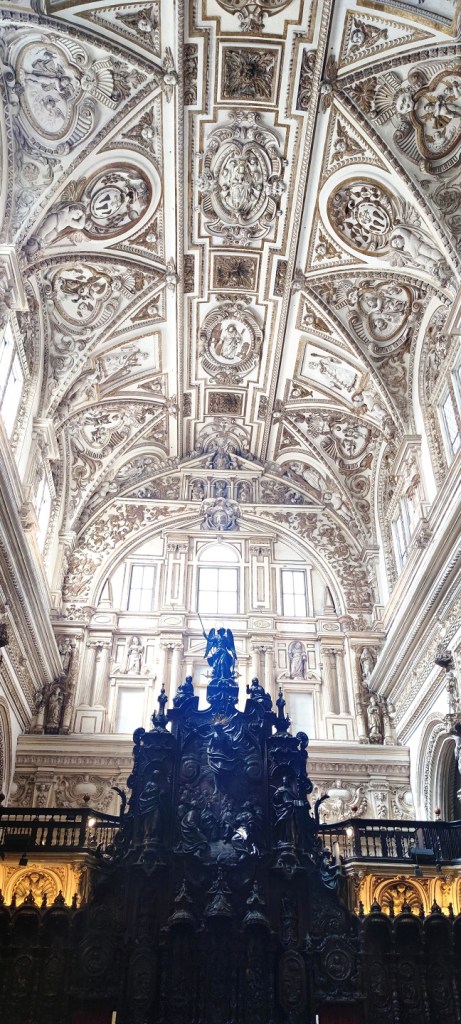
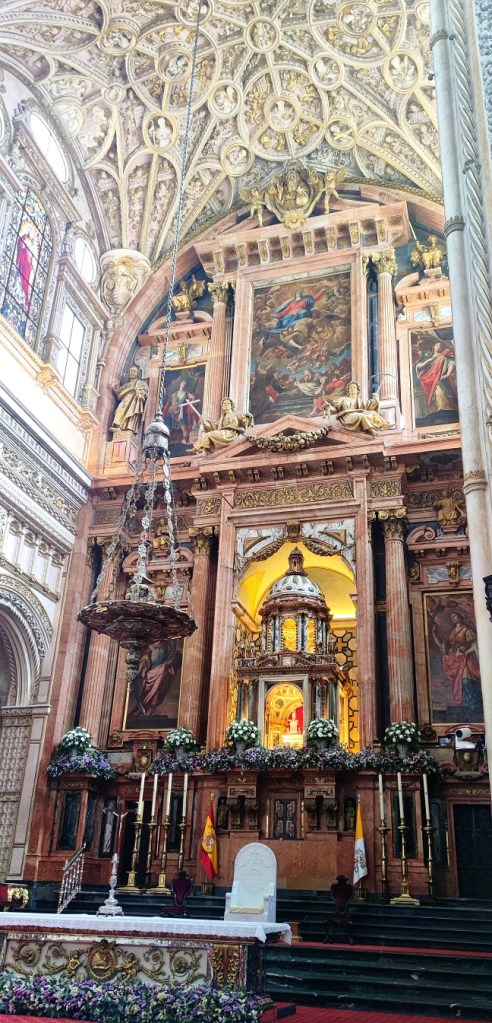
In the Christian part, stand out the chapels in which the famous poets of the Spanish Baroque (Inca Garcilaso de la Vega and Luis de Góngora.) are buried, a period known as the Golden Age, due to its great artistic-cultural wealth in Spain.
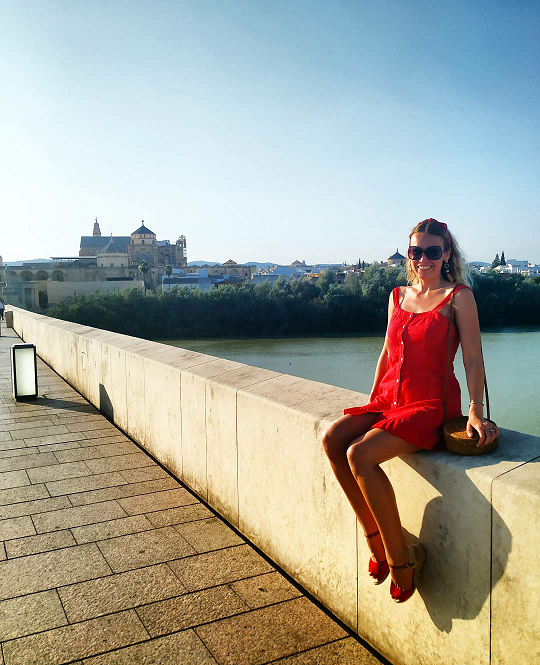
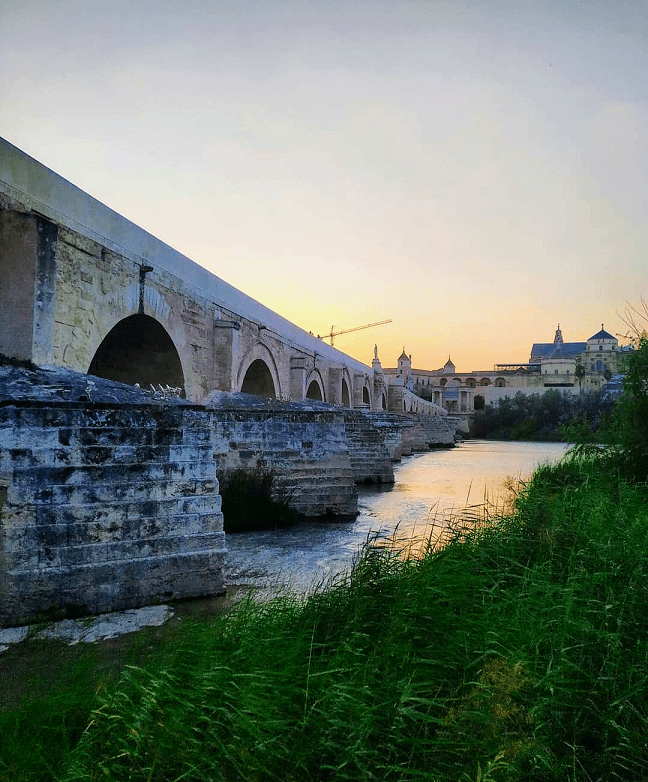
On the other hand, it is worth mentioning the minaret that houses the tomb of Caliph Abderramán III and which was crowned in the 16th century by a bell tower, made by the Renaissance architect, Hernán Ruiz el Joven. This architect had great importance in the construction of the Cathedral, likewise he rebuilt the Roman Bridge over the Guadalquivir. By the way, if you’re a Game of Thrones fan, several scenes from the series were filmed on this bridge. Returning to the minaret, it is a tower that Muslims used from the beginning in order to summon the faithful for prayer. Its origin is based on the bell towers of Christian churches in the East.
TIPS:
• Near the Mosque-Cathedral in one of the corners there is a very famous tortilla bar, Santos. Try it!
• You can book in advance, the entrance to the Mosque-Cathedral costs around €11, although there are discounts for various groups. Also every day between 8:30-9:30 admissions are free!
• To go up to the minaret it is necessary to purchase a separate ticket, it costs around €2.
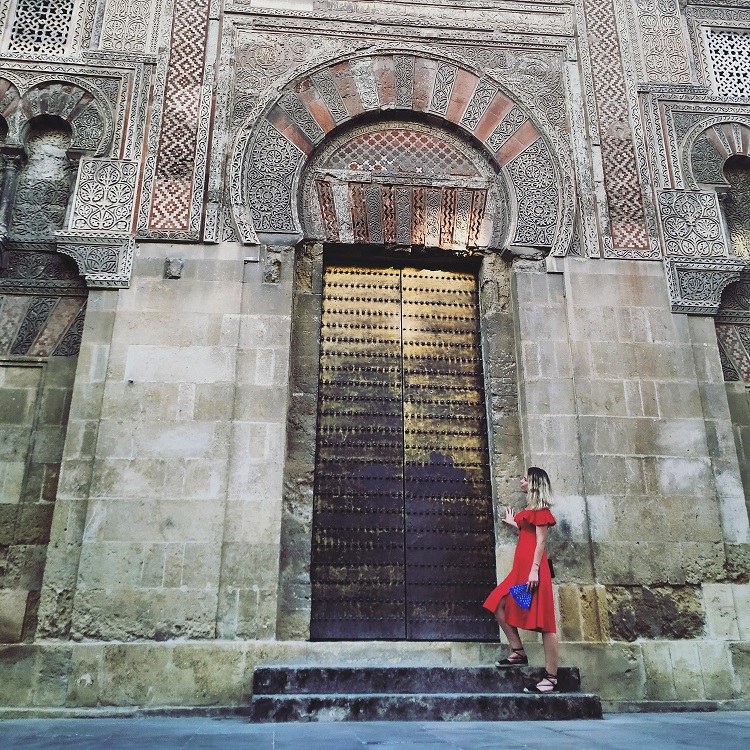
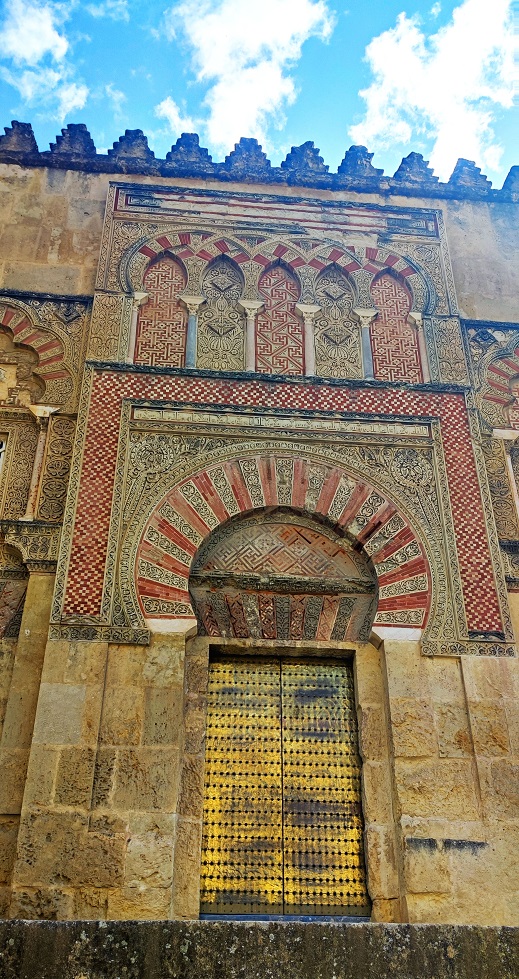
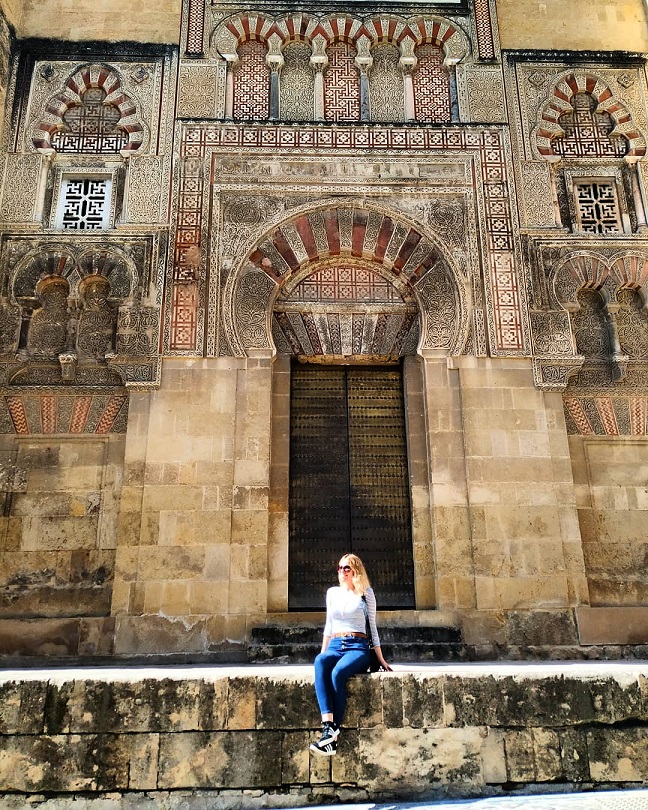
• Enjoy this place, the interior is impressive, but the magnificent Patio de los Naranjos (Orange Garden) and the exterior decoration, especially the giant doors, are truly exceptional.
 all about eve`s journeys
One thought on “CALIPHATE OF CORDOBA PART I: MOSQUE-CATHEDRAL”