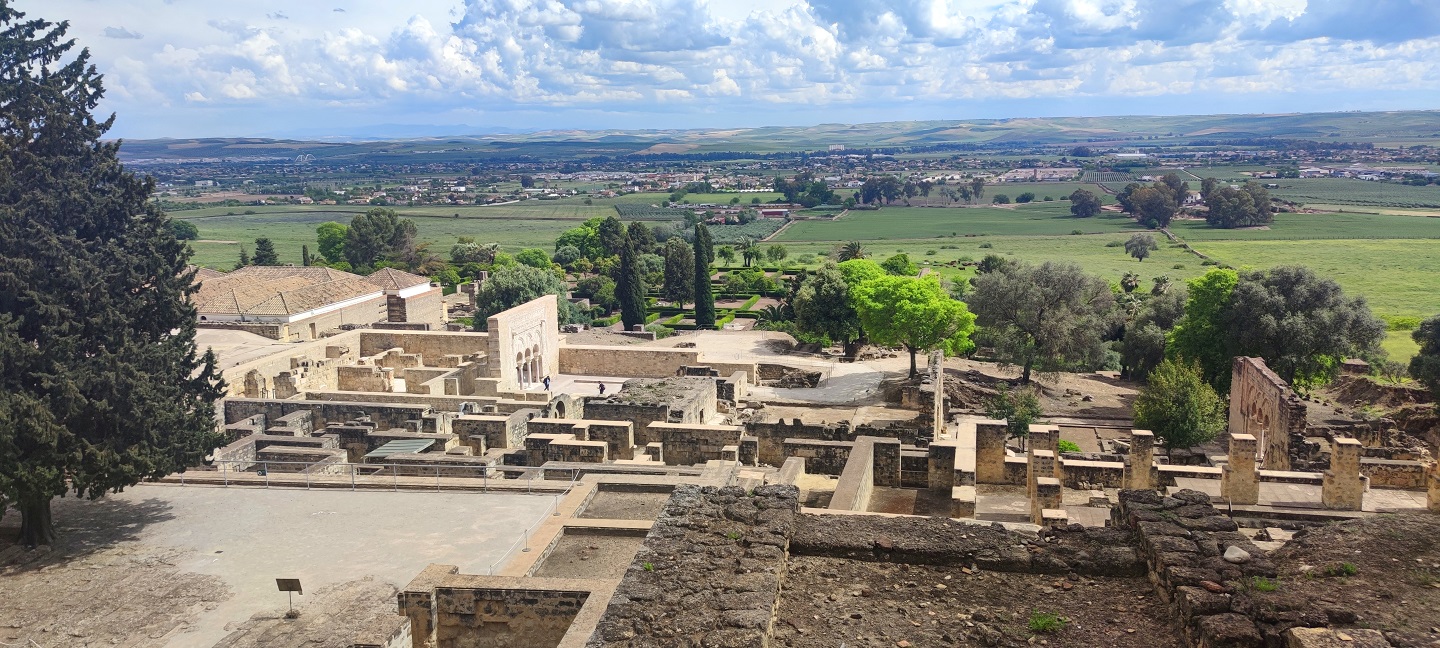
I had previously told you that the Muslims arrived in the Iberian Peninsula in 711, led by Tarik, and had defeated the last Visigothic king, Don Rodrigo, in the battle of the Guadalete River. This fact gave rise to the Muslim expansion in the territories that currently remain to Spain and Portugal. At the beginning of the conquest the Emirate of Córdoba was founded in 756 and later, the Caliphate of Córdoba in 929. The wonderful artistic-cultural works from this period are still preserved, such as the Mosque-Cathedral and the palatine city of Medina al -Zahara, which you will meet in this article.
THE ORIGIN OF MEDINA AL-ZAHARA WRAPPED IN LEGENDS
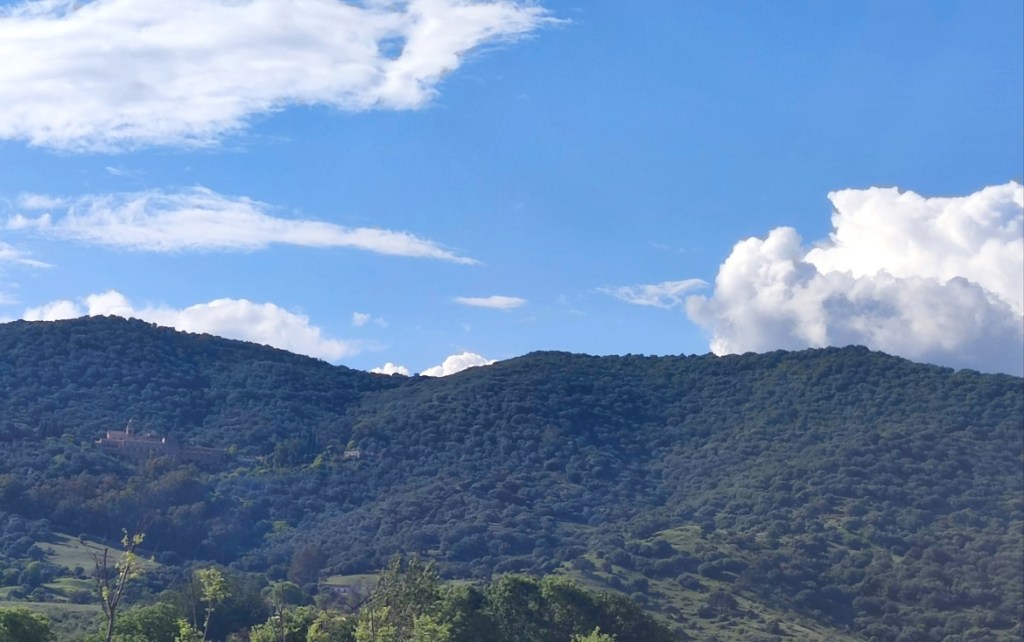
A Llegend says that the powerful caliph Abderramán III decided to build a palatine city in the year 936 on the slopes of Sierra Morena to show his beloved, Azahara, the great love he felt for her. In fact, the city bears her name. However, the story does not end here. In addition to satisfying his true love who came from Granada, the snow capital in southern Spain, the caliph ordered that gardens of this city-palace should be populated with almond trees. In this way, when the almond trees were blooming, they reminded the princess of Granada’s snow through their white flowers, so the sadness that the woman felt for her beloved land vanished.
THE SYMBOLOGY OF THE PALATINE CITY
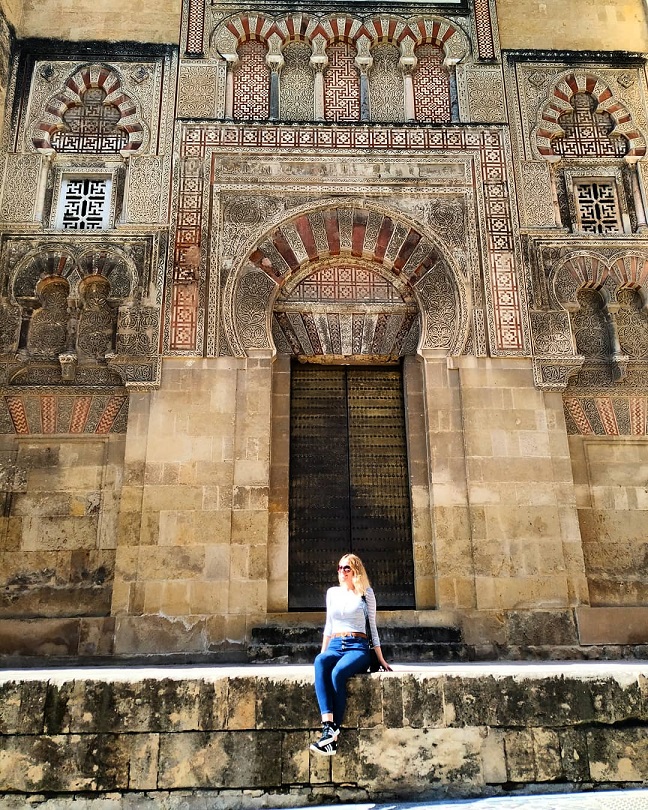
In the year 929 the emir Abderramán III assumed the title of caliph, giving rise to the Caliphate of Córdoba and breaking the last ties that united them with the Caliphate of Baghdad. In this way he obtained religious power, in addition to what he already had: administrative, political, economic and military. The urban complexity with which the platinum city of Medina al-Zahara was built was a demonstration of the independence and power of the Umayyad Caliphate of Córdoba, comparable to the Abbasid or Fatimid Caliphate.
THE ARTISTIC-URBAN COMPLEXITY
The platinum city, surrounded by walls, was distributed in three main terraces. In the upper one, facing north, was the royal residence. In the intermediate one were the administrative offices and the lower one was dedicated to the town. In addition, the enclosure had an aljama, that is, the mosque dedicated to Friday prayers. This mosque, which had the ablutions patio, the minaret and the prayer room, was located towards Mecca, unlike the Mosque-Cathedral of Córdoba.
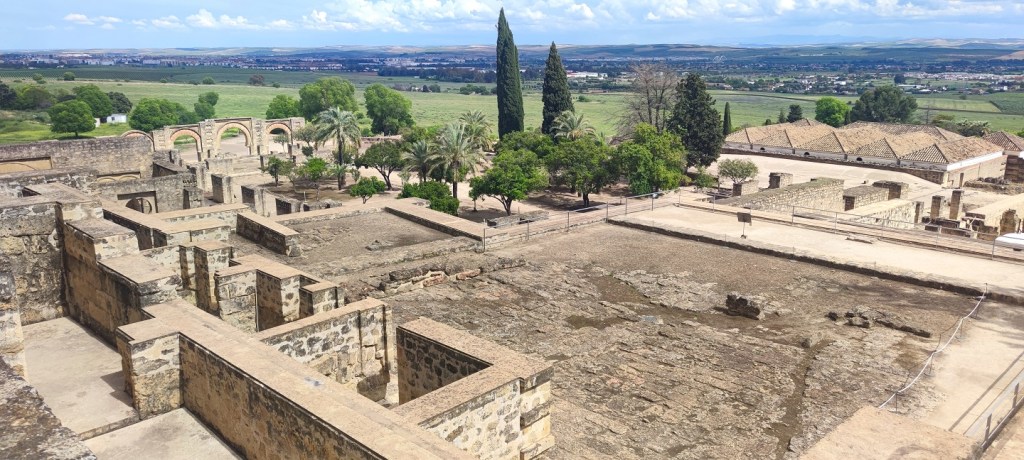
Among the most significant archaeological remains, the High Hall and the Rich Hall stand out, both divided by a colonnade of horseshoe arches that are inspired by the decoration of the Mosque-Cathedral of Córdoba, as red bricks alternate with white limestone, very abundant in the area. The Rich Hall, for instance, was used as the reception room and religious festivals were held there.
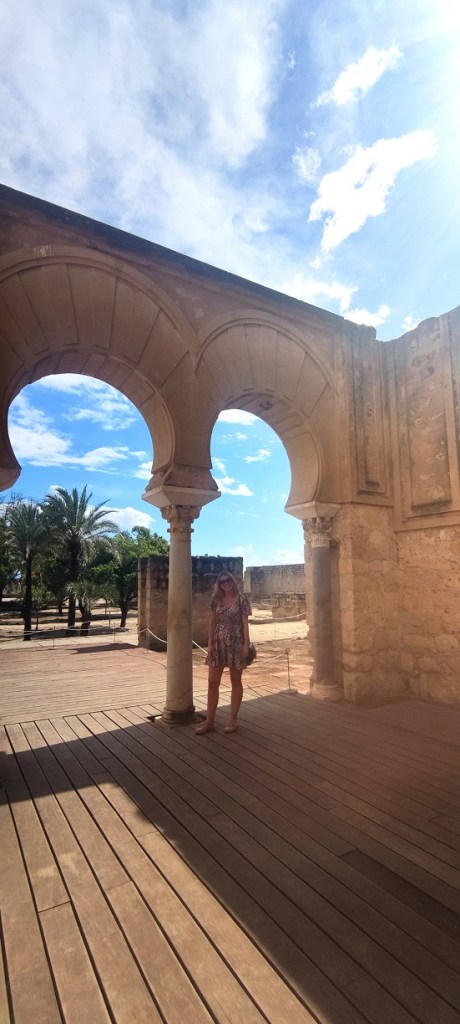
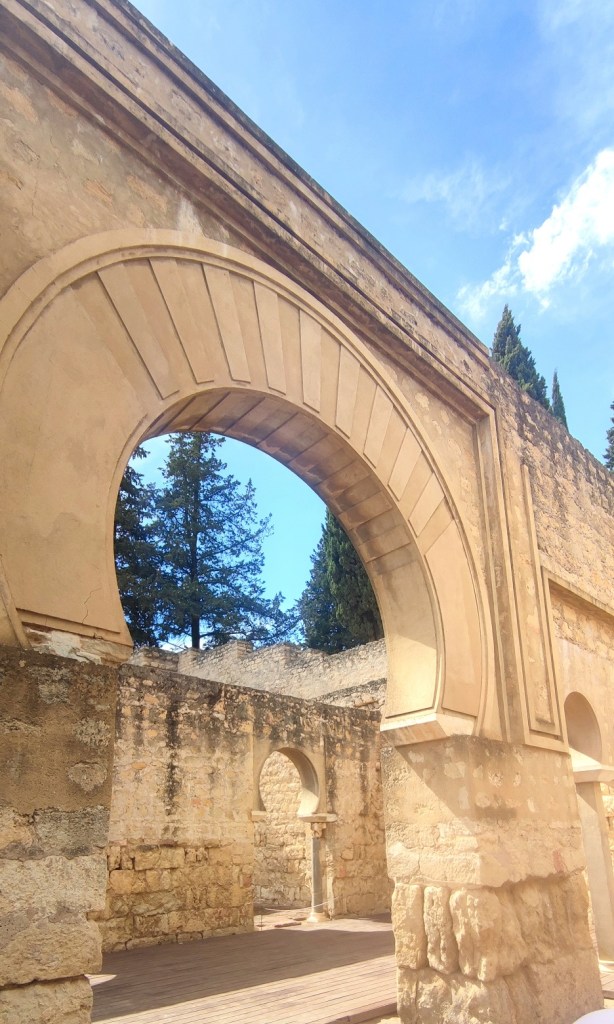
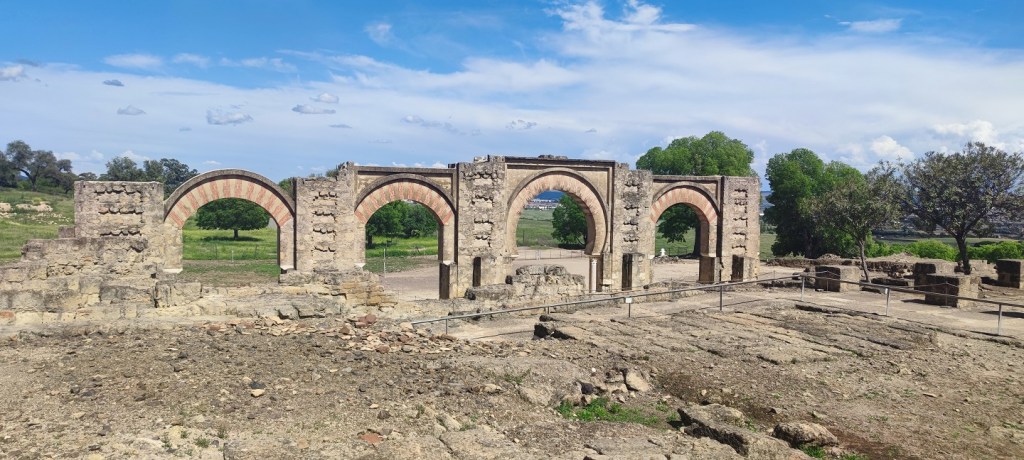
Likewise, another building that draws our attention is the Great Portico, through which the rooms of political-ceremonial use were accessed. Although during its construction the alternation of red bricks and white limestone was maintained, the arches are mostly foreshortened and only the central arch is a horseshoe. Although the arcade of the main façade of the house of Ya’far, the caliph’s prime minister, is also truly spectacular.
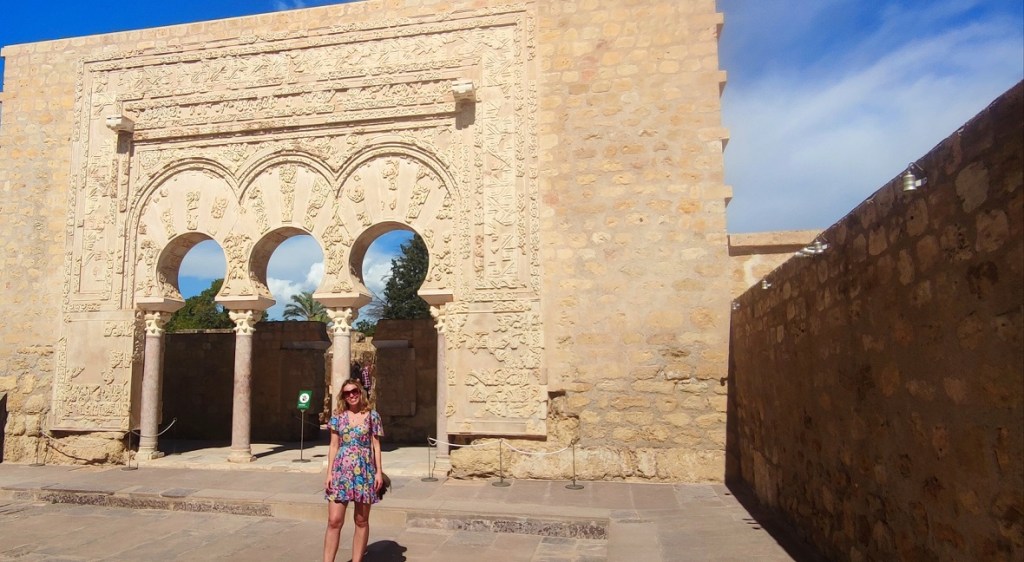
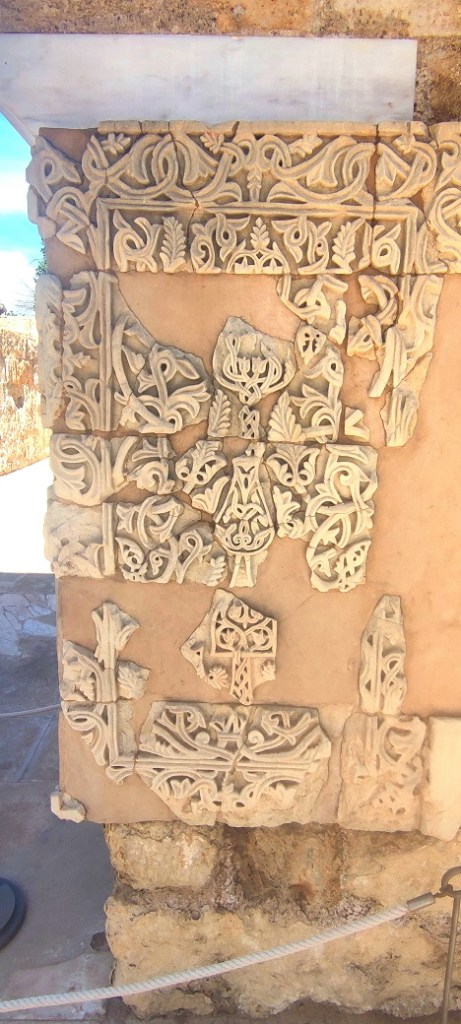
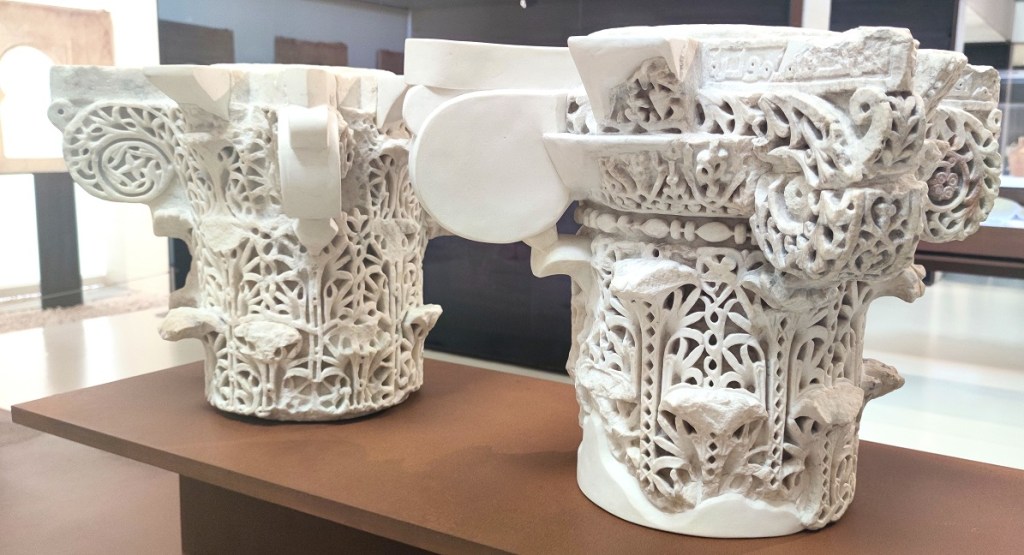
On the other hand, in the decoration, white marble and the magnificent decorations of lacerías (geometric decoration) and ataurique (plant decoration) were used to a great extent. What gave a great sense of wealth to the complex and, of course, left visitors speechless.
TIPS:
• The best way is to drive to the Medina al-Zahara Interpretation Center, where you must stop to register and buy tickets. You can also get there on the tourist bus from the center of Córdoba for around €9. Bus departures are from: Paseo de la Victoria (Red Cross Hospital roundabout and Victoria Market). Hours: 10:00-13:30 / 10:45-14:15 / 15:30-18:45.
• In the Interpretation Center you have the opportunity to watch the video that will explain in detail what you are going to see in the archaeological complex, don’t miss it!
• The price is free for visitors from the EU and costs €1.50 for others. Likewise, it is necessary to pay the entrance fee for the shuttle bus from the Interpretation Center to the archaeological complex, €2.50.
• I recommend visiting at sunset, but not in summer as it is too hot, so it is better in the morning. The sunset is beautiful, you can contemplate the beauty of Sierra Morena in the golden hour.
 all about eve`s journeys
Marvelous city!
LikeLike
Yes, it’s a wonderful place!
LikeLike