According to an ancient legend, the eternal city of Rome, Italy was founded on April 21, 753 BC., by twin brothers Romulus and Remus, sons of Rhea Silvia, who was a descendant of Aeneas, a Trojan hero. Aeneas was aided by his mother, the goddess Venus, in his flight from Troy to the Lazio region of Italy, where he married a local princess and founded his own kingdom. Eight generations later, his descendant, Rhea Silvia, maintained relations with the god of war Mars, and the fruit of this relationship were twin brothers.
However, upon hearing the news of Rhea Silvia’s pregnancy, her uncle, King Amulio, became enraged and decided to kill her children in order to stay in power. At birth the children were put in a basket on the river to drown, but they were rescued by the Capitoline Wolf, who took care of them until their adulthood. The brothers took revenge by killing Amulio and on the banks of the Tiber they founded the city of Rome.
Of course, the facts described are mere legends, but even so Rome is a great city, full of mystery and history that, without a doubt, you should visit sometime.
ESSENTIAL VISITS IN ROME
COLOSSEUM AND THE ROMAN FORUM
The Flavian Amphitheater, that is, the Colosseum, is the most prominent monument in Rome. It was completed by Emperor Titus and is located next to the Triumphal Arch of Constantine, another Roman emperor who brought freedom to Christians with the Edict of Milan in 313 and was the founder of the city of Constantinople, the capital of Byzantium, the Eastern Roman Empire that lasted until 1453. The Colosseum became famous for its cruel executions of early Christians, as well as gladiator fighting.
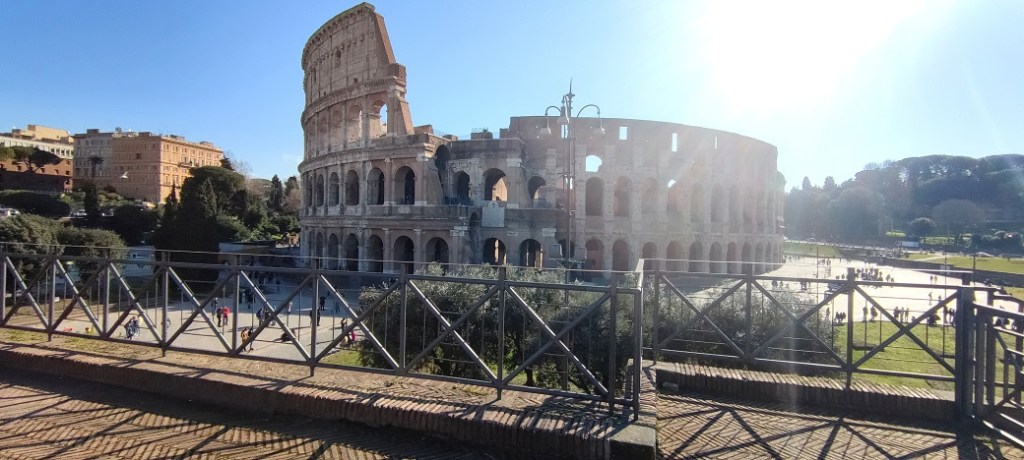
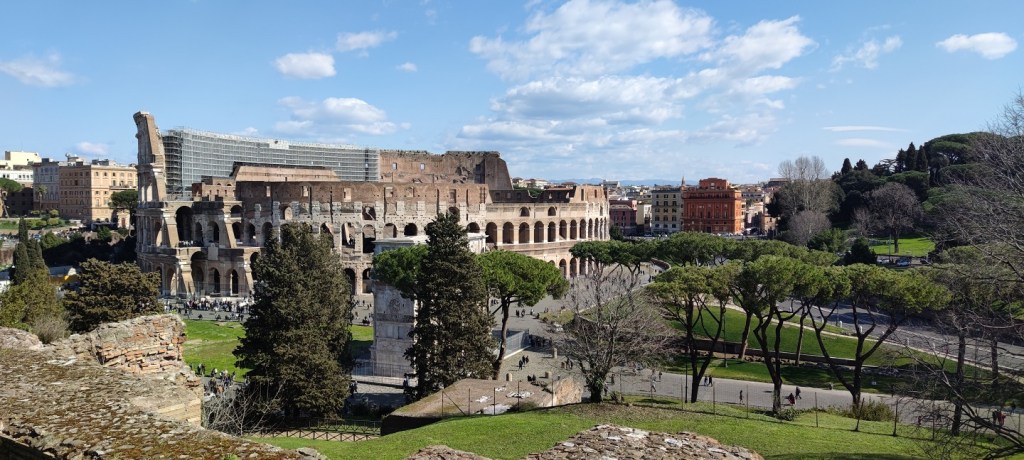
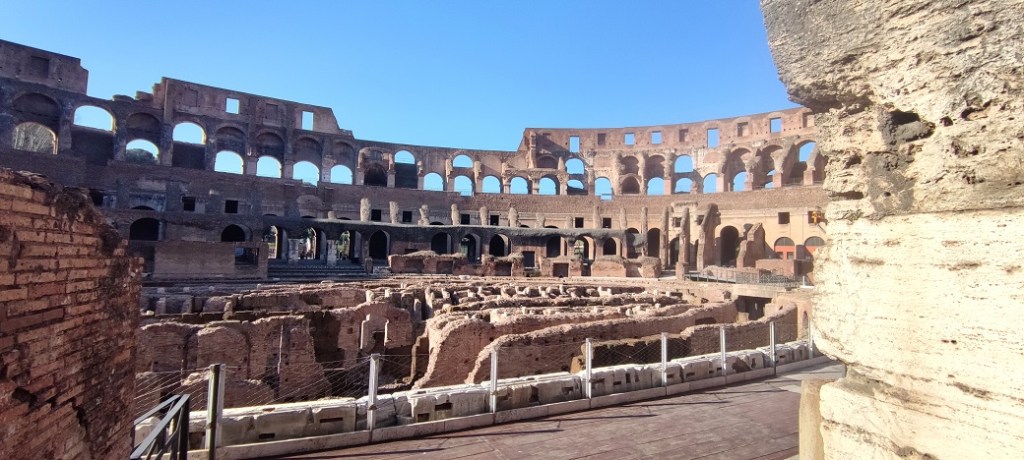
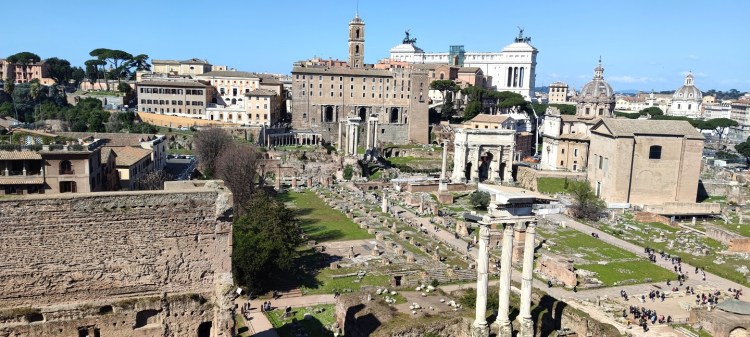
Opposite the Amphitheater there is the Roman Forum with numerous temples and administrative buildings. You should know that the Romans not only stood out for conquering a large part of the known world, but also they were known by their legislation. In fact, already in 450 B.C. the Laws of 12 Tables was published, which included all public and private issues. Over time, theirs rules continued to advance to the point where, at present, Roman Law is the basis of legislation in many different countries.
VATICAN
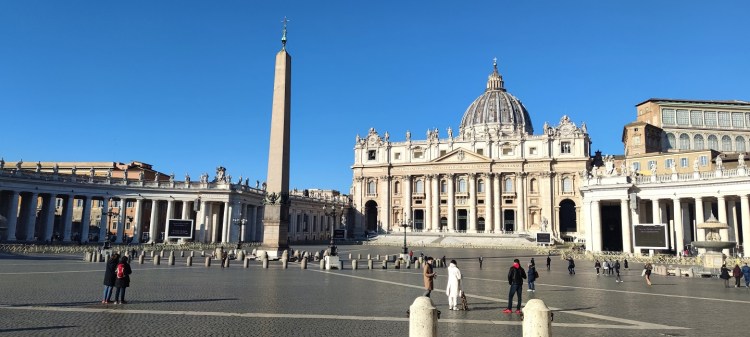
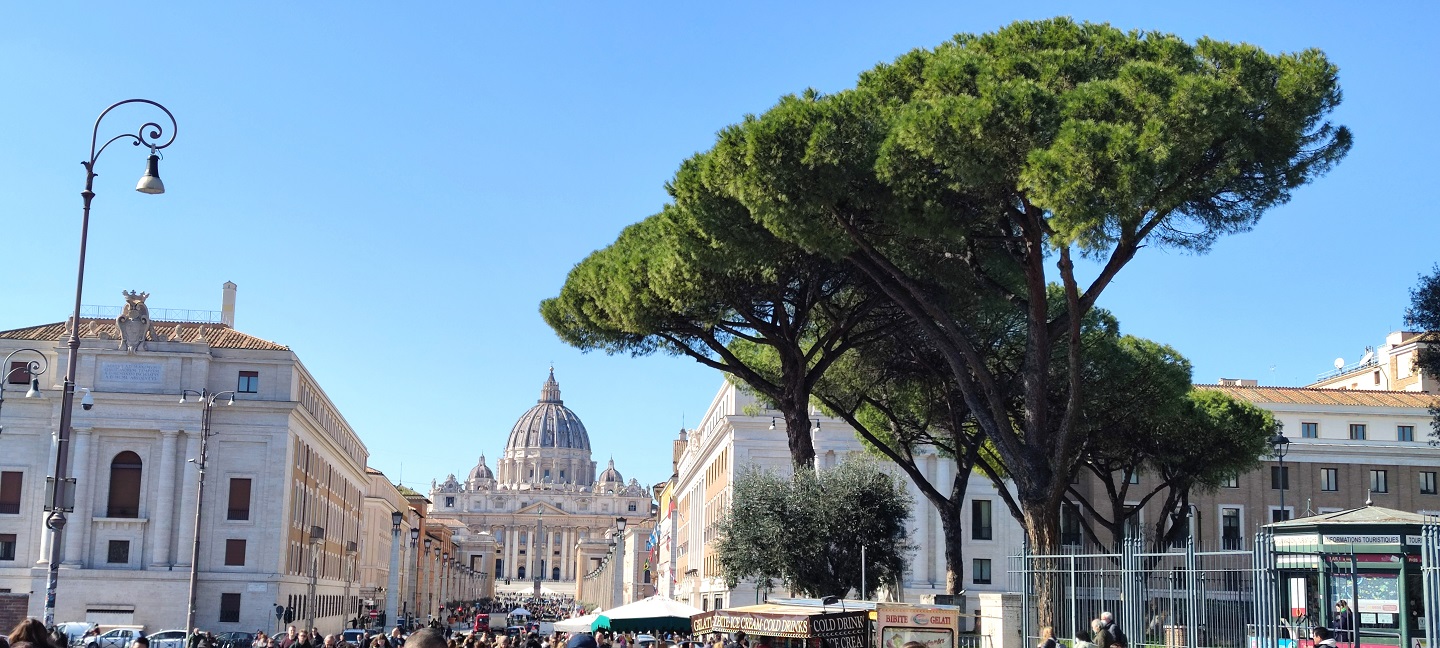
The Vatican, a European microstate, is the headquarters of the Christian World and its existence is due to the Lateran Pact of 1929. It is home to the most spectacular Christian temple, St. Peter’s Basilica, where the remains of the Apostle lie under Bernini’s Baldachin. The architectural complex also houses numerous works of art, among them, the magnificent piece by Michelangelo, Pietá, which stands out for the youthful and beautiful face of the Virgin, as a symbol of purity.
In front of the Basilica, there is the St. Peter’s Square with its wonderful colonnade, also designed by Bernini. The square has become an important symbol that represents the open arms of the Church that welcomes the faithful.
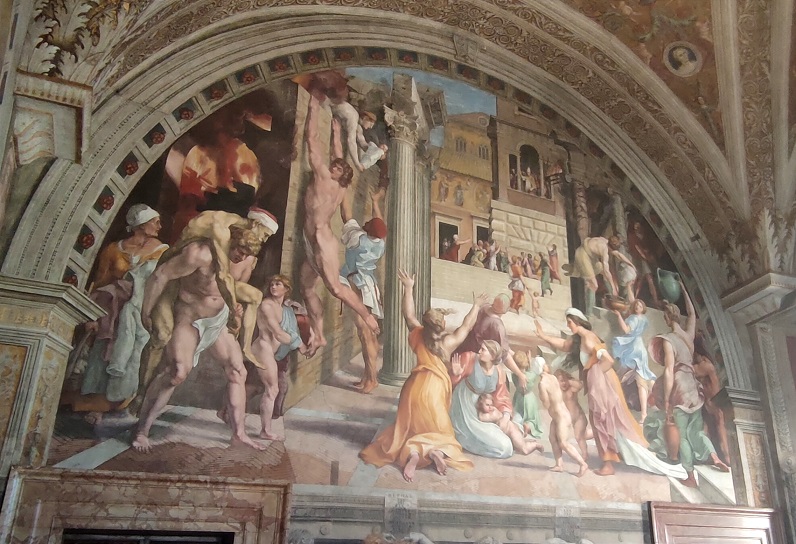
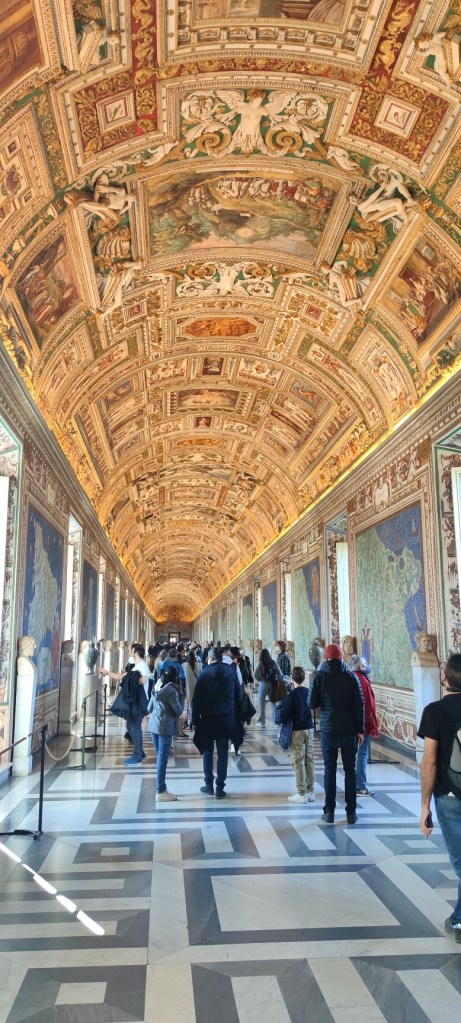
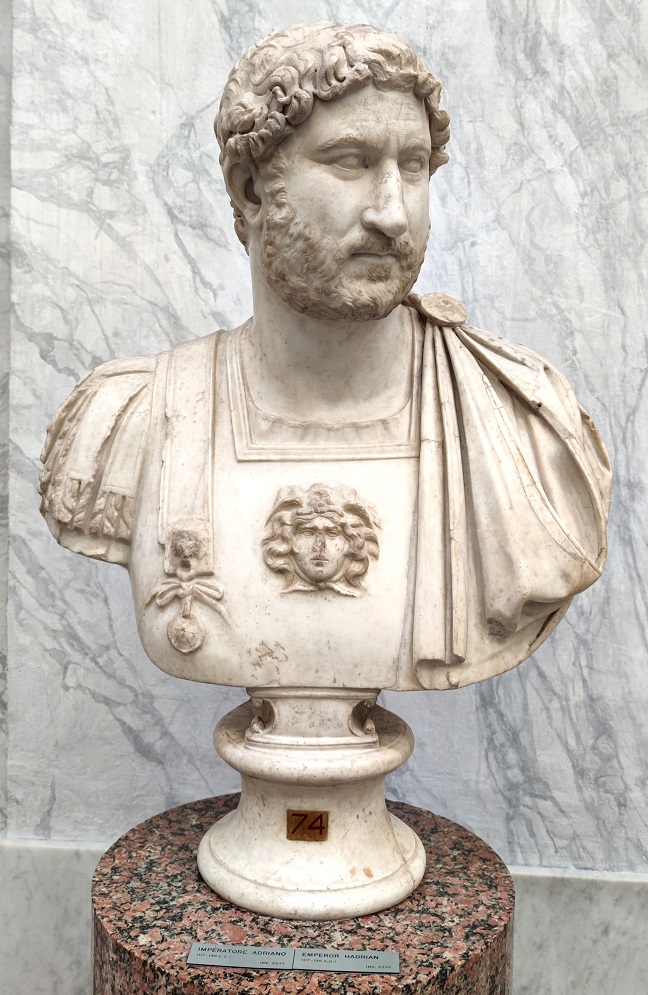
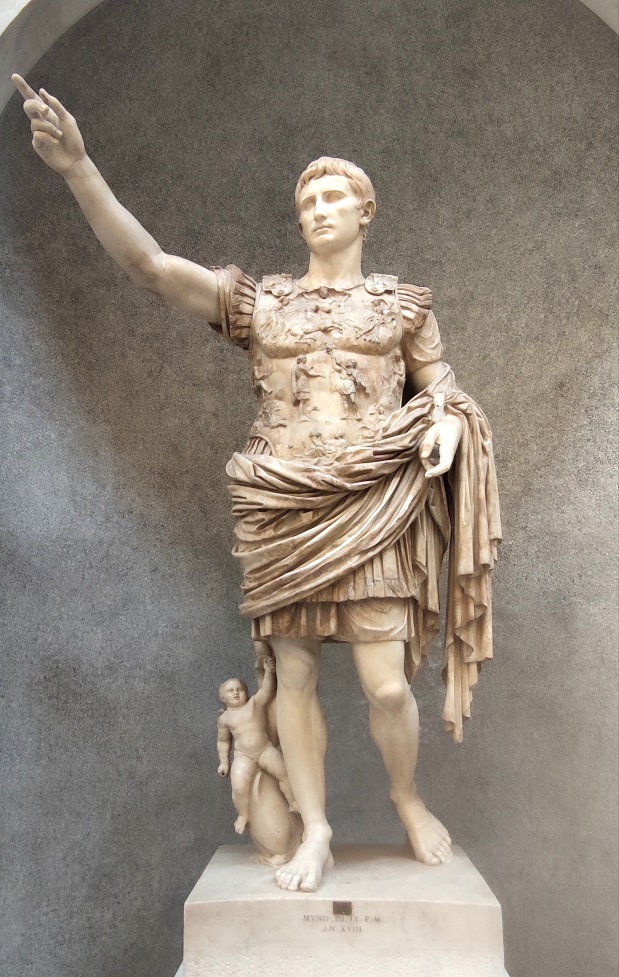
The next obligatory stop in the Vatican are the Vatican Museums, of great extension with a visit that will last at least 4 -5 hours. So, take it easy. Its origin is based on a donation made by Pope Julius II in 1503. Inside you can observe different artistic and cultural pieces of Art.
OTHER UNAVOIDABLE PLACES IN ROME
THE BORGHESSE GALLERY
The Borghesse Gallery hides true pictorial and sculptural jewels that belonged to the collection of Cardinal Borghesse, nephew of Pope Paul V. The building, built in 1612, is surrounded by wonderful gardens, which you should also visit.
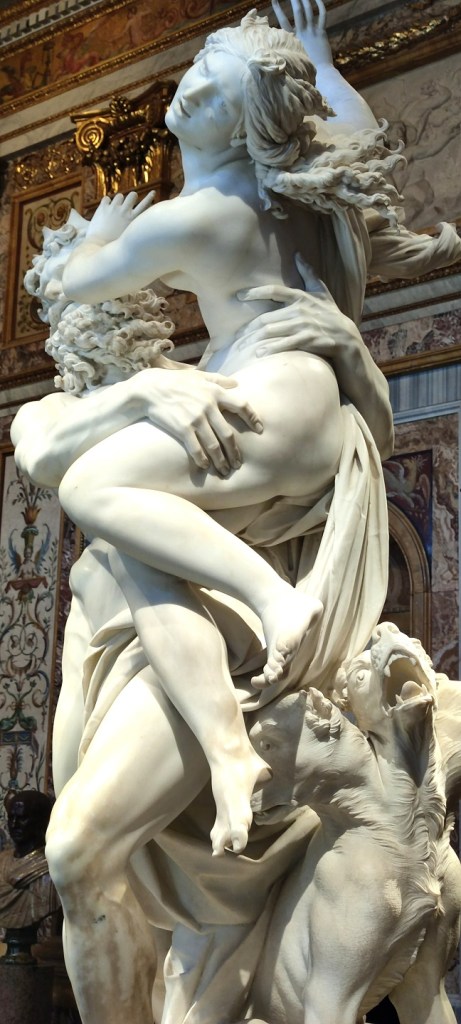
Although the Gallery houses plenty of interesting works of Caravaggio, the author of Tenebrism, such as The Sick Bacchus, Titian who handled colors with great ease, such as Sacred Love and Profane Love or Canova, such as Venus, that is inspired by Pauline Bonaparte, my favorite work is Pulto and Prosperinaby Bernini. Why this work? It is extraordinary how the sculptor works with marble, as if it were simply clay instead of hard rock.
ARA PACIS
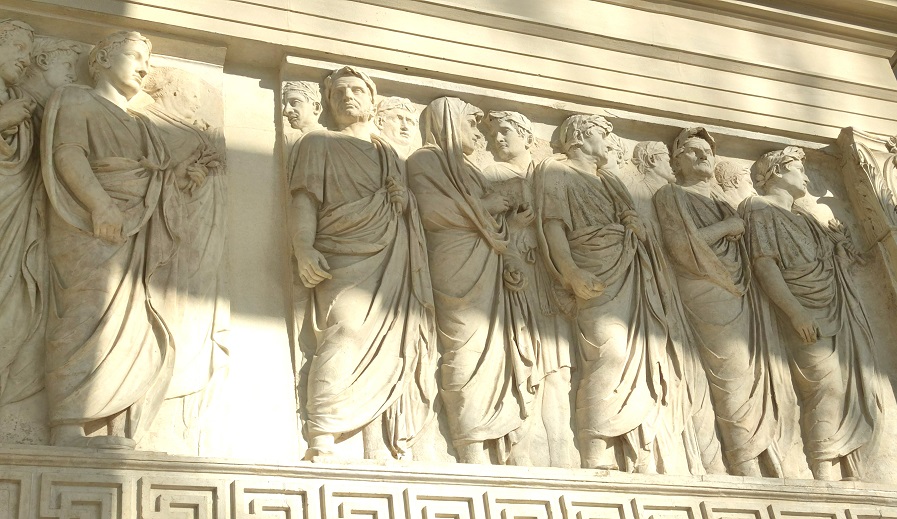
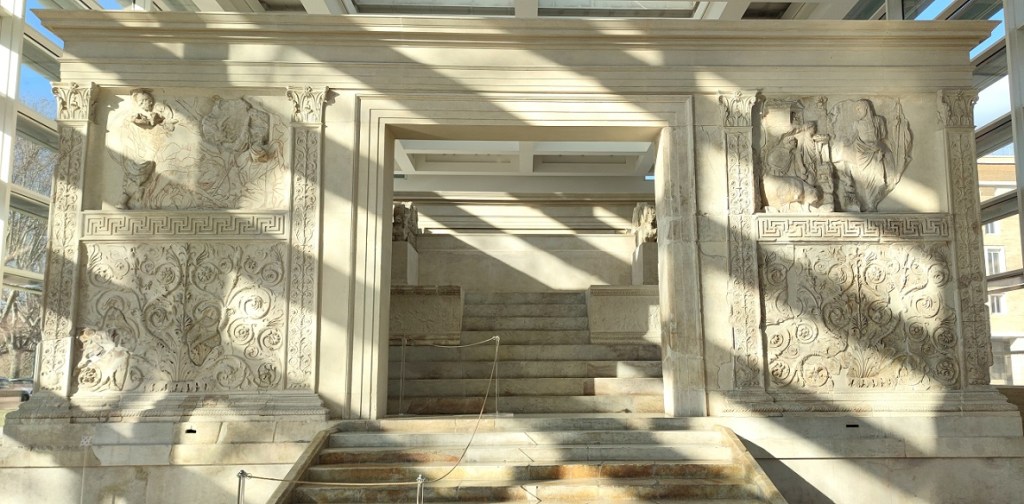
Ara Pacis is a small temple, built in order to celebrate the peace between Gaul and Hispania. The reliefs that represented the bucranium (skull of an ox) and garlands, symbols of immortality, predominated in the interior. While outside around the door there are represented allegories related to the mythical foundation of Rome: the Earth as a woman with two children, the Air on a swan, and the Water on a sea monster. The side walls have been decorated with the representation of a civic procession that goes to the annual sacrifice. It is possible to see Emperor Augustus, his relatives, friends, as well as public officials, lined up in a double row and dressed in togas.
BOARIUM FORUM
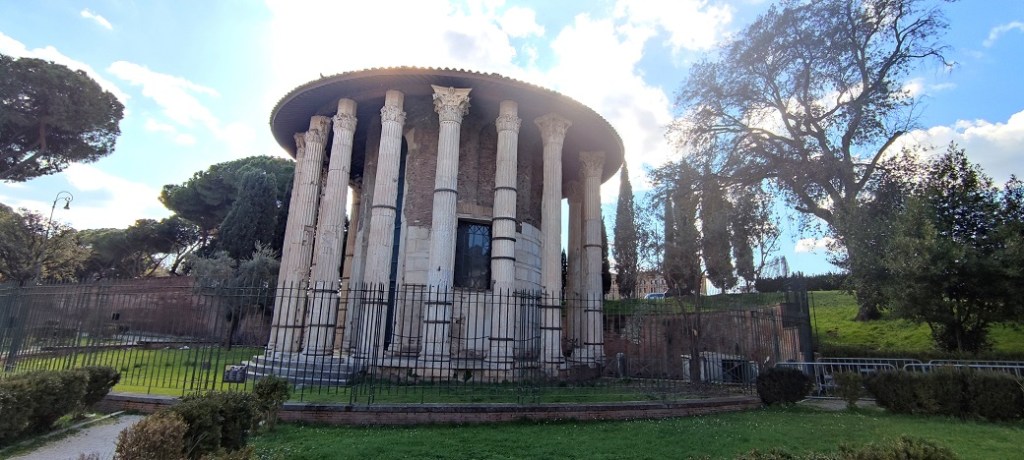
Boarium Forum was the market area of the ancient city, located at the point where the roads that crossed the valley of the Tiber River converge, and those that connected Etruria with Campania, areas dominated by the Etruscans and the Greeks respectively. The river bank constituted the river port of Rome (Portus Tiberinus) and there was an ancient sanctuary, the high altar of Hercules, dedicated to a local divinity assimilated at first to the Phoenician Melkart, and later to Hercules.
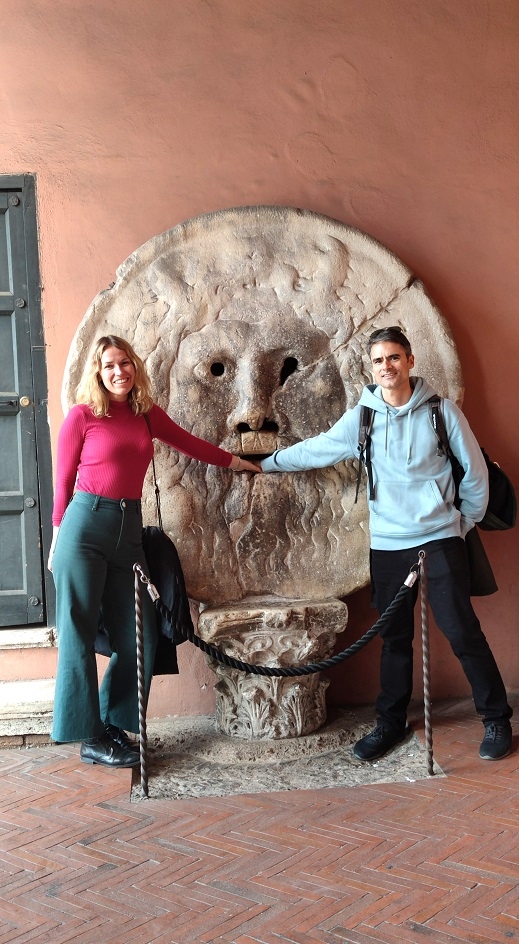
You should also visit the Mouth of Truth in Santa Maria in Cosmedin church built on the ancient Temple of Hercules. According to medieval legend, it will bite off the hand of any liar who places their hand in its mouth. In Roman Holiday film you can observe a scene with Audrey Hepburn and Gregory Peck next to this marble mask.
COLUMN OF MARCO AURELIUS
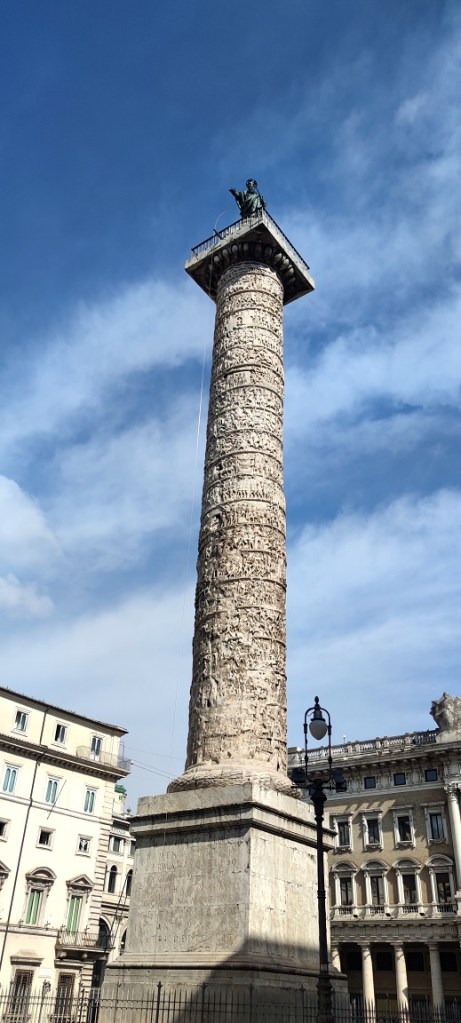
Column of Marco Aurelius (176-192) bears similarities with Trajan’s Column, located in the Forums. The reliefs that you can see on its shaft narrate the victories of the emperor against the Germans and Sarmatians during the Marcomannic Wars. It is 30m high and it has 4m in diameter. Previously it was crowned by the emperor and his wife Faustina, currently there is a figure of St. Paul.
TREVI FOUNTAIN
Trevi Fountain has become the largest in extension of the Baroque era. The fountain is located at the crossroads of three streets (tre vie), marking the point of the Aqua Virgo, one of the ancient aqueducts that supplied water to Rome. The aqueduct was destroyed during the barbarian invasions, however, it was rebuilt by Pope Nicholas V in the 15th century, who returned pure water to the city.
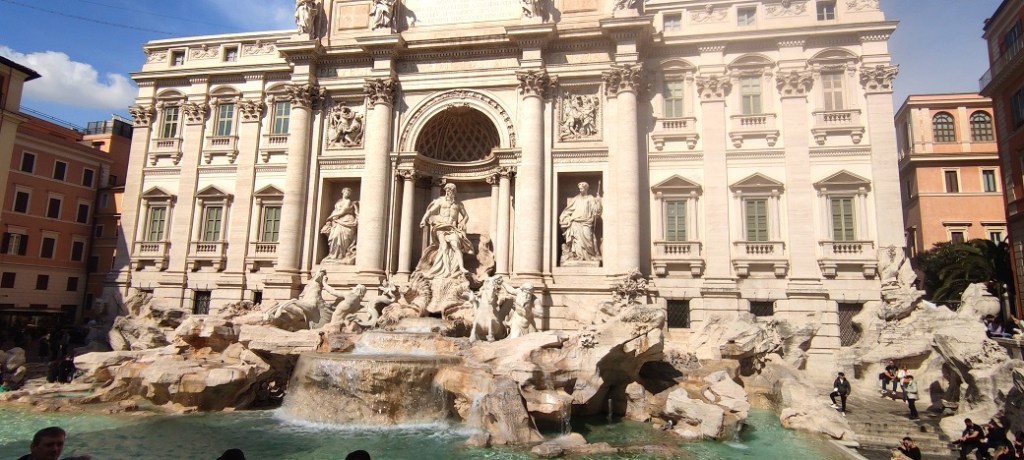
It appears in Federico Fellini’s 1960 film, Dolce Vita, when Anita Ekberg wades into the fountain with Marcello Mastroianni.
CESTIA PYRAMID
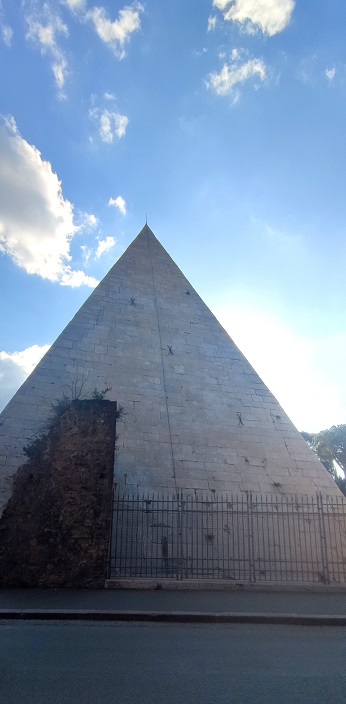
Cestia Pyramid was built around 18 and 12 B.C. as a sepulcher for Gaius Cestio Epulon, a Roman magistrate. Its base is a square and it reaches a height of about 36m. Although it is covered outside with marble, its internal construction was made with hard Roman brick. On its sides it is possible to read the inscriptions in Latin that name Cestio, and explain the circumstances of the 330-day-long construction.
VICTOR ENMANUEL II MONUMENT
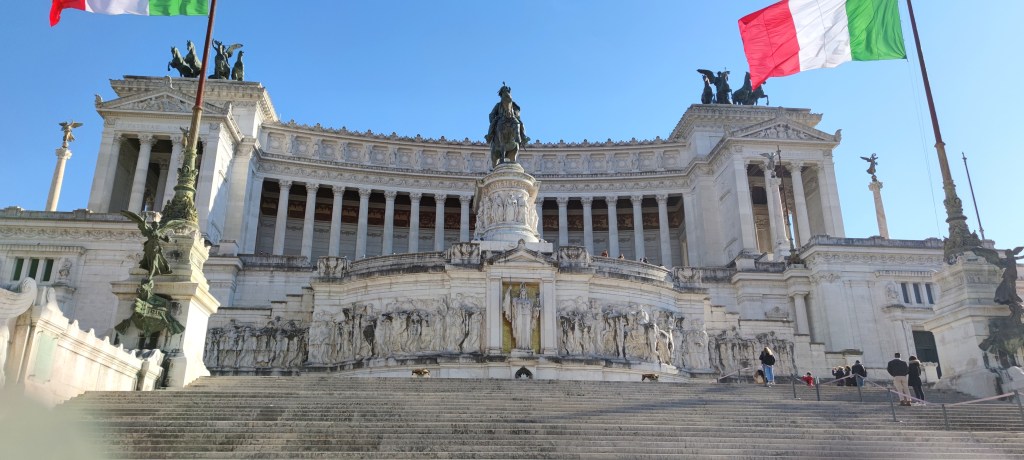
The National Victor Emmanuel II Monument, also known as the Altar of the Fatherland, located in Piazza Venezia, was designed by Sacconi and inaugurated in 1911 to commemorate the Unification of Italy. In it is also located the Tomb of the Unknown Soldier. It is a work of great majesty that is accessed by a staircase, on sunny days the white marble is so bright that it can even be somewhat annoying for the eyes. From above there is a wonderful panoramic view.
TIPS:
• Buy RomaPass and use the first free entry to see the Colosseum, Palatine Hill and the Forums. It’s better to book in advance.
• St. Peter’s Basilica is open from 7:00 a.m. to 7:00 p.m. in summer and from 7:00 a.m. to 6:30 p.m. in winter. Admission is free, but go early to avoid the queues.
• I recommended you to book your visits to the Museums in advance to avoid queues and ensure tickets, since many of them do not sell tickets for the same day.
 all about eve`s journeys