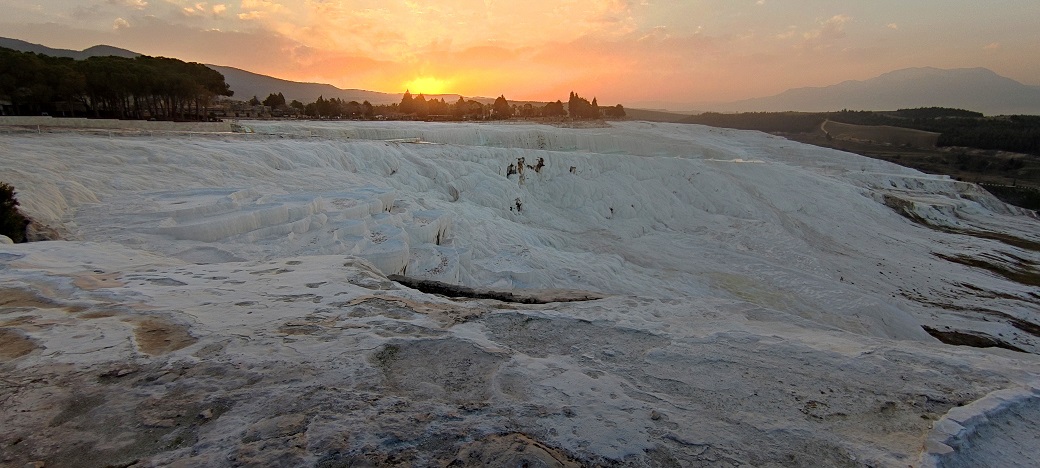
In the southeast of Turkey, in the valley of the Menderes River, there is a beautiful geographical area, called Pamukkale in Turkish, which literally means: the cotton castle. Also, at the top of the cotton castle there is an ancient city, Hierapolis. In this way, the magnificent natural landscapes and the important historical-cultural enclave have become, without a doubt, a wonderful place that you should not forget to visit if you make a trip to Turkey.
HOW WAS PAMUKKALE FORMED?
Due to frequent tectonic movements, hot springs were created in the Menderes River fault, which contained various minerals, above all chalk, that is, a white and porous limestone, reminiscent of snow and used in the chalk production. Hence its appearance of frozen waterfalls.
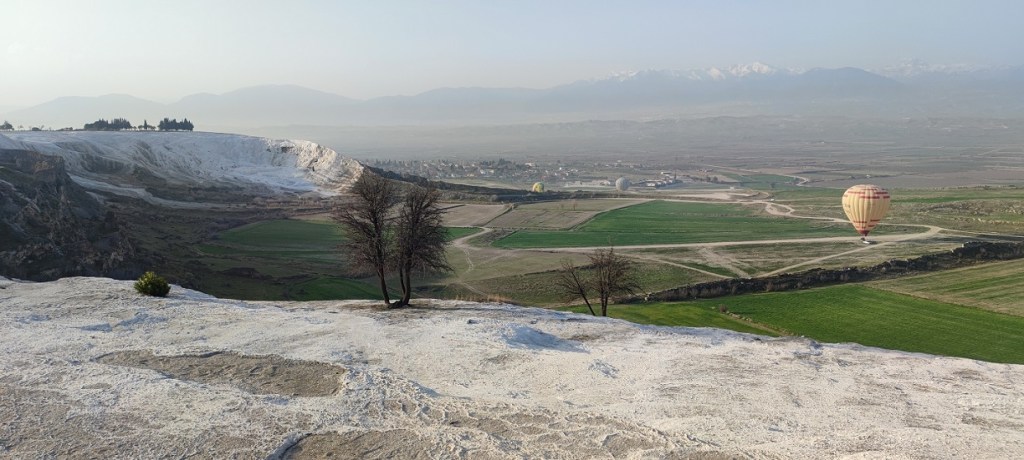
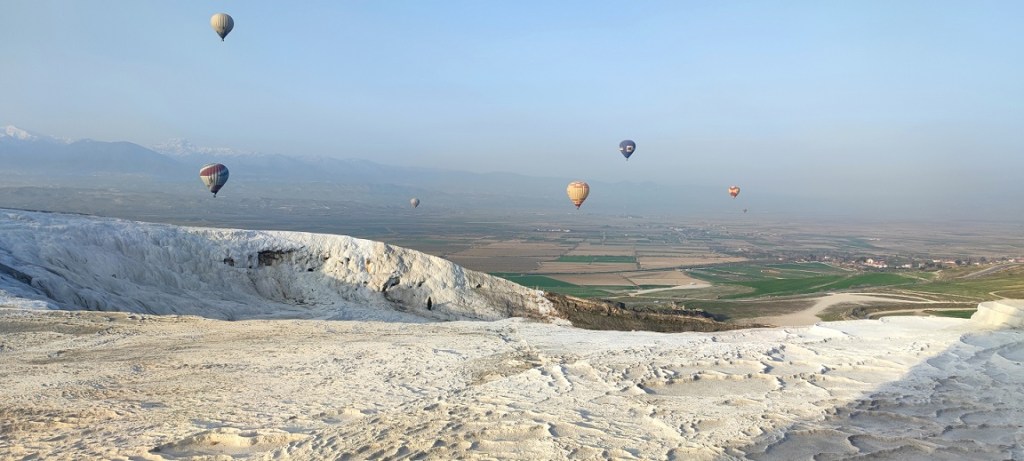
Since Classical Antiquity, healing properties were attributed to these waters, granted by the gods, especially Asclepius, the Roman god of medicine, as well as Hygiegia, goddess of hygiene, and Apollo, god of healing. Currently, since 1988, together with Hierapolis, it is a World Heritage Site.
HIERAPOLIS – AN ANCIENT CITY
Next to Pamukkale there is a city created by the king of Pergamum, Eumenes II, which is called Hierapolis. Let us remember that the Kingdom of Pergamum, then located in Asia Minor, was a cultural enclave of great importance in the Hellenistic Age, after the death of Alexander the Great in 333 BC. Likewise, the same monarch was the founder of his well-known temple, Altar of Zeus, currently located in the Historical Museum of Berlin.
Between the 2nd and 3rd centuries the city was rebuilt and became the typical Roman city. At this time it was a resort town for the upper classes who came to treat themselves in the healing waters of the cotton castle. In 1210 the city fell to the Seljuks, the ancestors of the Ottoman Turks, however in1354 it was destroyed during an earthquake.
LET’S PLAN A VISIT
WATCH THE DAWN AT CASTLE OF COTTON
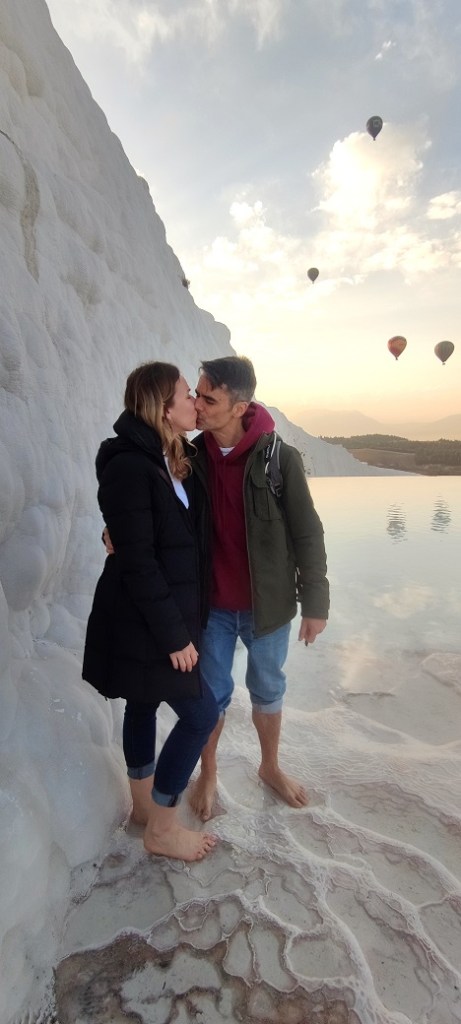
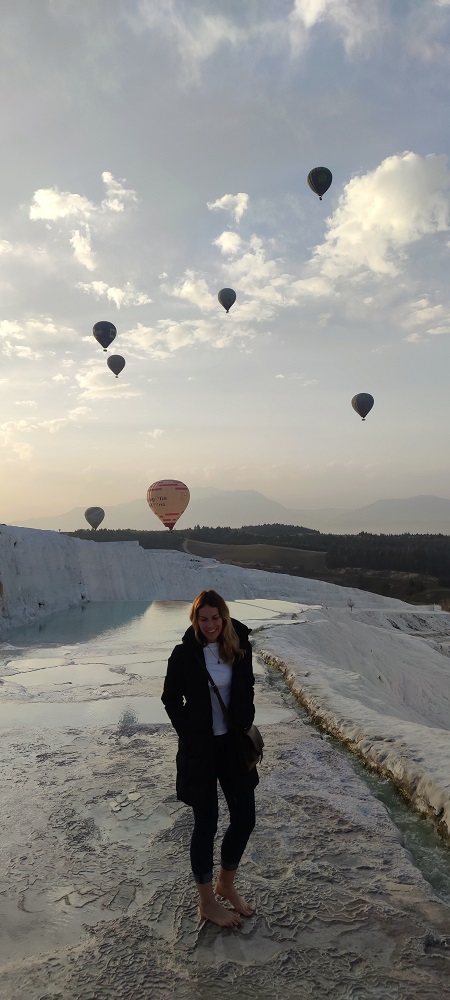
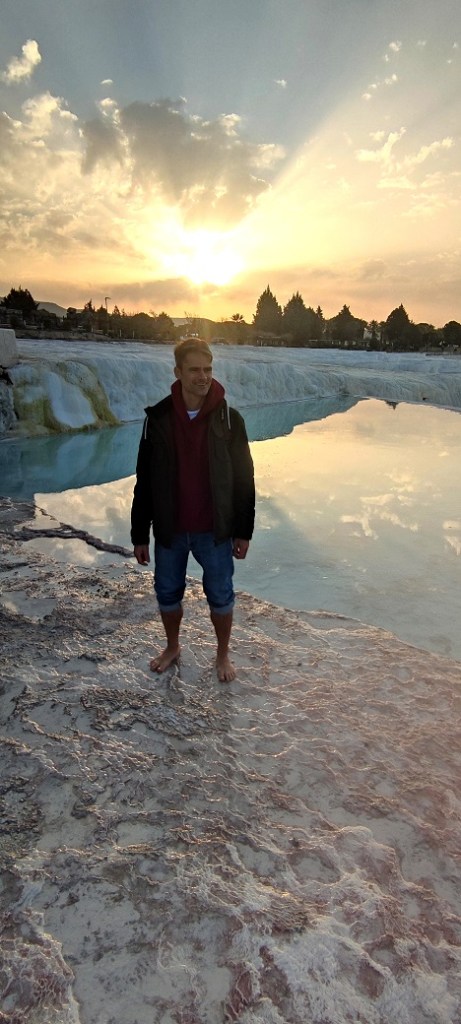
It is better to start early, even before the sunrise, so that you can enjoy the views of a beautiful sunrise from Pamukkale. You can visit the cotton castle even by walking through its warm waters, but you must go barefoot and it is better to wear either shorts or, if it is winter, pants that you can easily roll up in order not to get wet. In winter, even if it is cold, the water remains warm and it is very pleasant to walk through it. Of course, you have to be careful not to slip, because although most of the parts are quite rough, there are some areas that are more slippery and you must be careful.
LET’S DISCOVER THE ANCIENT CITY HIERAPOLIS


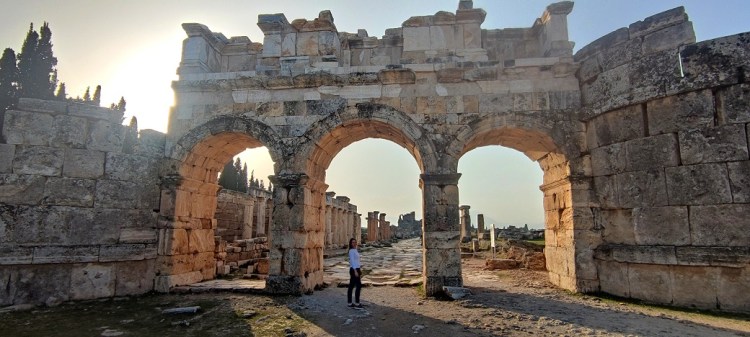
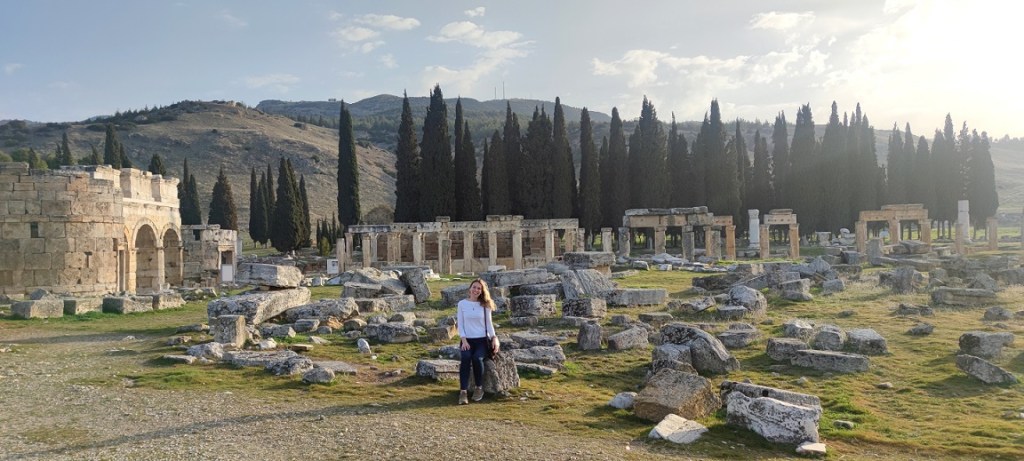
TEMPLE OF APOLLO
The temple of Apollo originates from Hellenistic times, but was rebuilt under Roman rule. It is a large temple, and next to it is Plutonium, the access to the underworld, as described by the geographer and historian, Strabo. What exactly was Plutonium? Well, a cave full of toxic gases due to underground volcanic activity in which numerous living beings had died.
ROMAN THEATRE
The Roman theatre is a construction of up to 20,000 people. The Romans were real engineers, not just architects. To build their theaters they were based on the geographical position, taking advantage of the hills to create the seats, as well as they were oriented by the direction of the wind, so that, in this way, the voice of the actors would reach the spectators better and more clearly.
Unlike the Greek theaters, the Romans built the orchestra of a smaller size, in a semicircular shape, however, the scene was monumental with several floors, as can be seen in the theater of Hierapolis. It had up to five large doors and reliefs with mythological scenes. Let us also remember that the actors were always men and wore tunics and masks to play male or female roles, as well as platform shoes, called cothurnus.

NECROPOLIS
The city houses up to three different necropolises, in one of which the tomb of the Apostle Felipe was found. Also in the enclosure there is an octagonal monument from the 5th century that pays tribute to this apostle, who according to the Golden Legend, written by Jacobus de Voragine, archbishop of Genoa, was martyred in Hierapolis.
TIPS:
• Start your visit at sunrise, since the views at the golden hour are really beautiful.
• Take a towel to dry your feet at the end of your visit to the hot springs. It is not necessary, but it is comfortable. Remember that your pants should be easily rolled up so as not to bother you when walking through the thermal water pools.
• You can visit the Archaeological Museum, but the entrance costs separately. It’s 110 lire.
• At the end of the enclosure there is the Cleopatra Pool, it is for public use, but you have to pay 100 lire. If you have enough time, it is a recommended activity. For this you must bring your swimsuit and towel. By the way, the queen of Egypt was never there.
• If you couldn’t make a balloon flight in Cappadocia, don’t despair, since in Pamukkale you have another chance to do it.

 all about eve`s journeys
One thought on “PAMUKKALE: A COTTON CASTLE IN TURKEY”