Bratislava, the capital of Slovakia, is a brilliant city, full of historical places and magnificent architectural constructions of the Gothic, Baroque and Art Nouveau styles that coexist in perfect harmony with the modern city. By visiting this beautiful city in Central Europe you will have the opportunity to obtain an enriching and rewarding experience for various reasons, which I will talk about below.
A BRIEF HISTORY OF BRATISLAVA
The history of Bratislava is linked to the history of the Austro-Hungarian Empire. During the Middle Ages, from the 10th century, the Slovak capital was part of the Kingdom of Hungary and in 1291 the monarch Andrew III granted it urban status thanks to which Bratislava experienced great cultural and economic growth. During the time of the Empire and the royal power of the Habsburg family, the city was the seat of the Royal Assembly (Diet) and even after the Austro-Hungarian Compromise it became the capital of the Hungarian Kingdom within the Austrian Empire until its fall in 1918. .
After the collapse of the Austro-Hungarian Empire after World War I, which, by the way, also ended with great European empires, starting with the Russian Empire in 1917, Bratislava, as well as the rest of Slovakia, formed part of a new country, Czechoslovakia. Subsequently, it survived the Nazi occupation, as well as the influences of the communist regime, and in 1993 it peacefully declared its independence.
REASONS TO VISIT BRATISLAVA
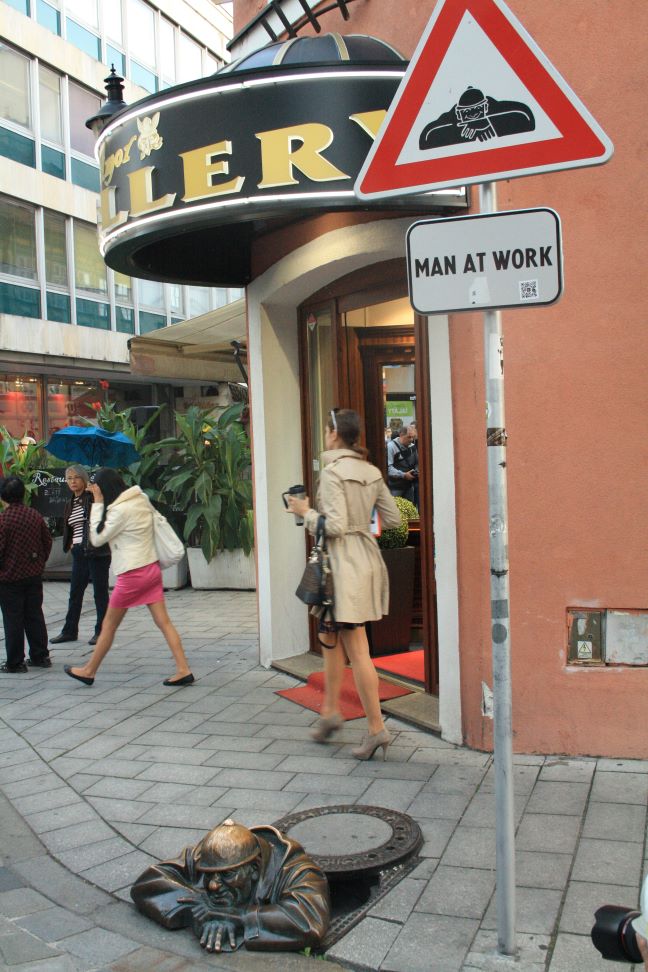
HISTORICAL CENTER WITH A LOT OF CHARM
The history of Bratislava that goes back many centuries and the great cultural development that this small city in Central Europe had, has led to the creation of a Historic Center, Stare Mesto, with a lot of charm that fascinates visitors. Some of the most outstanding monuments are:
BRATISLAVA CASTLE
Built on top of the hill offers wonderful views of the Slovak capital, as well as the navigable Danube River. In fact, one way to visit the city is through a cruise on the Danube that stops in the beautiful cities of several Central European countries. Returning to the castle, it is a fortification from the 9th century that has long been the residence of the Hungarian monarchs. However, victim of several sieges, it was burned and had to be rebuilt at the end of the 19th century by Eugen Schömer, who based himself on the original plans.
SQUARES
In the old town there are also two main squares where you should stop at a cafeteria and contemplate its magnificent architecture.
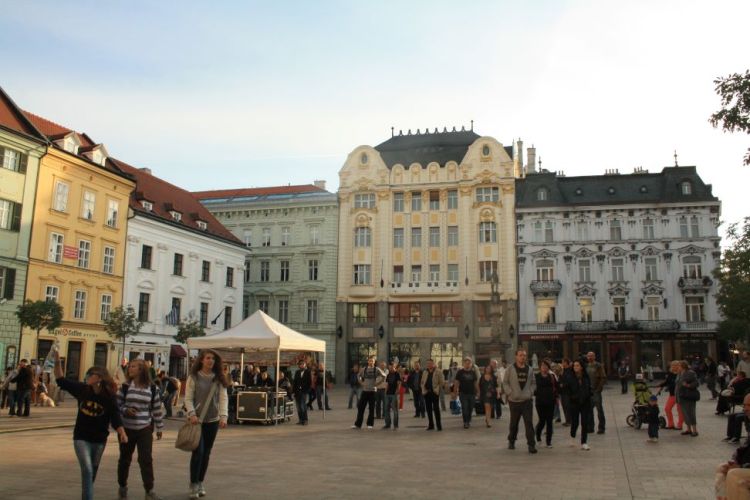
MAIN SQUARE, Hlavné Námestie, of medieval origin, is flanked by buildings that reflect various artistic styles. Among them stands out the Old Town Hall (Stara Radnica) from the 14th century with a Gothic character and the Primate Palace with neoclassical influences. In the center of the square, the baroque fountain represents Neptune, the classical god of the seas. Also, in this square every winter the charming Christmas Market is hosted. HVIEZDOSLAVOVO SQUARE named after the famous Slovak poet Pavel Hviezdoslav, whose sculpture is located in the center of the square, also offering views of impressive architectural constructions, such as the National Opera and the National Theatre. Likewise, a good way to enjoy this place is by having a delicious coffee in one of its cafeterias, or visiting one of the many craft markets that are held in this square.
GOTHIC CATHEDRAL OF ST MARTIN
Its construction was carried out between the 13th and 14th centuries. It stands out for its great 85-meter-high tower from which you will have the opportunity to contemplate the city. It goes without saying that inside there are wonderful works of art from different cultural eras. I encourage you to visit it and climb its tower.
WALK THROUGH THE DANUBE
Near Hviezdoslavovo Square is located the Danube River. You can walk along its shores or take a boat cruise, which I highly recommend.
BRATISLAVA IS MODERNIST
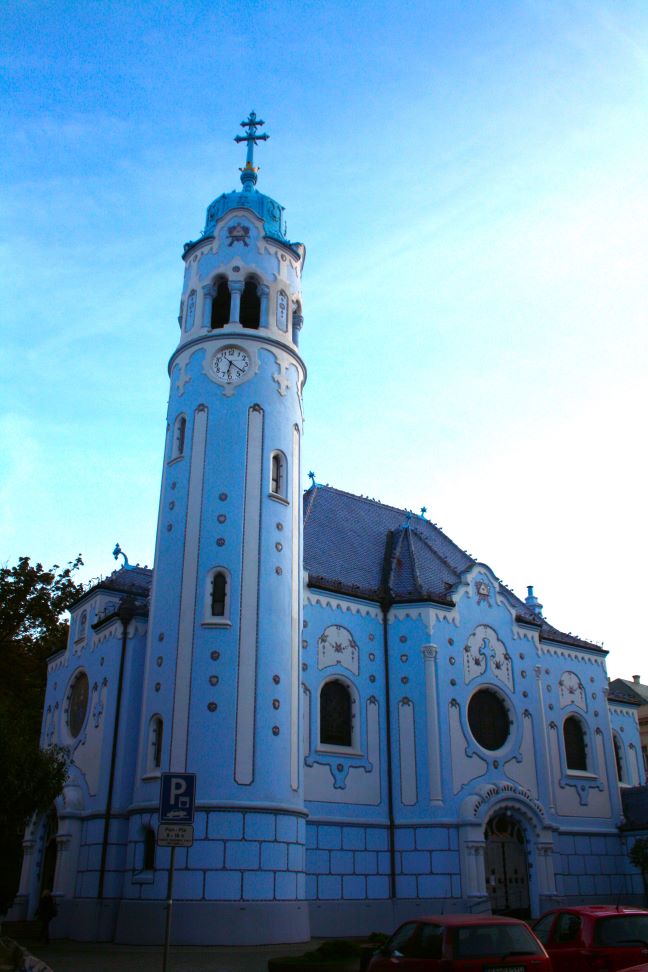
The modernist artistic movement was developed at the end of the 19th century and the beginning of the 20th century in Belgium at the hands of Víctor Horta. From there through specialized magazines it spreads to other European countries. Bratislava is full of numerous works of a modernist nature, among which the Blue Church stands out, located in the Petrzalka neighborhood, and designed by the Hungarian architect Ödon Lechner. Its intense blue color is in harmony with the white decorative elements inspired by nature. Inside, this intense blue also stands out, taking us to a heavenly place. It is a true artistic jewel that awakens our imagination.
A MODERN TOUCH
The historical part of the city is perfectly combined with modern architecture, which gives the Slovak capital a very special character. I recommend you visit the New Bridge (Novy Most) on top of which the UFO restaurant is located 95 meters high, whose shape resembles a spaceship. The bridge was built in 1967 and is 400 meters long. From the bridge you can also enjoy the beautiful views.
TIPS:
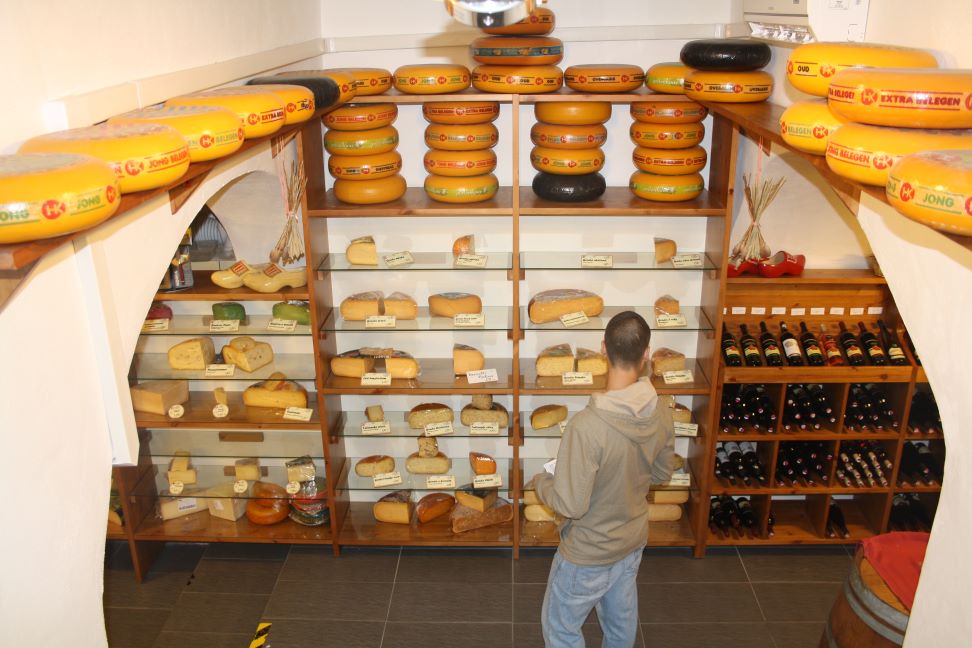
- Slovak gastronomy is based on the influences of various cultures that have coexisted on the same territory for centuries. I recommend you try Bryndzove Halusky, gnocchi in sheep cheese sauce, called bryndza. A delicious dish.
- You can reach Bratislava on a Danube cruise, thus visiting other magnificent capitals, such as Budapest or Vienna.
- Visit the green spaces, such as the Sad Janka Krala Park, it is a good place to disconnect surrounded by nature.
 all about eve`s journeys