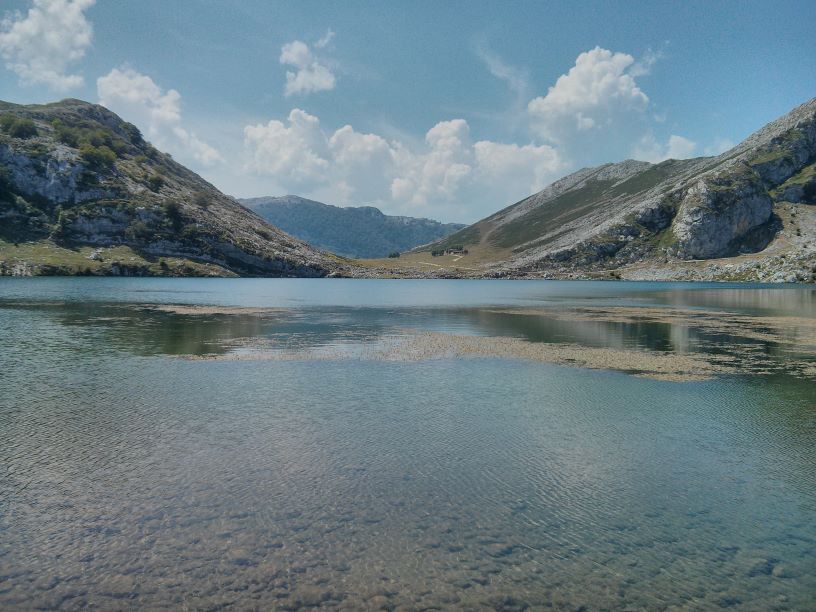
In the heart of Asturias, Spain, a picturesque corner unveils itself as a treasure for nature and spirituality enthusiasts. The Lakes of Covadonga, majestically nestled in the Picos de Europa National Park, and the venerable Monastery of Santa María, form an itinerary that captivates both the soul and the senses. I invite you to explore these wonderful places with me.
GLACIAL PHENOMENON AS AN ARCHITECT
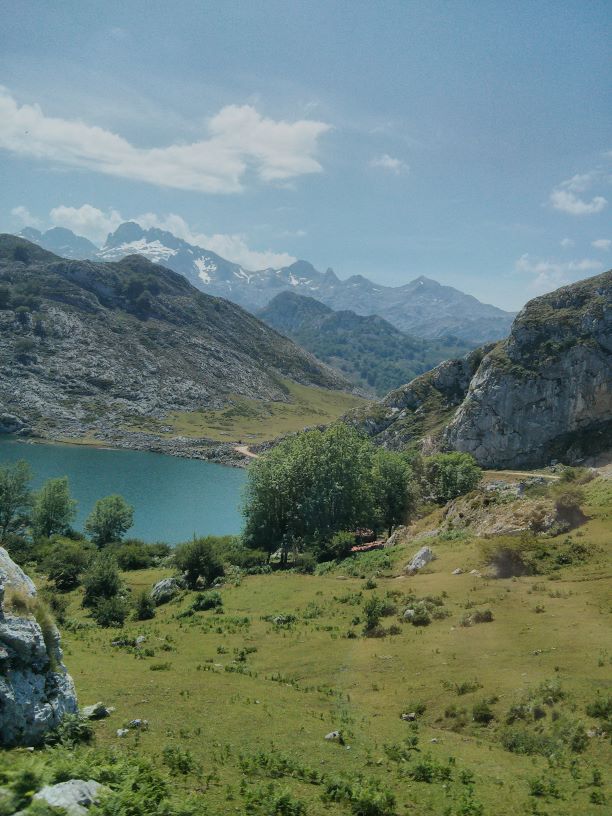
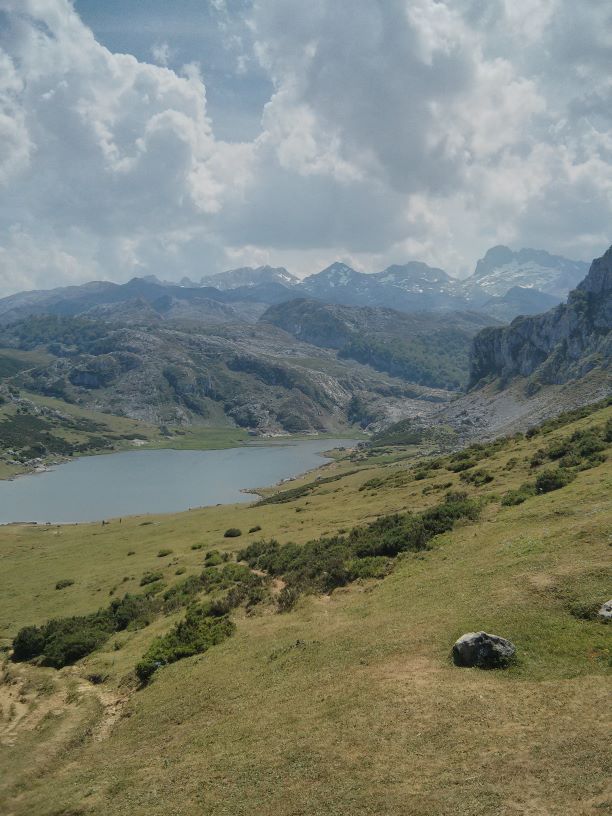
Thousands of years ago, during the last glaciation, a thick layer of ice covered the region. This glacial phenomenon was the main architect of the current morphology of the Lakes of Covadonga, not only a visual marvel but also a tangible testimony to the whims of geology over time.
As the ice advanced and retreated, it sculpted valleys and shaped the topography of the area. The glacial action left behind two depressions that, over time, filled with water, giving rise to the Enol and Ercina lakes, located at an altitude of over 1,000 meters. The composition of the soil, rich in limestone and dolomite rocks, contributed to the unique transparency of the lake waters. These rocks, part of the geological structure of the Picos de Europa, interact with the waters in a way that gives the lakes a characteristic bluish-green hue, offering a visual spectacle reflecting the geological purity of the environment.
THE BEAUTIFUL NATURE
The Routes of the Lakes, weaving through ancient forests and meadows saturated with lush greenery, transform into a hiking journey that awakens the senses and establishes an intimate dialogue with the rich biodiversity that Asturias harbors. Beech and birch forests greet you in the lower heights, while alpine meadows dotted with endemic flowers provide a visual spectacle at higher altitudes. Each step represents a change in the tapestry of life, a testament to the biological diversity of the region.
The intimate dialogue with nature expands as hikers share space with local fauna. The melodious songs of birds like the blackbird and the black woodpecker resonate among the trees, while the possible appearance of chamois and roe deer adds an element of excitement to the journey. In every corner, nature reveals its natural ballet in motion. Likewise, the Routes of the Lakes are not just physical paths but also open-air classrooms. Through an educational approach, a deeper appreciation of the environment is fostered, promoting environmental awareness and inspiring visitors to become guardians of this natural treasure.
MONASTERY OF SANTA MARÍA: A SANCTUARY OF HISTORY AND FAITH
A few kilometers from the Lakes, the Monastery of Santa María emerges as an architectural and spiritual relic that has withstood the ravages of time. Gothic arches, religious frescoes, and meticulously decorated chapels offer a window to the past, where each stone tells a story of faith and devotion.
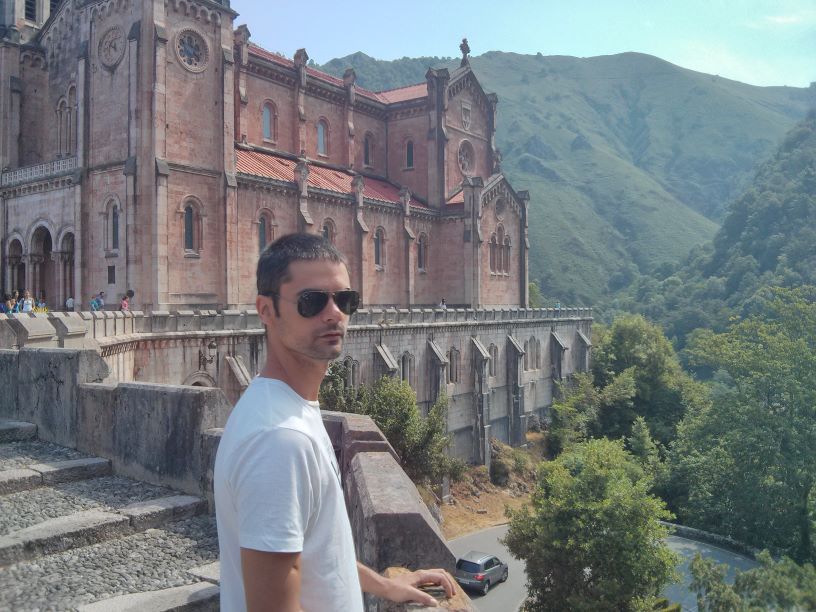
With its roots dating back to the 8th century, the Monastery of Santa María emerges as a silent witness to the vicissitudes of Asturian history. Founded by King Alfonso I, known as Alfonso the Catholic, in a period marked by political complexities and territorial tensions, the monastery has endured the ebb and flow of time, becoming a spiritual beacon that has withstood the storms of history intertwined with the legend of the Miracle of Covadonga. According to tradition, during the battle between the Christian forces of Don Pelayo and the Muslims, the Virgin Mary intervened miraculously, granting victory to the Asturians. This event strengthened the Christian identity of the kingdom and consolidated the spiritual importance of Covadonga.
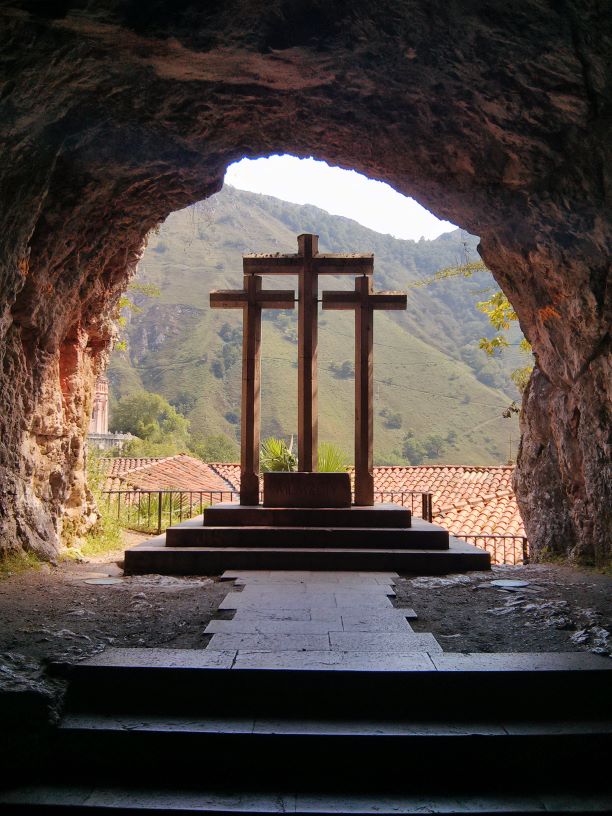
Throughout the Middle Ages, the monastery established itself as a spiritual refuge and custodian of sacred relics. The presence of relics such as the Holy Shroud and the Cross of Victory attracted pilgrims and enhanced the reputation of the monastery as a center of pilgrimage and devotion. Today, the Monastery of Santa María remains a beacon of spirituality and a living testimony to the rich history of Asturias. The ancient stones of the monastery resonate with centuries of prayer and devotion, offering visitors the opportunity to immerse themselves in the spiritual and cultural legacy of Covadonga.
TIPS:
- Begin your journey in Cangas de Onís, a charming Asturian town and the capital of the first Christian nucleus in Asturias after the Muslim conquest of the Peninsula in 711. From the bus station, there are regular services that will take you to the Lakes and the Monastery.
- If you plan to hike around the lakes or on surrounding trails, make sure to wear comfortable footwear and appropriate mountain clothing, especially if visiting during cooler seasons.
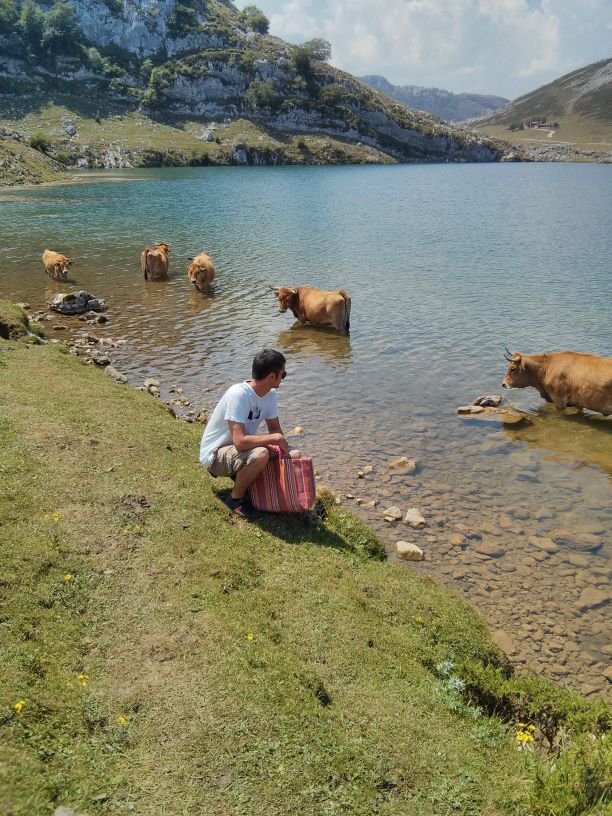
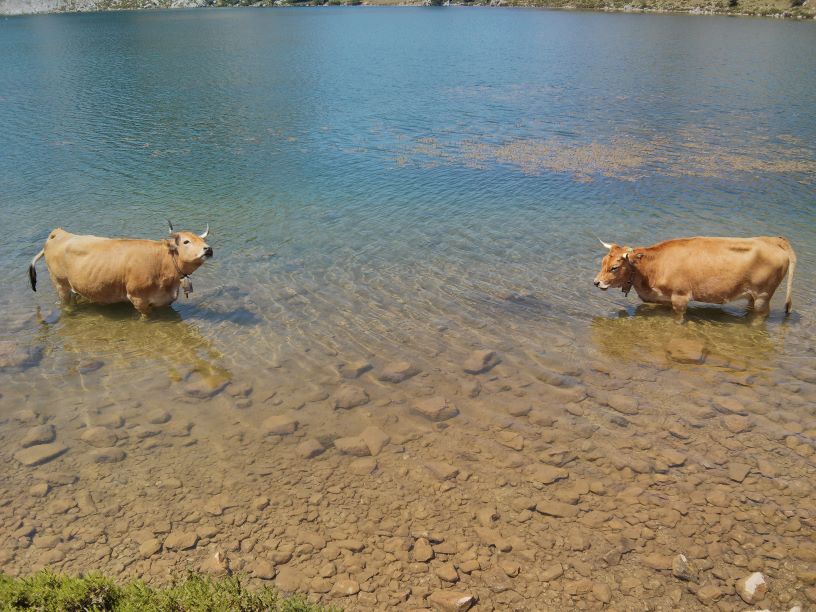
- Exercise caution when traversing this area, as encountering loose livestock, especially cows, is common. However, it is important to note that they are generally harmless. In my personal experience during the visit to the Lakes of Covadonga, I had the peculiar opportunity to witness a fight between two cows. This curious episode took place with one facing the other, while the others formed a circle of observers. It is fascinating how, in certain behaviors, cows are not so different from humans. 😊
 all about eve`s journeys