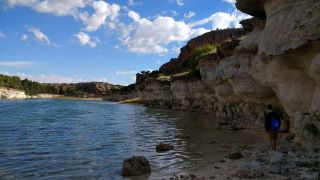
Recently, I mentioned a beautiful town in Castilla La Mancha in Spain, Alcalá de Júcar. Now, I want to tell you about two natural wonders in the same region: the Ruidera Lakes and the wetlands of the Daimiel Marshes. The Ruidera Lakes are fifteen interconnected lagoons, offering a charming landscape with crystal-clear waters, perfect for water activities and surrounded by lush vegetation. On the other hand, the Daimiel Marshes, a unique ecosystem in Europe, harbor a diversity of migratory birds and a rich aquatic flora. Both places are essential for conservation and connection with nature.
RUIDERA LAKES
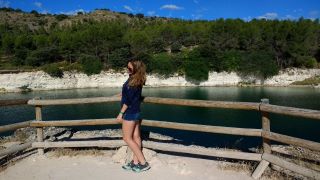
The Ruidera Lakes are a set of fifteen interconnected lagoons located between the provinces of Ciudad Real and Albacete. These lagoons form a landscape of great natural beauty, with crystal-clear waters reflecting the tones of the sky and surrounding vegetation. They are a popular destination for tourists as well as nature lovers and water sports enthusiasts.
The importance of the Ruidera Lakes lies in their value as a habitat for a diversity of flora and fauna species. Their shores are dotted with lush vegetation that serves as shelter and food for a variety of waterfowl, such as the northern shoveler, the great crested grebe, and the Eurasian coot. Additionally, the lakes are home to fish such as barbel, carp, and pike, among others. Regarding flora, the Ruidera Lakes are surrounded by typical wetland vegetation, including species such as reeds, bulrushes, tamarisks, and yellow water lilies. These plants not only contribute to the scenic beauty of the place but also play a crucial role in maintaining the aquatic ecosystem, providing shelter and food for local fauna.
According to oral tradition, these lagoons were created by nine sisters fleeing from the harassment of a Moorish prince. To avoid being captured, the sisters asked God for help, who turned them into lagoons so they could escape and hide in the water. It is said that each of the lagoons represents the place where one of the sisters disappeared beneath the waters.
DAIMIEL MARSHES
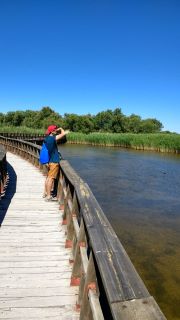
The origin of the Daimiel Marshes dates back thousands of years, when the Guadiana River carved a deep channel in the La Mancha plain, creating a wetland of great ecological importance. Over time, fluctuations in water levels and human intervention have shaped this landscape, creating a mosaic of lagoons, streams, and marshes that harbor exceptional biodiversity. First and foremost, it is one of the few wetlands in the Iberian Peninsula that remains in a natural state, making it a true oasis of biodiversity in a predominantly dry region like La Mancha. Its uniqueness lies in the combination of geomorphological, climatic, and hydrological factors that create a unique ecosystem with aquatic plants such as reeds, bulrushes, tamarisks, and yellow water lilies.
Additionally, the Daimiel Marshes are an important resting and feeding point for migratory birds traveling between Europe and Africa during their migration routes. Among the most prominent examples of birds are the purple heron, the mallard, the Eurasian coot, the little bittern, the common pochard, and the little grebe, among many other species. These birds use the Daimiel Marshes as a breeding, feeding, and resting place during their seasonal migrations. Among the mammals inhabiting this wetland are the garden dormouse, the European rabbit, the Eurasian otter, and the European badger, while reptile species such as the water snake and the Spanish pond turtle can be observed.
TIPS:
• Spring is an ideal season to explore these natural areas. With mild temperatures, it offers perfect weather for enjoying a pleasant visit.
• An excellent idea is to bring binoculars to better observe the birds in their habitat.
• Unfortunately, Spain has experienced an increase in drought in recent years, which directly affects the conservation of natural areas, so you should consider that water levels may be at their lowest.
 all about eve`s journeys