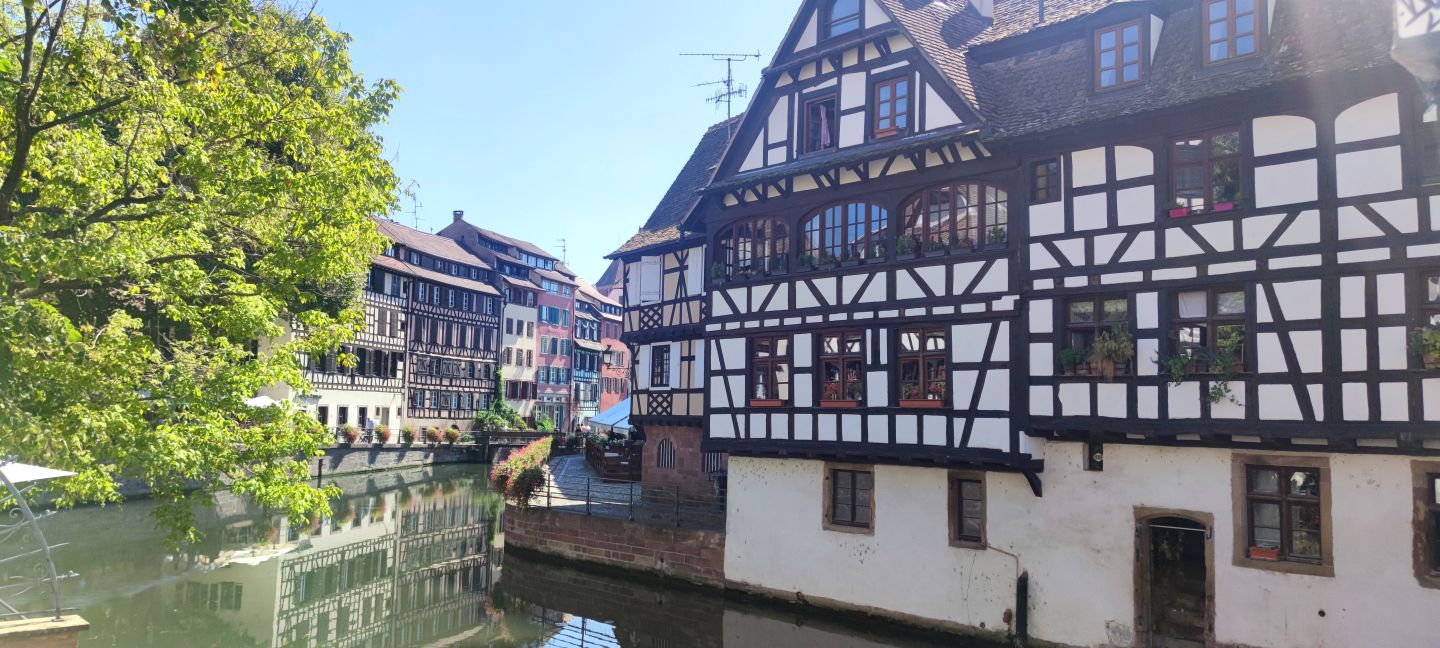
Strasbourg is one of those cities that seem straight out of a storybook, with half-timbered houses, quiet canals, and a cathedral that leaves you speechless. Located in northeastern France, in the Alsace region and on the banks of the Rhine River, it is a crossroads between French and German culture. This blend can be seen in the architecture, the gastronomy, and even in the character of the city.
A BIT OF HISTORY TO SET THE SCENE
Strasbourg has changed hands several times over the centuries, alternating between France and Germany. This historical back-and-forth explains why its identity is so unique: it is French, yes, but with a clearly Germanic heart. Today, it is also one of the political capitals of Europe, as institutions such as the European Parliament and the Council of Europe are based here. This mix of medieval past, Franco-German heritage, and modern present gives the city many layers and always something interesting to discover.
LA GRANDE ÎLE: THE HEART OF THE CITY
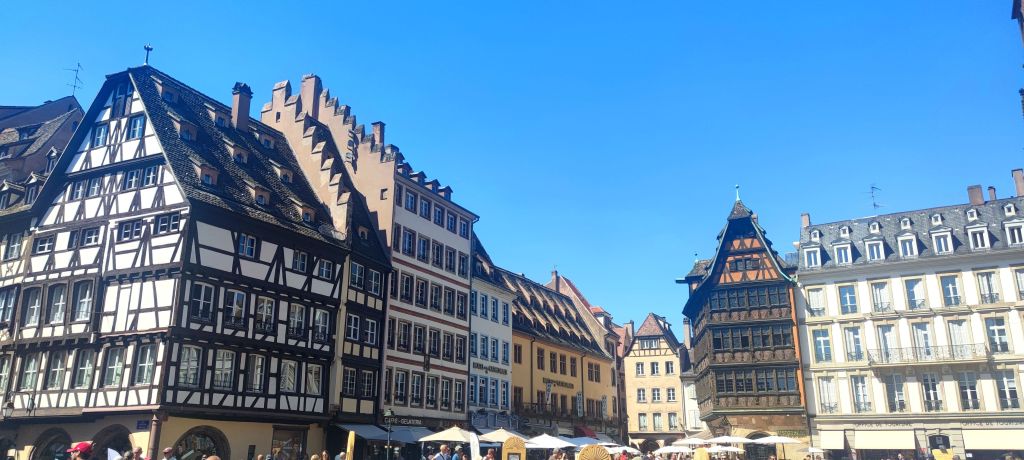
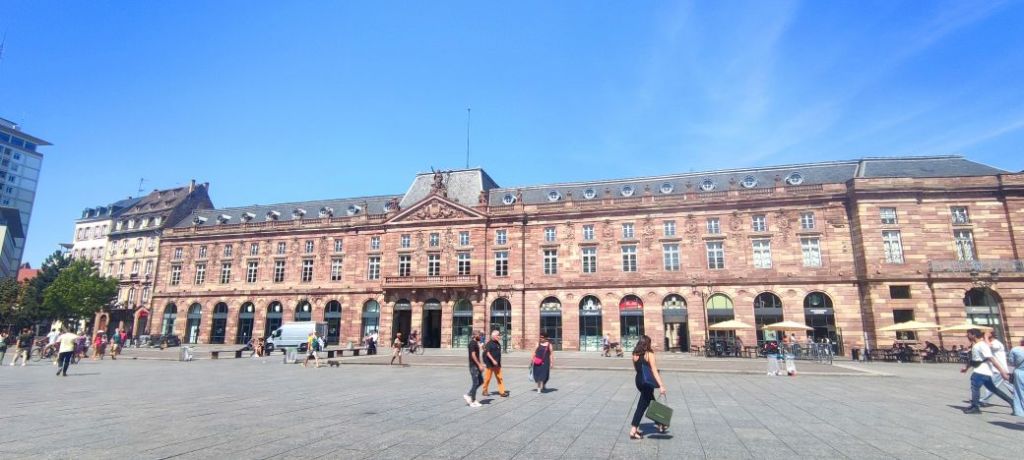
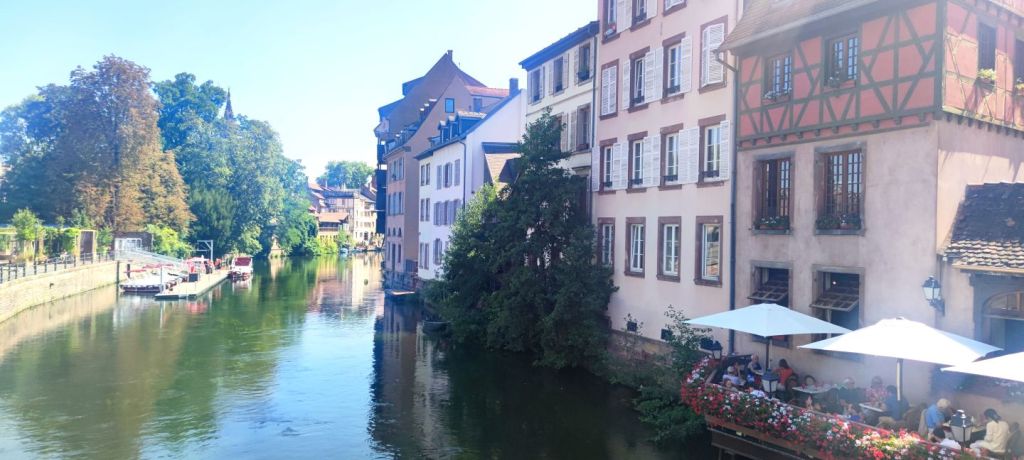
The best place to start exploring is the Grande Île, the historic center declared a UNESCO World Heritage Site. It is an island surrounded by the Ill River, and many of the main attractions are concentrated here. Walking through its cobblestone streets is a pleasure in itself: every corner has a house with flowers in the windows, a lively square, or a little spot that seems perfect for a photo.
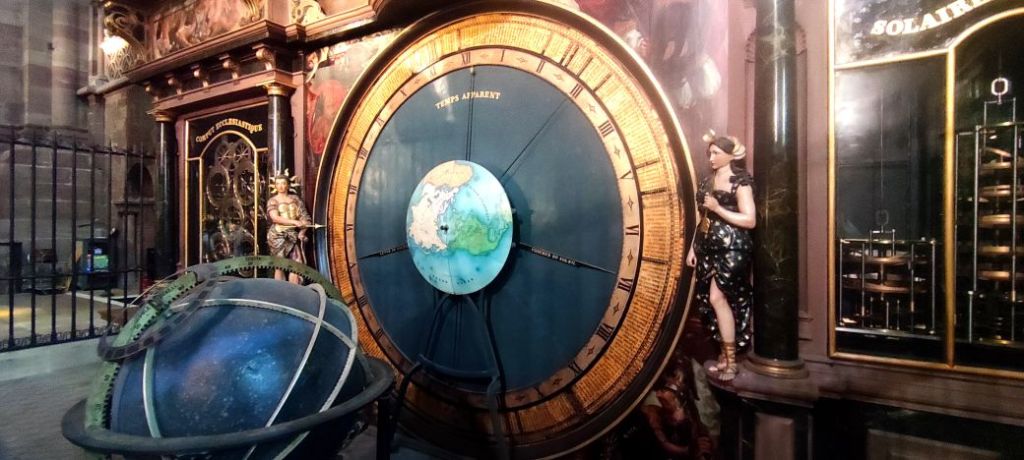
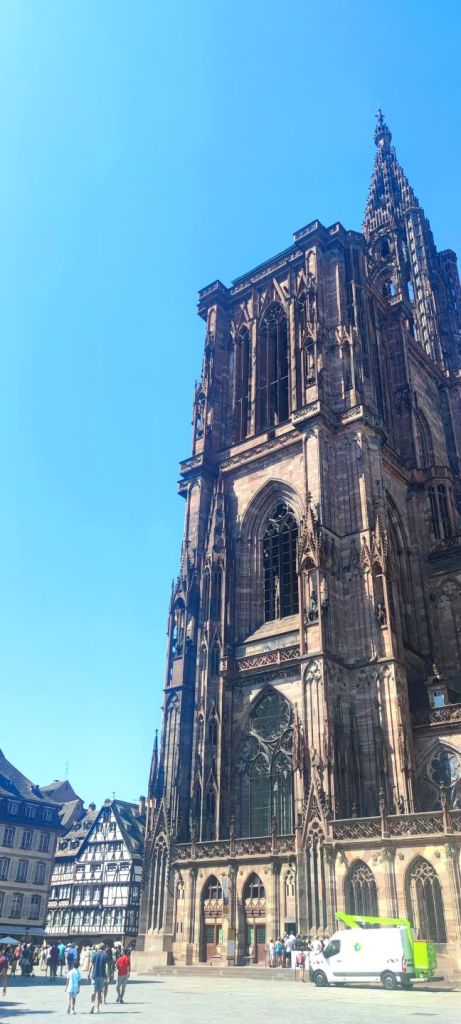
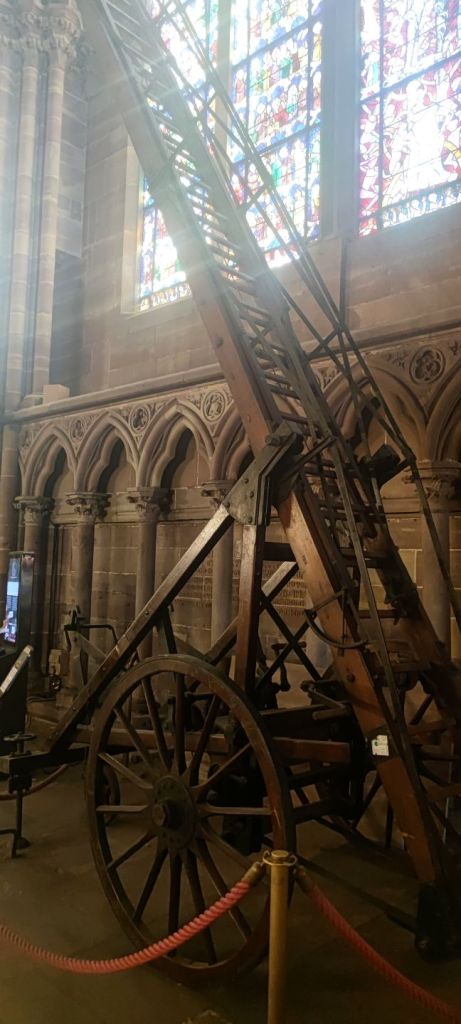
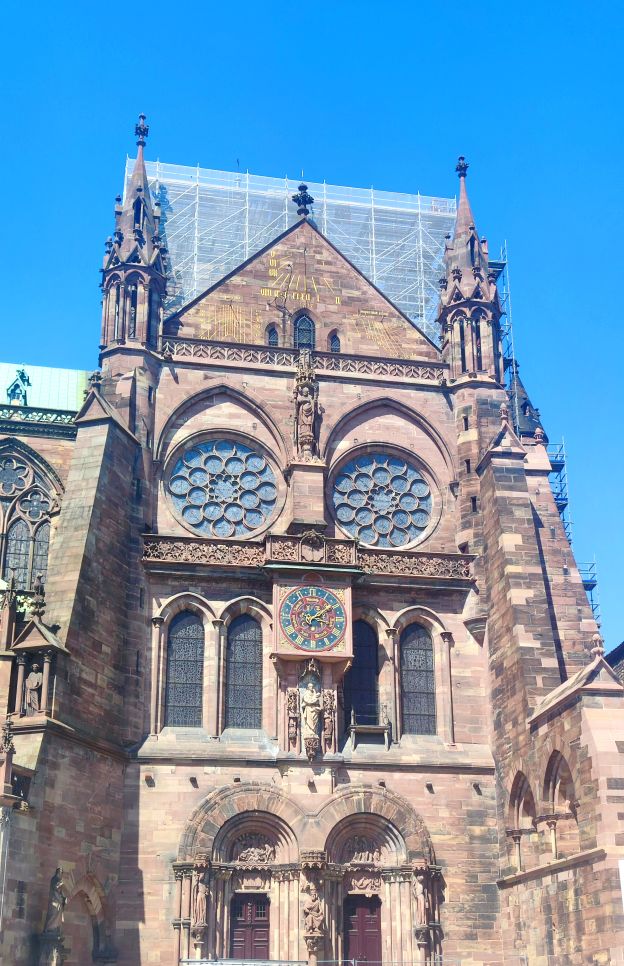
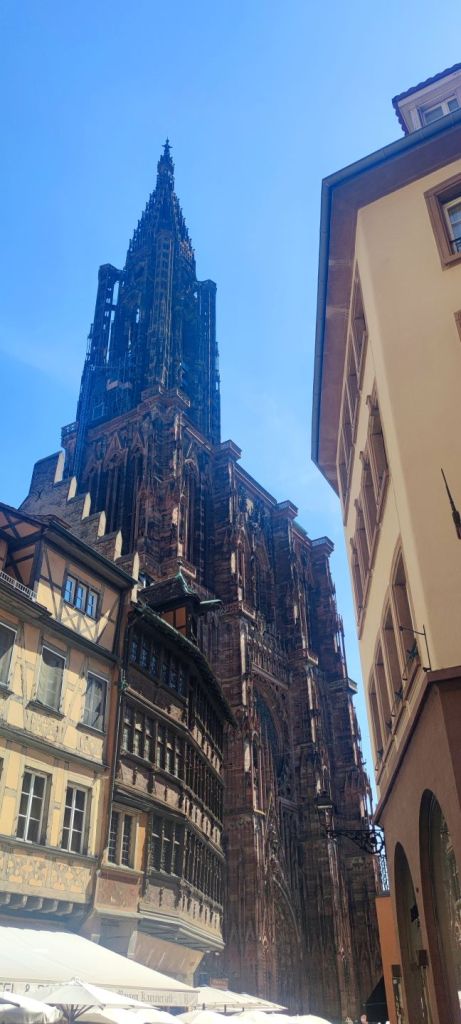
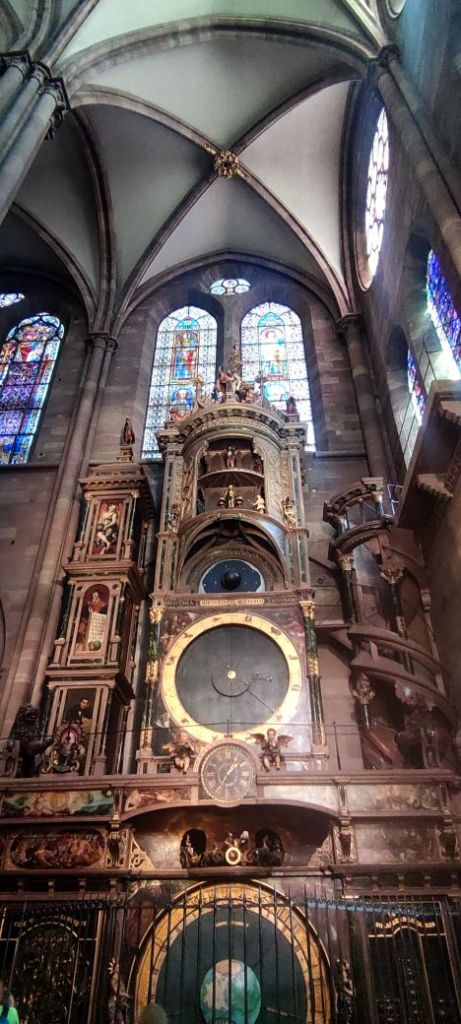
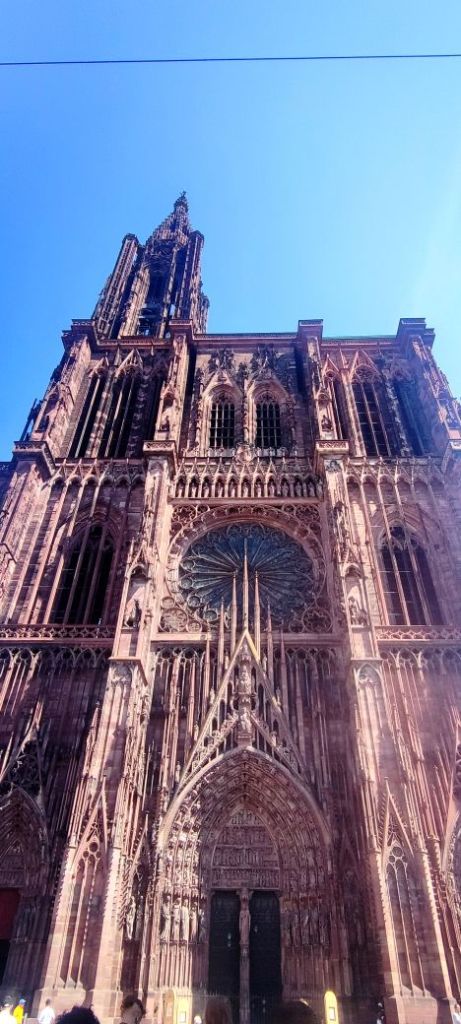
The main star here is, without a doubt, the Strasbourg Cathedral (Notre-Dame). Built in pink sandstone, its façade is a true masterpiece of Gothic art. For centuries it was the tallest building in the world, and even today its 142-meter tower is impressive. If you climb up to the platform (there are many steps, fair warning), you’ll get one of the best views of the city and, on clear days, even of Germany’s Black Forest. Inside, don’t miss the famous astronomical clock, a marvel of engineering that, at certain times, puts on a small mechanical show with moving figures.
LA PETITE FRANCE: A PERFECT POSTCARD
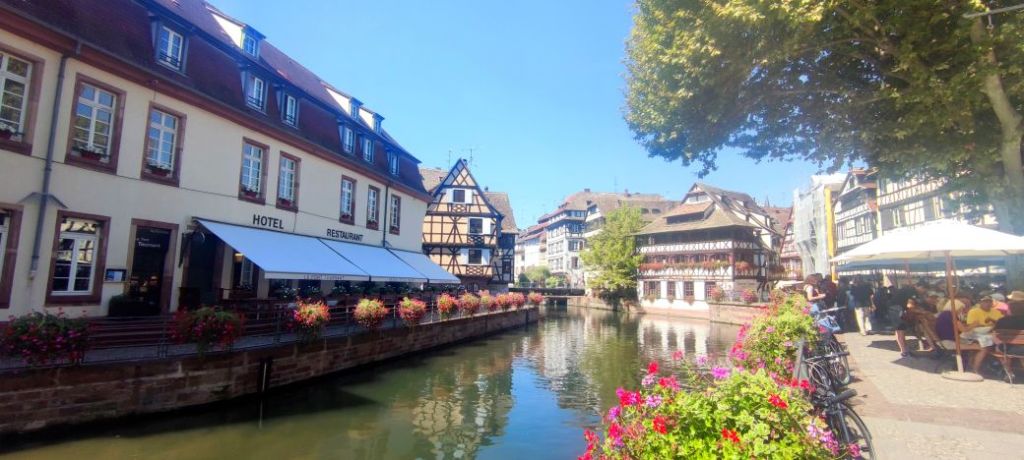
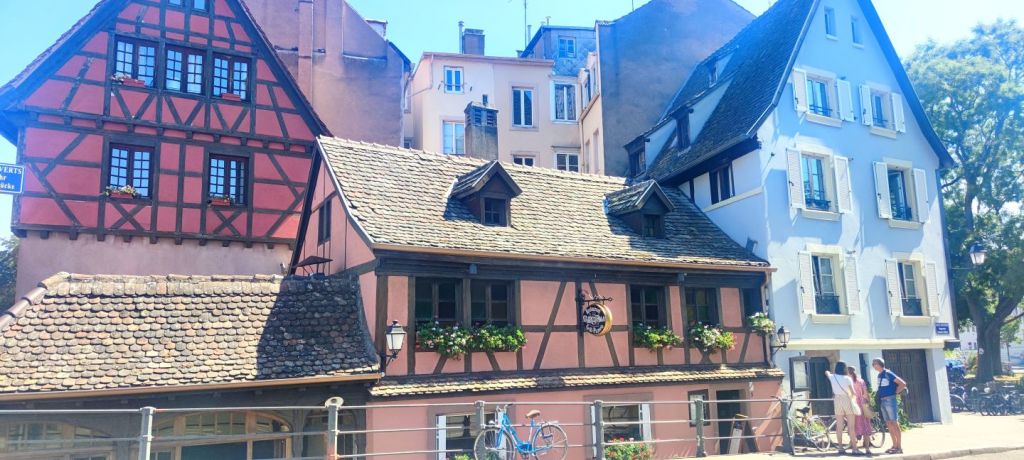
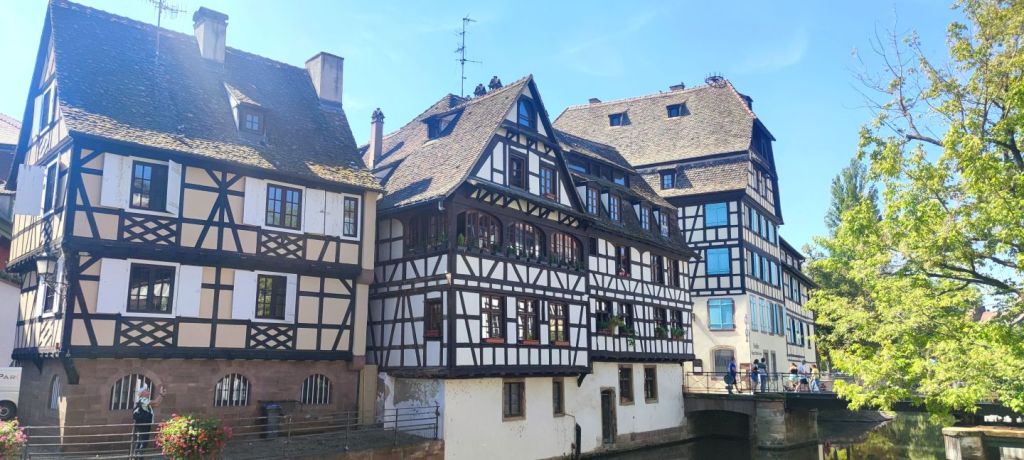
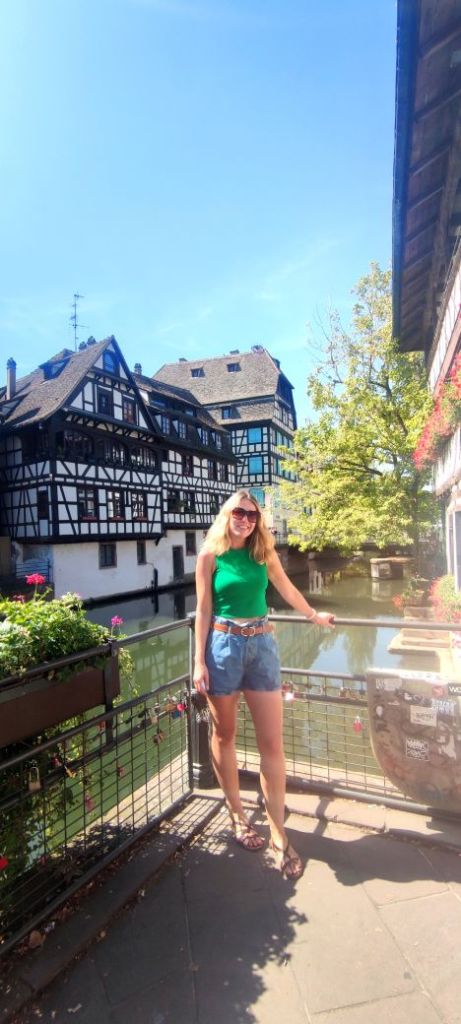
If there is one neighborhood that sums up the essence of Strasbourg, it is La Petite France. In the past, it was the area of tanners, millers, and fishermen; today, it is the most photogenic corner of the city. Its half-timbered houses, with sloping roofs and flower-filled balconies, are reflected in the canals, creating a storybook scene.
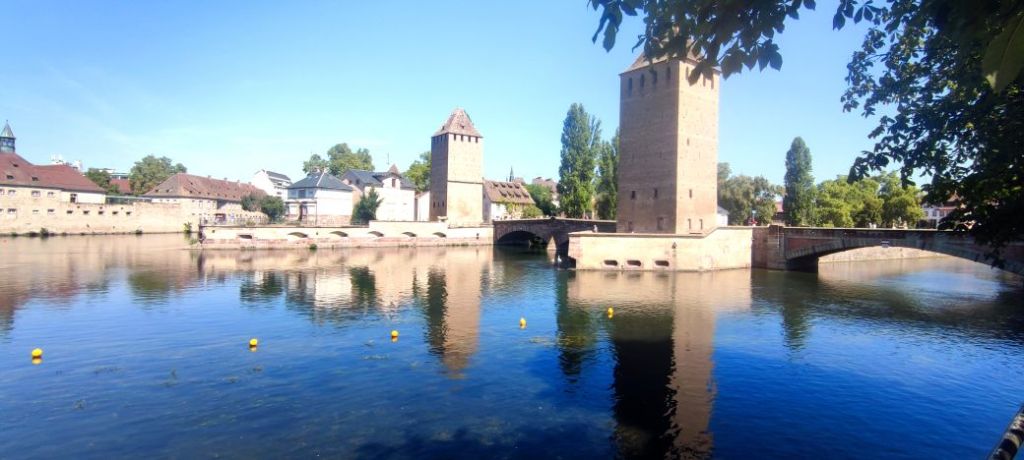
Wandering around here without a fixed route is almost mandatory. You can cross the Covered Bridges (Ponts Couverts) and reach the Vauban Dam, from whose terrace you’ll have a beautiful panoramic view of the neighborhood and the medieval towers. At sunset, when the light softens and the street lamps turn on, La Petite France becomes especially magical.
EUROPE LIVES HERE TOO
Strasbourg is not only medieval and romantic; it is also a key city in modern Europe. In the European Quarter you’ll find buildings such as the European Parliament, the Council of Europe, and the European Court of Human Rights. Although the architecture is much more contemporary, it’s worth visiting to understand the city’s political role. If you’re interested, it’s possible to visit the Parliament on certain days and learn a bit more about how the European Union works from the inside.
ALSATIAN GASTRONOMY AND A SWEET YOU CAN’T MISS
Strasbourg’s cuisine is hearty, flavorful, and strongly influenced by German tradition. Dishes like choucroute (sauerkraut with different kinds of meat and sausages) or tarte flambée (a kind of thin pizza with cream, onion, and bacon) are classics you’ll find in almost any traditional restaurant, called a winstub here.
But let’s talk about the typical sweet: the kougelhopf (or kugelhopf). It’s a crown-shaped cake, usually flavored with raisins and almonds, and it’s often eaten for breakfast or as an afternoon treat. You’ll see it in almost every bakery and pastry shop, each with its own version. Paired with a coffee or a hot chocolate, it’s a little piece of happiness in dessert form.
A FEW CURIOSITIES THAT WILL MAKE YOU SMILE
One of the best-known curiosities is that the stork is the symbol of Alsace. You’ll see its image on souvenirs, façades, and even on some signs. For a time, storks were in danger of disappearing from the region, but thanks to protection programs, they can now be seen again in the surrounding areas.
Another curious detail is the (almost) bilingual character of the region. Although French is the main language today, you can still hear Alsatian, a dialect of Germanic origin, especially among older people or in nearby towns. This cultural mix is present in many everyday details.
TIPS:
• When to go: Strasbourg is beautiful all year round, but spring and autumn are usually ideal thanks to the mild weather and fewer tourists. In December, with the Christmas markets, the city is gorgeous, although also much more crowded.
• How to get around: The historic center is perfect for walking or cycling. In fact, Strasbourg is one of the most bike-friendly cities in France. It also has a very efficient tram system for longer distances.
• How much time to stay: Two full days are enough to see the essentials without rushing, but if you have three, even better: you can add museums, boat rides along the canals, or even a short trip to a nearby Alsatian village.
 all about eve`s journeys