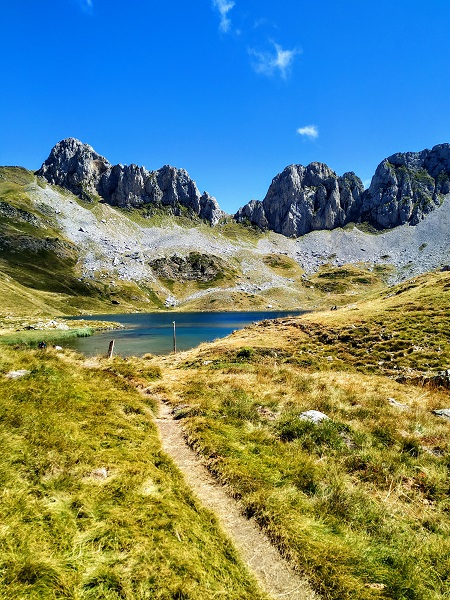
Spain is a place full of incredible mountains, whose beauty surprises visitors who usually know this southern European country due to its beautiful beaches. In fact, after Switzerland it is the second European country whose territory is most covered by impressive mountainous landscapes, in this way, if you are a hiking or climbing lover, Spain becomes the ideal place to take a trip and discover its wonderful landscapes. In the north-east of the country, on the border with France, the Pyrenees are located, brimming with high mountains, green meadows, glacial lakes and exuberant flora and fauna. I would like to show you the Hecho Valley, a wonderful place full of magic.
LET’S LEARN MORE ABOUT THE PYRENEES
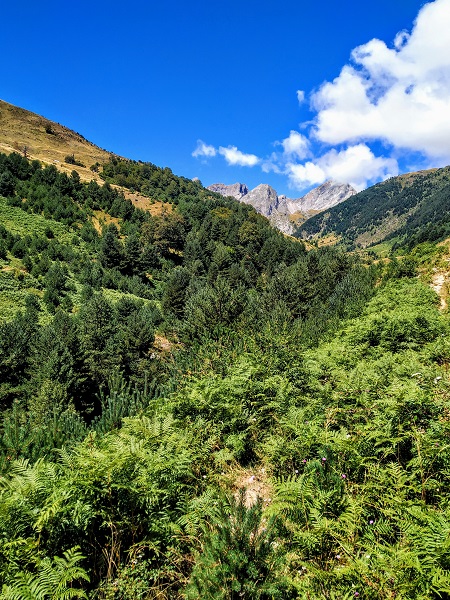
The Pyrenees are a mountain range that extends in an east-west direction for about 491 km, until reaching the Cantabrian Mountains from Cape Creus located on the shores of the Mediterranean Sea, the favorite place of the famous Spanish surrealist painter, Salvador Dalí, who used to strolling along these beaches with his beloved, Gala, and he had eternalized his moments of happiness in some of his works through his own hidden symbols. By the way, if you don’t remember History of Arts classes, surrealism is an artistic current of the early twentieth century, so it is part of the avant-garde, and was first coined by Apollinaire and officially established after the Manifesto of surrealism published by Breton in 1924.
Going back to the Pyrenees, the name of these wonderful mountains is related to an episode in Greek mythology, according to which Pirene, a girl, who came from this place, with whom Hercules fell in love, accompanied him during a trip and when she died, the Greek hero buried her under a pile of stones that would be the origin of the mountains. Although officially the Pyrenees originated during the Alpine-Himalayan orogenesis, however, there are even older parts that come from the Paleozoic and Mesozoic Era. Likewise, during the Quaternary Epoch the area was affected by glaciation, which later led to the creation of fantastic natural landscapes, full of lakes (ibón). Surely you do not know Aragonese, the dialect of this Spanish region, so I explain, ibón precisely means lake of glacial origin. In the north of Spain there are numerous lakes originated in this way, one of the most famous is Lake Covadonga, located in Asturias, related to a famous historical episode, produced between Muslims and Christians in medieval times. I’ll tell you this story too in another blog post.
HECHO VALLEY: A PLACE FULL OF MAGIC
Starting from the picturesque town of Jaca, whose development was very important during medieval times, in fact, the Camino de Santiago (Way of St. James) passed through its streets and continues to do so, through which pilgrims came from all over the European continent who attracted new cultural and artistic influences. In the Cathedral of Jaca we still have the opportunity to appreciate the magnificent chrismon that is carved on one of the walls of the Cathedral. The chrismon is a Christogram or the monogram of Christ in which the letters of Christ’s name appear, as well as the first and last letters of the Greek alphabet, Alpha and Omega, which in the same way as its circular shape allude to religious belief that God is the beginning and the end of all things. From Jaca along a beautiful road surrounded by countryside landscapes, I drove to the Hecho Valley, a place whose inhabitants speak the Aragonese dialect, called the chaso and still maintain many customs of past centuries, although the human presence in this part of the Pyrenees dates back to 3000 BC, since in the Crown of the Dead up to 120 stone circles and more than 500 flint tools were found. I suppose the ancient hunter-gatherers ventured into these parts in search of food.
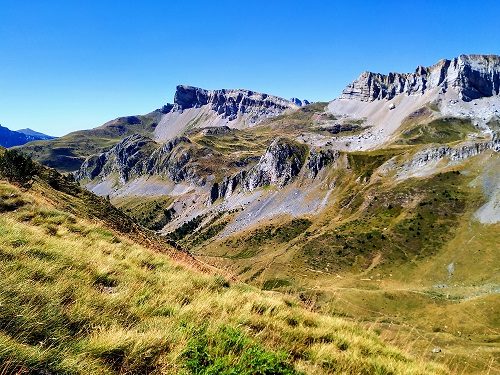
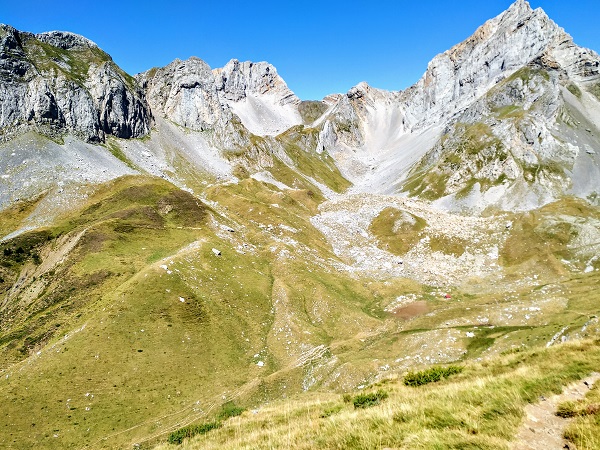
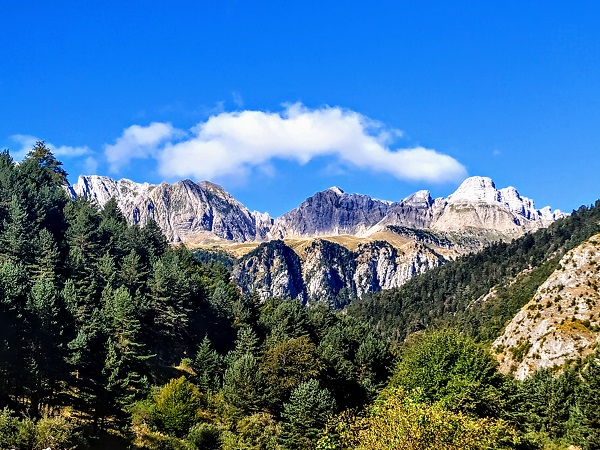
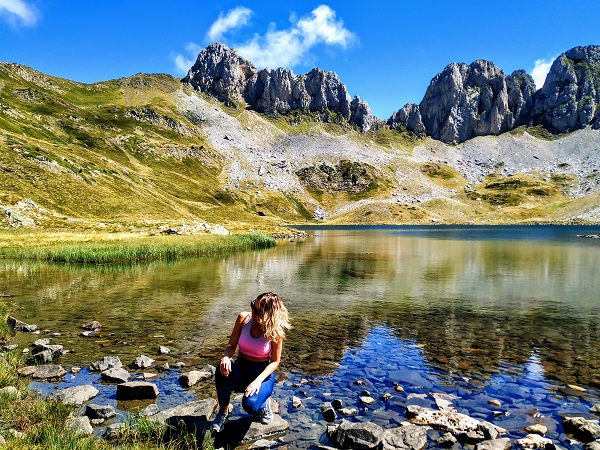
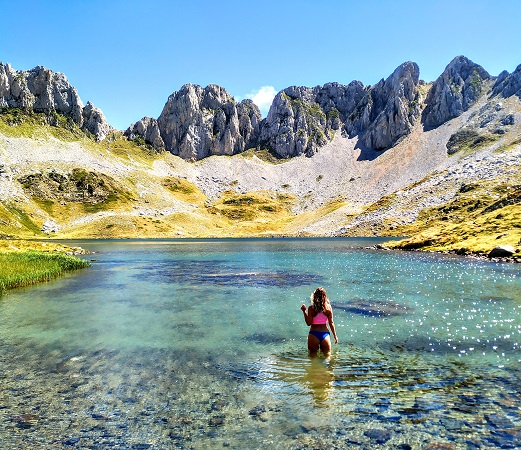
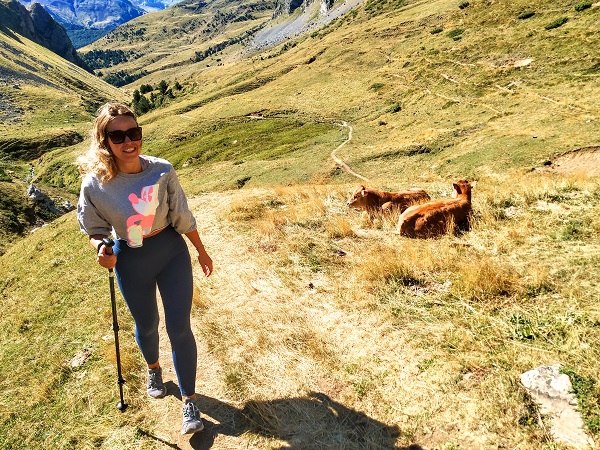
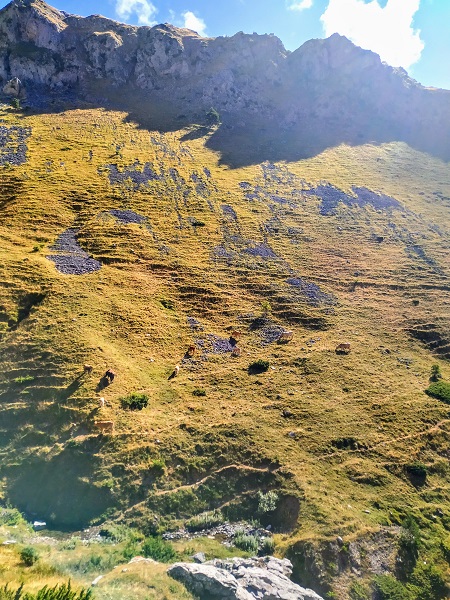
The route that I have chosen to get to know the Valley leads to the Acherito lake, it is a circular route of about 4 hours of hiking that begins in the Guarrniza plain that I reached after passing the Selva de Oza. I recommend this route, since the views are spectacular all the way. Above all I have loved the fact of passing through a section, in which wild cows rest in the soft grass meadows and even dare to climb the steepest areas that make me dizzy just looking at them. It’s amazing how they climb steep areas without losing their balance. Cows are harmless, but it is better not to get too close and respect their rest. Some time ago, at Lake Covadonga, I had the opportunity to see a real cow fight. I had never imagined something similar, the animals put themselves in the circle and the two cows, not bulls, facing each other were in the middle, one in front of the another, very angry. It was funny to see this show, they looked so much like humans. Cows are really very sociable animals, they usually form small friendship groups with which they spend time passing through the valley and resting. The central point of the route is, of course, the magnificent Ibón de Acherito, the vestige of the glaciation produced in the Quaternary period. Since during the summer months, in July and August, it is a bit warmer, I decided to immerse myself in its waters, which to my surprise were not as freezing as I imagined. It is a spectacular place, I cannot find enough words to describe its cuteness, and while you are there, surrounded by the high peaks of the Pyrenees, a feeling of peace and happiness envelops your body. I recommend that you take a break in this part, it is a perfect place to have a snack.
TIPS:
- Bring the adequate equipment, even in summer it can be cold and the sun light is really strong at the high altitudes, so don’t forget your sunglasses, a cap and the sun cream.
- If you stay for longer in this area, try to visit the medieval monastery, San Pedro de Siresa. It is a stunning place, you are going to love it!
- You can spend a night in your van at the parking area.
 all about eve`s journeys
Love this blog post! Beautiful history, pictures and tips for visiting. Very informative 🙂 Can’t wait to read more from you!
LikeLike
Thank you very much for your comment 😊
LikeLike