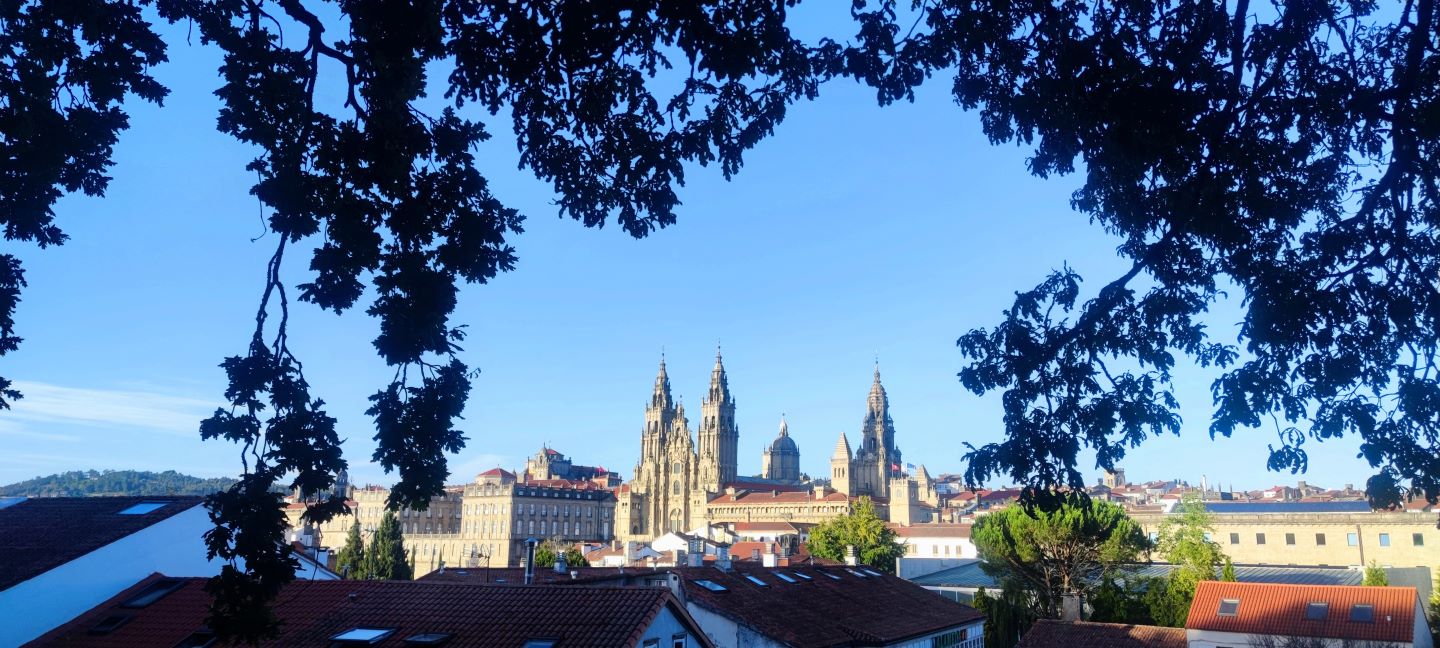
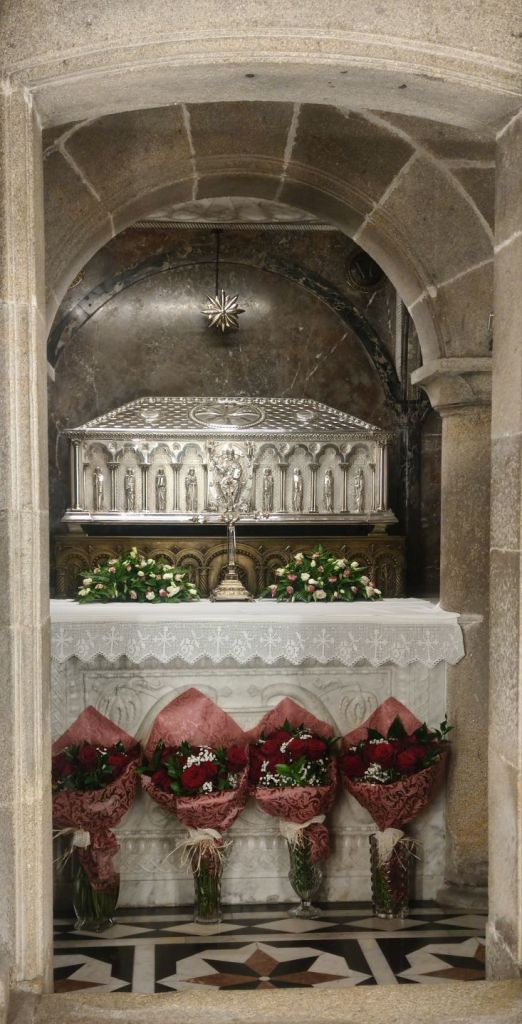
Santiago de Compostela is one of the most famous cities in Spain and in the world due to its religious nature and the fact that it is a Christian pilgrimage center that dates back to Medieval times. It is located in the northeast of the Iberian Peninsula, in the autonomous community of Galicia. The city was founded during Roman times and since then it has been related to the Apostle James the Great, whose mortal remains after his martyrdom in Jerusalem were transferred to the Galician city, and whose tomb was later found in the 9th century. Since then, the city has prospered due to the influx of numerous pilgrims who come every day to the beautiful Cathedral of Santiago, where the relics of the apostle are located under the transept, after completing the famous Camino de Santiago, a network of pilgrimage routes that cross Europe and that culminate in this city.
THE FOUNDATION OF THE CATHEDRAL AND THE BEGINNING OF THE PILGRIMAGE
According to legend, the hermit Pelayo found the tomb of the apostle in the Libredón forest in 814, and after the recognition of this fact as miraculous by Bishop Teodomiro, whose headquarters was located in Iria Flavia, current Padrón, the monarch of Christian kingdom of Asturias, Alfonso II, had ordered a construction of a primitive chapel, to which he went as the first pilgrim. The chapel became in 829 the first pilgrimage church of pre-Romanesque character, but due to continuous attacks by Muslims (remember that the Iberian Peninsula was then divided into the various Christian kingdoms and the Emirate of Córdoba since 756), and also due to the continuous increase in pilgrims who came to venerate the apostle, the church was rebuilt on numerous occasions.
One of the most important attacks that reduced the primitive church to rubble was carried out in 997 by Almanzor, vizier of the Caliphate of Córdoba (929-1010) and a great warrior, who also took the doors and the bell of the church as souvenirs, and located them in the Mosque of Córdoba, another majestic architectural work that nowadays it is possible to visit as a Christian Cathedral. However, after the Christian conquest of Córdoba in 1236, carried out by the monarch Fernando III El Santo, these doors and the bell were transferred to form part of the Cathedral of Toledo (remember that Toledo was the capital of the Visigothic Kingdom between 507 and 711, and for the Christians it was very significant to recover it in 1085, since from the year 711, after the Muslim conquest of the Iberian Peninsula initiated by Tarik, Toledo was under Muslim rule).
THE CATHEDRAL NOWADAYS
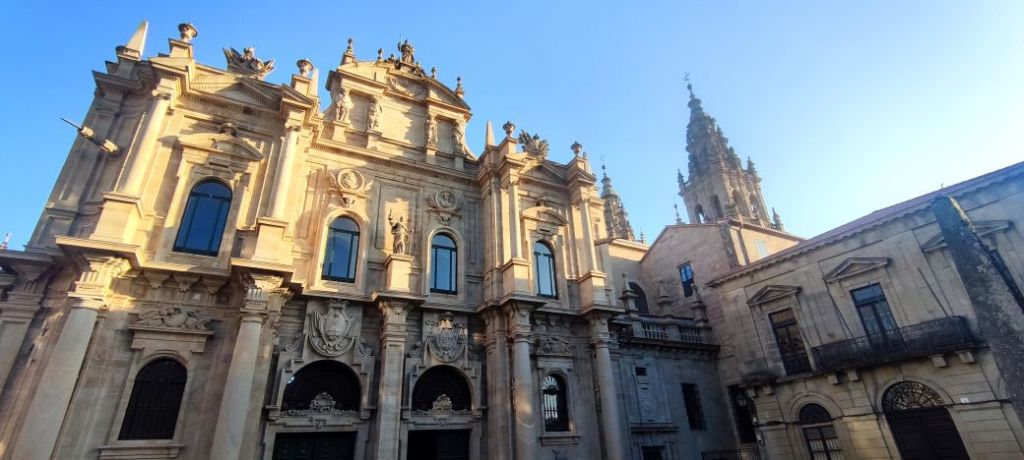
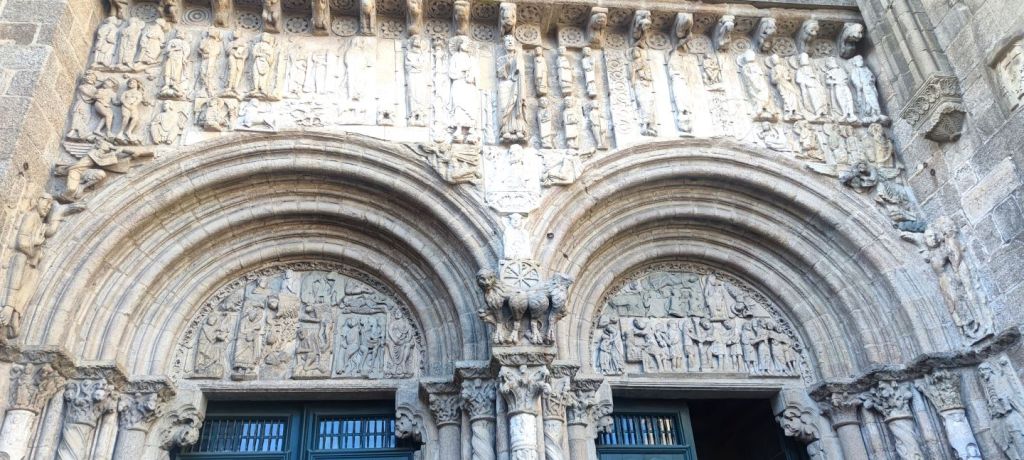
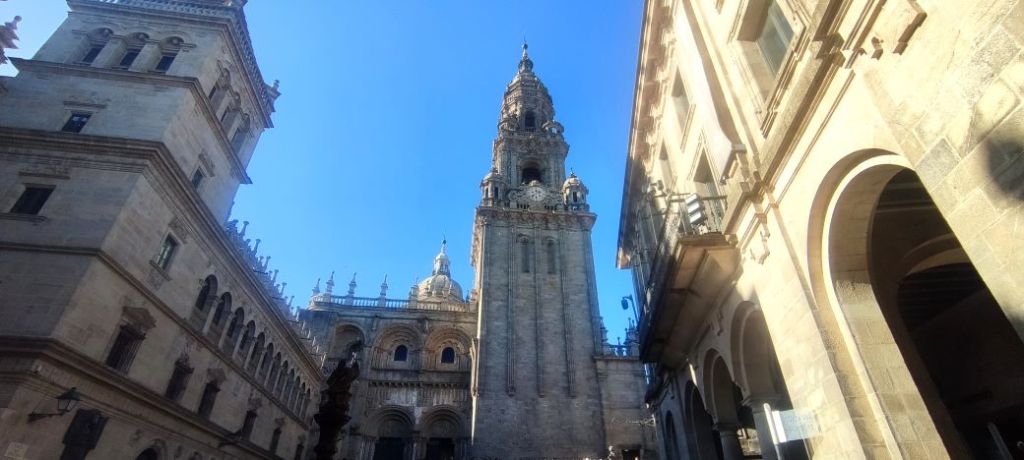
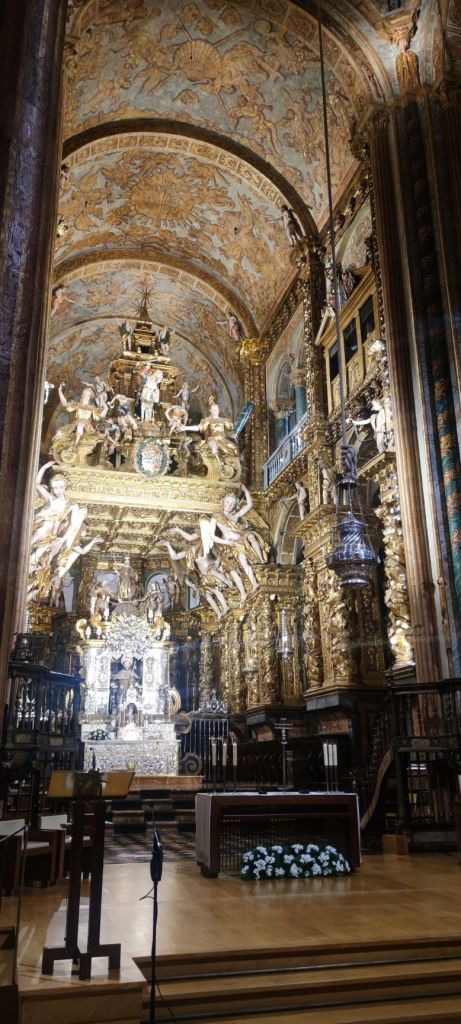
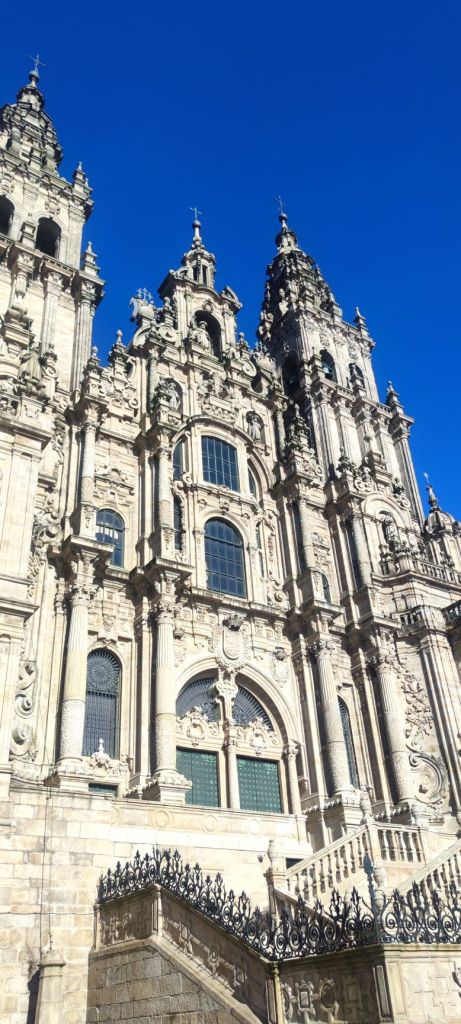
Returning to the current Cathedral of Santiago, its construction began in 1075 under the direction of master Bernardo and master Esteban, and its style is typical of a Romanesque pilgrimage church with some Gothic influences, an artistic style that was established in the Peninsula from the 11th century, among others, due to the influx of French pilgrims. The Cathedral is mainly recognized for its magnificent main doorway, located on the western side of the temple, called the Portico of Glory, created by the master Mateo between 1068 and 1088. Although it should be noted that during the Baroque era the Portico was covered under a new doorway, and is currently located inside the Cathedral, being part of the museum tour.
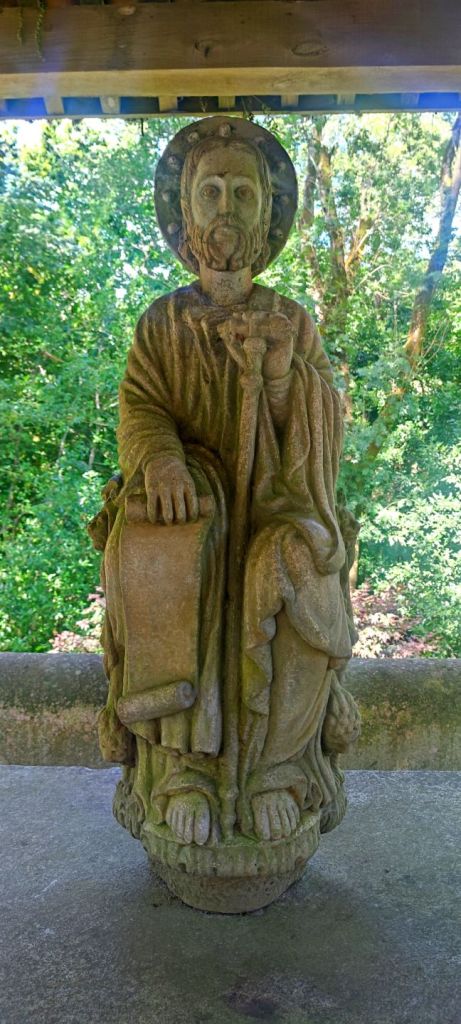
In the center, in the part of the tympanum, there is Pantocrator, the figure of Christ sitting on the throne and blessing the faithful. It is surrounded by the Tetramorphs, the four Evangelists (Saint Matthew, Saint Luke, Saint John and Saint Mark) with their corresponding symbols (man, bull, eagle and lion respectively – characteristics of these living beings that each of the evangelists attributed to the figure of Christ in theirs writings). We can also observe the angels carrying the symbols of the Passion of Christ. In the central column that divides the doorway into two doors, called the mullion, there is the figure of James the Great, dressed as a pilgrim, carrying his cane and scallop shell, and who appears seated on the Tree of Jesse, the genealogical tree of Jesus. There are numerous more sculptures of celestial figures and saints, which surprise the visitor, since they clearly depart from the schematic forms that were more typical of the Romanesque. The naturalness of these figures represents the influences of the Gothic. Of course, the Portico of Glory is a masterpiece, admired by numerous historians and artists due to its great aesthetic beauty and important spiritual content.
GREEN STOPS IN THE CITY
BONAVAL PARK
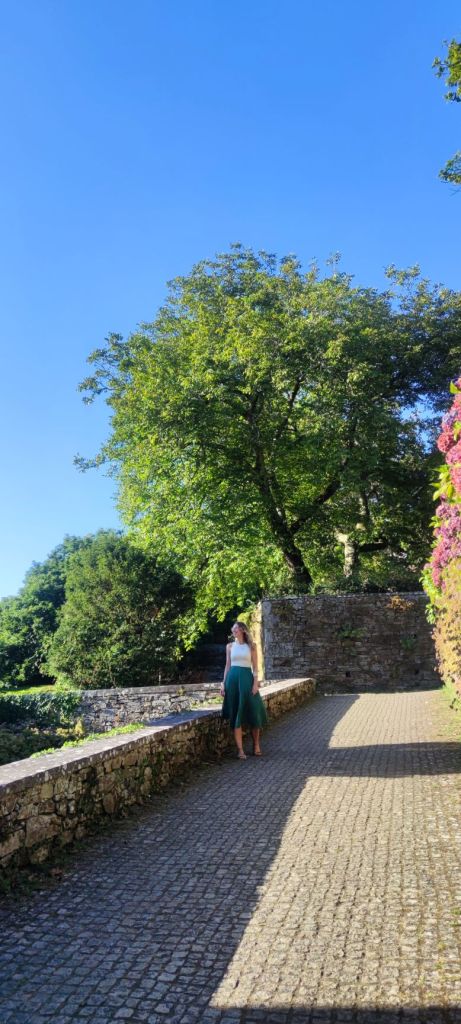
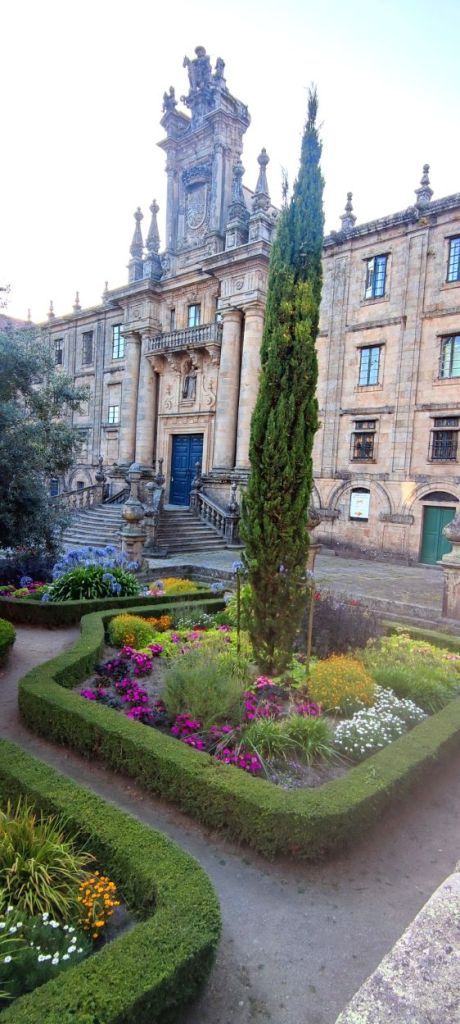
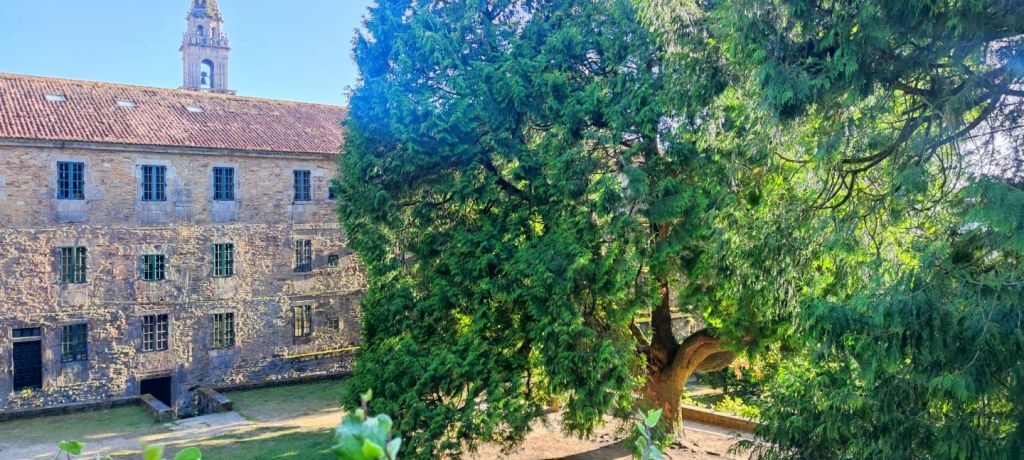
During my time in the city of Santiago, the Bonaval Park caught my attention due to its great charm. It is a garden area that formerly belonged to a Dominican convent, located outside the walls of the city, of which we can still appreciate the architectural construction from 13th century and an old cemetery. In fact, this building is currently home to the Pobo Gallego Museum, in which are represented different areas of Galician culture. On the other hand, from the top of the park, located on an undulating slope, it is possible to appreciate the views of the city and it is a perfect refuge to rest during the tourist visit, especially in summer.
ALAMEDA PARK
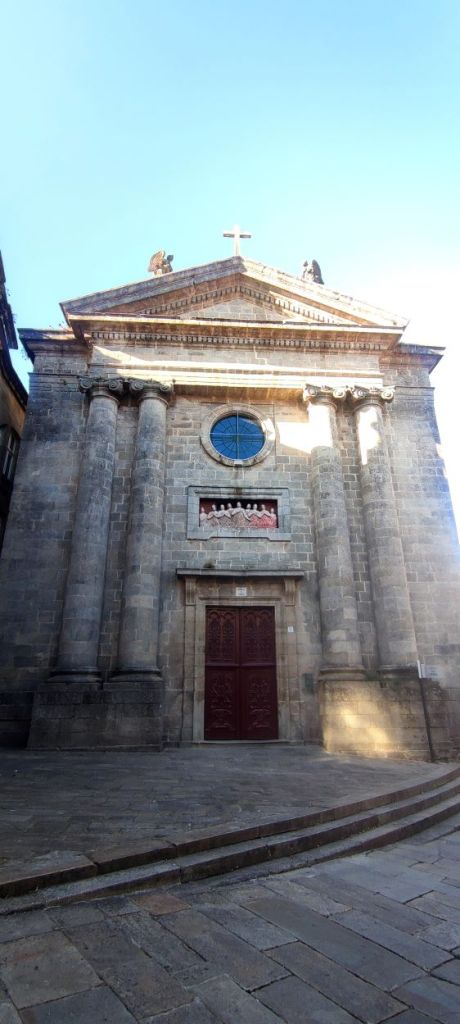
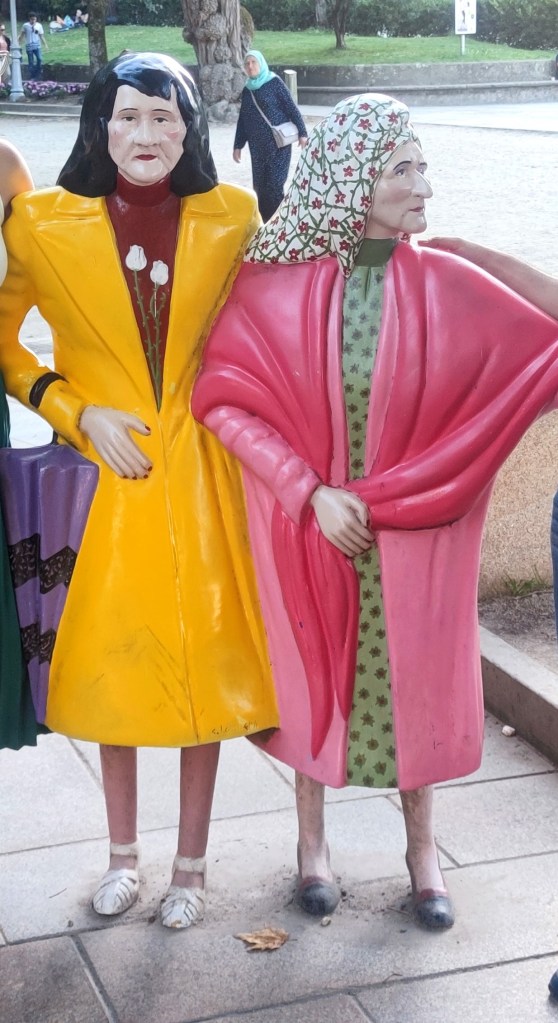
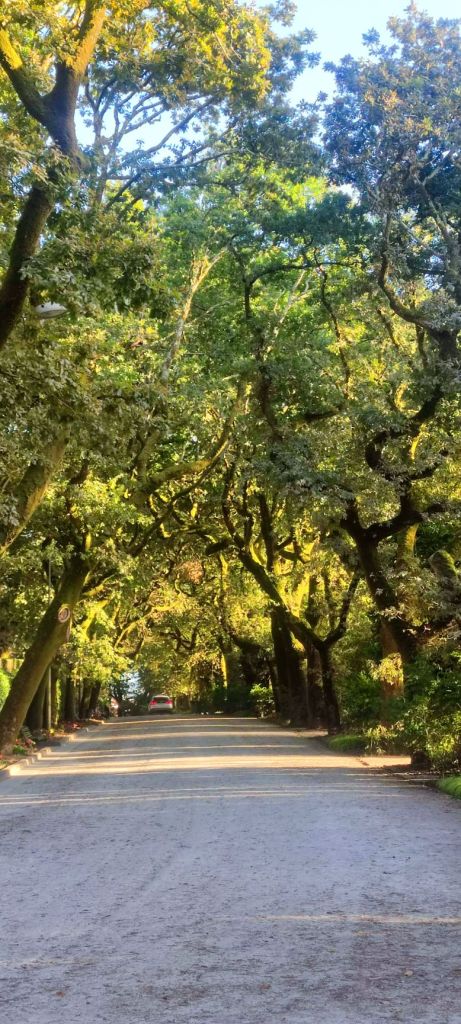
Located in the heart of the city, the Alameda Park, built in the 19th century, is the main reference for leisure walks and for resting in the open air under the shade of chestnut and oak trees. Likewise, the park has a privileged view of the western façade of the Cathedral. Despite the fact that in it there is possible to find numerous nineteenth-century buildings, in addition to the chapel of St. Susanna and the church of Pilar, I would like to highlight the figure of the Two Marias dedicated to the extraordinary citizens of Santiago, who dared to go against the current of theirs time, wearing colorful and showy clothes.
ONE DAY TRIPS AROUND THE CITY
FLUVIAL BEACH OF TAPIA
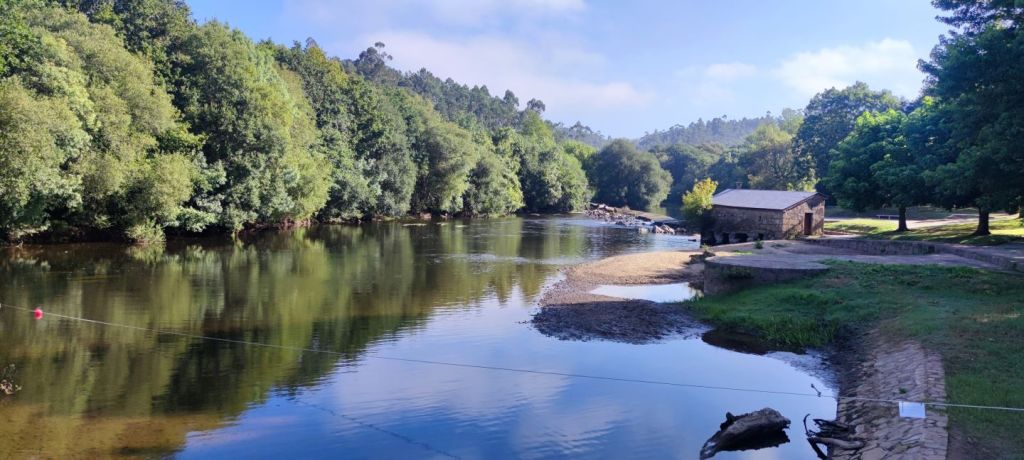
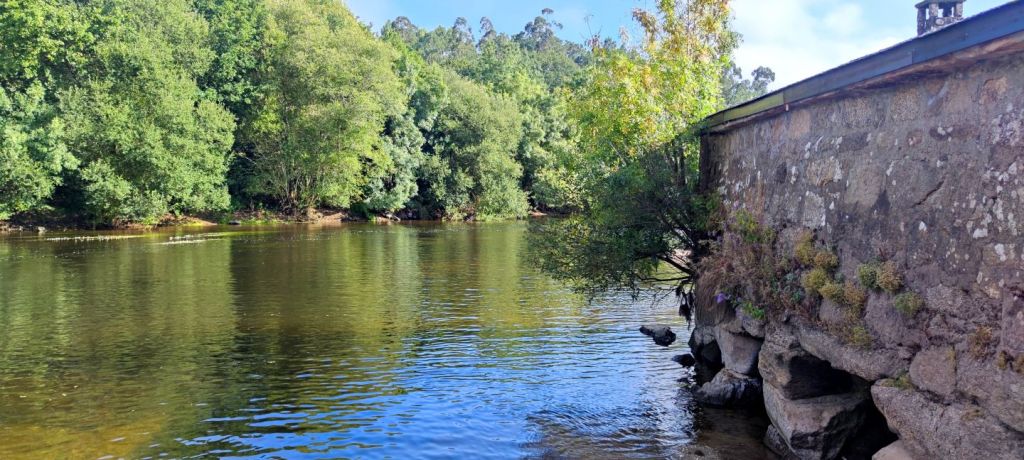
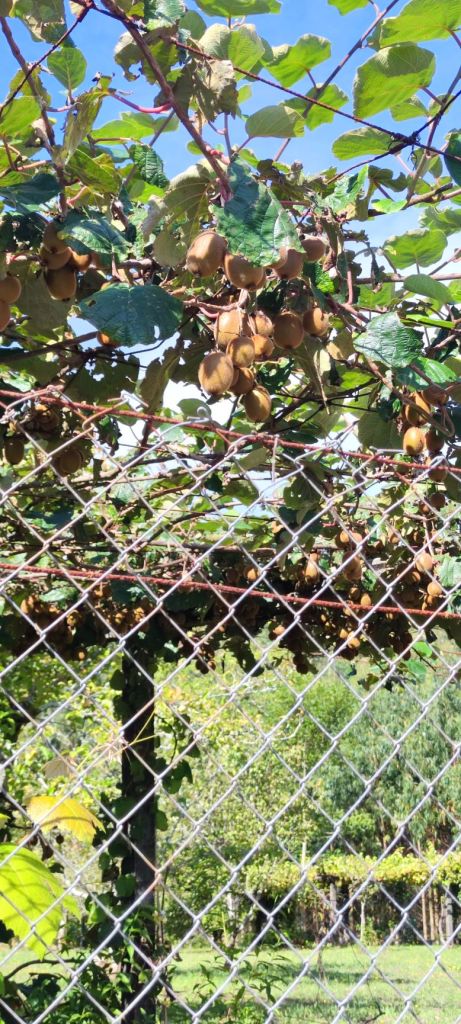
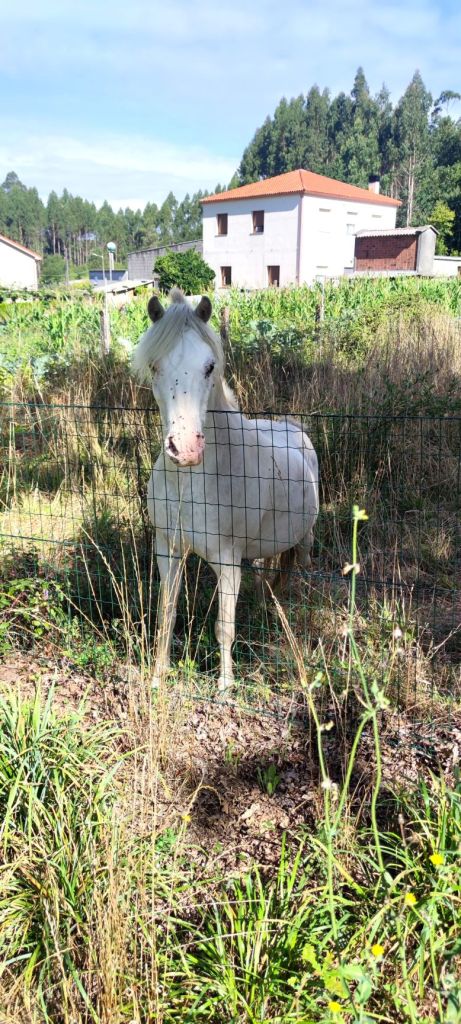
15 km from the city there is a recreational area called Fluvial Beach of Tapia, where you can also get to by public transport. It is a nice place to spend the day and is suitable for children, in fact, in summer numerous recreational activities are organized there. It also has a toilets, swimming pool, lifeguard post…etc. During my visit to this beach, I also did a small hiking route through the surrounding wooded area, it is a truly incredible place.
PAZO FARAMELLO
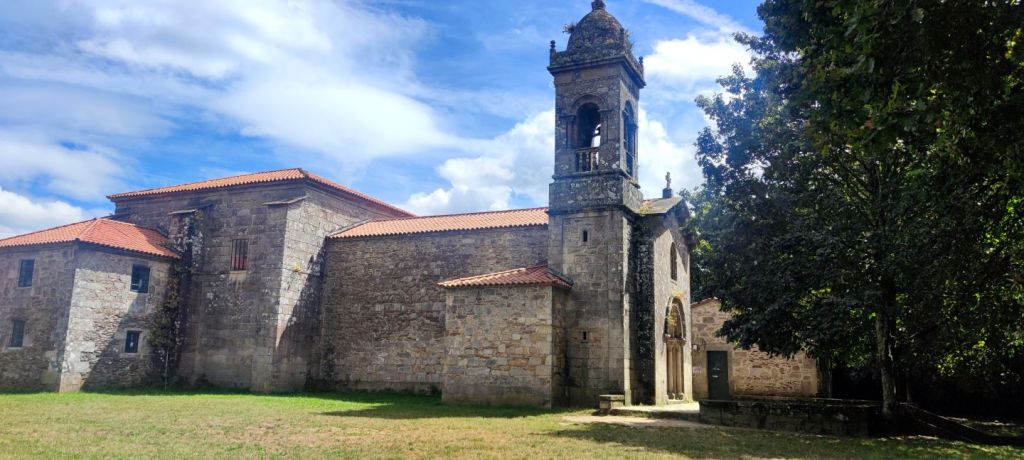
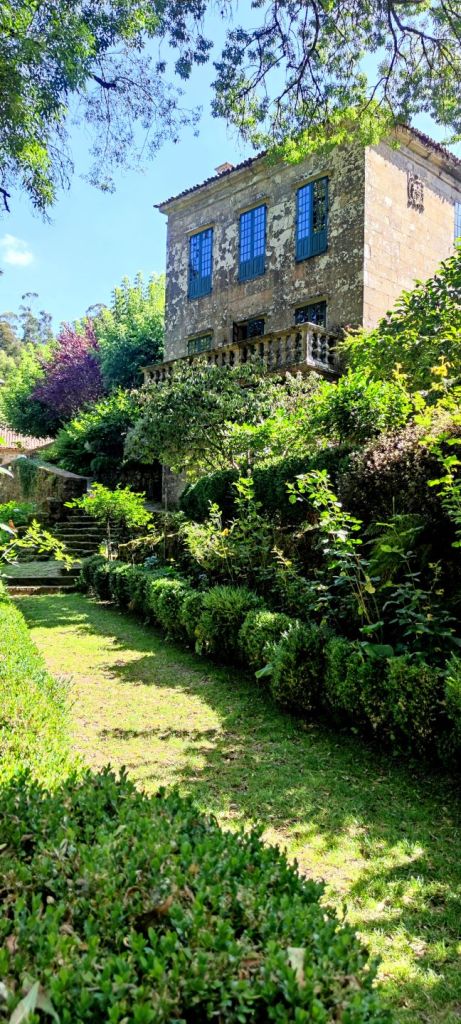
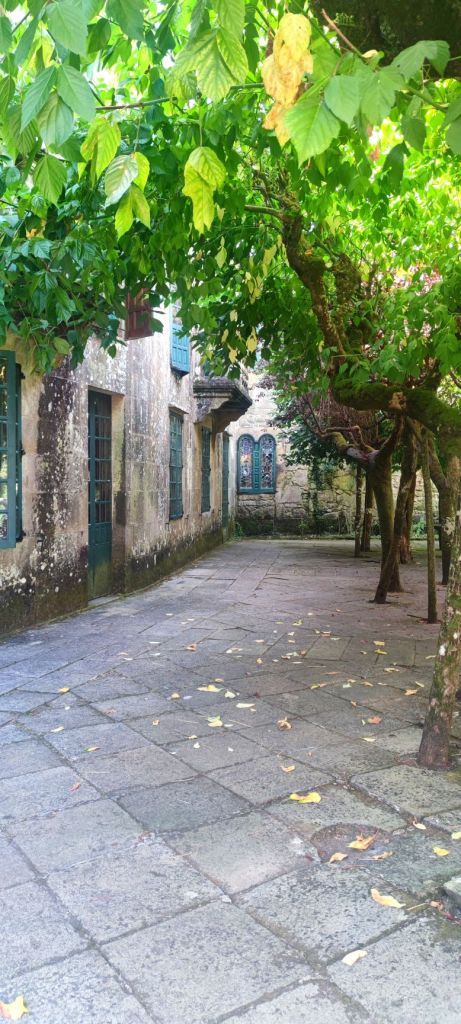
The Galician pazos are the typical stately manor houses, whose importance was crucial between the 18th and 19th centuries. The Pazo Faramello was built in the 18th century in the Baroque style, it is also located on the Camino de Santiago, 12 km from Santiago and 10 km from the town of Padrón, famous for its delicious peppers and being the birthplace of the famous writer Camilo José Cela. The Pazo was built near the Angueira River, and stands out for its wonderful biodiversity, and its truly wonderful gardens. It was the birthplace of the baroque sculptor José Gambino, the temporary residence of the monarch Alfonso XII, as well as duke Ludwik of Bavaria, also the ammunition was stored there to face the French invasion in 1808, and finally, it was the place of reference of great Galician writers, C.J. Cela, Emilia Pardo Bázan or Rosalía de Castro. The visit is highly recommended.
TIPS:
• To see the Portico of Glory you must visit the Cathedral Museum. The rest of the temple can be visited for free.
• To get to Fluvial Feach of Tapia and Pazo Faramello it is not necessary to have your own vehicle, as there are good connections with public transport. Important! Check and book in advance your tickets for the Pazo.
• If you like jewelry, I recommend buying some jet, the magical black Galician stone, coming from Karst wood, subjected to great stress, it has a natural origin. The jet masters have been in the city since the 11th century.
 all about eve`s journeys
This totally took me back to our amazing trip there ! Can’t wait to hit the Santiago Path !
LikeLike