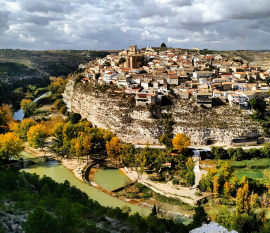
Today, we venture into a picturesque corner full of history: Alcalá de Júcar, a hidden treasure in the vast plains of Castilla-La Mancha, Spain. This charming village, nestled along the banks of the Júcar River, has witnessed centuries of history and culture, with every corner telling a fascinating story. Its narrow streets, troglodyte caves, and the kindness of its inhabitants will make you feel like you’ve uncovered a hidden gem. So, get ready to get lost in the cobbled streets and discover the magic that Alcalá de Júcar has to offer!
A WALK THROUGH HISTORY VIA ITS MONUMENTS
THE ARAB FORTRESS
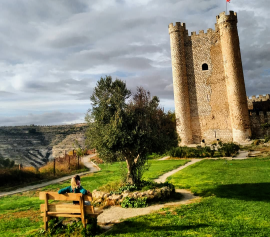
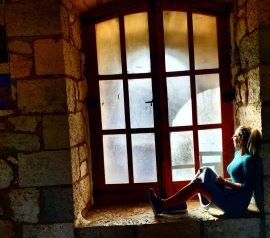
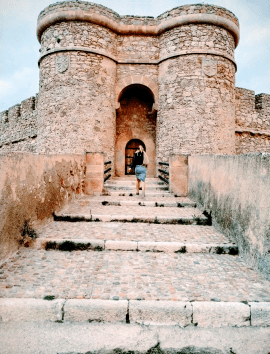
Alcalá de Júcar, originally known as “Al-Qalat,” was a crucial enclave during Muslim rule. The Arab fortress, built in the 8th century, majestically stands on the hill, offering panoramic views that once served as a strategic observation point. The walls, constructed with masonry and tapial, attest to the architectural skill of the time. During the Reconquista, the fortress fell into Christian hands and underwent various modifications. The Tower of Homage, of Muslim origin, was reinforced and expanded, becoming a symbol of the town’s resistance and adaptation over the centuries.
THE CHURCH OF SAN ANDRÉS: A GOTHIC-RENAISSANCE MONUMENT
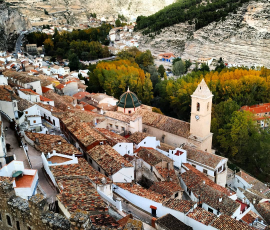
The Church of San Andrés, built between the 15th and 16th centuries, is an exceptional example of Gothic-Renaissance architecture. Its facade, adorned with Renaissance details, contrasts with the sober Gothic interior. Decorated with finely carved Renaissance details such as Corinthian columns and geometric ornaments, the facade starkly contrasts with the prevailing Gothic style inside. This contrast is not just aesthetic but reflects the cultural and artistic transition of the society of that time. By exploring its aisles, you immerse yourself in the spirituality of bygone eras, where every stone exudes history. The side chapels house intricately sculpted altars, some dedicated to local patrons, others to sacred figures venerated for generations.
TROGLODYTE CAVES: CENTURIES-OLD DWELLINGS UNDERGROUND
Some of the troglodyte caves in Alcalá de Júcar date back to the 11th century, a period when the region underwent significant changes. In an attempt to adapt to the environment, inhabitants carved into the rock to create unique shelters providing protection against the weather and, at times, conflicts. Initially used as homes, these troglodyte caves offered a respite from the region’s extreme climatic conditions. The natural stone provided thermal insulation, keeping the caves cool in summer and warm in winter. The intricate cave systems became cozy homes where generations built their lives in communion with the earth itself. As time progressed, the troglodyte caves of Alcalá de Júcar evolved with the changing needs of the community. They transformed into storage spaces, workshops, and even wine cellars, leveraging optimal climatic conditions for storing food and products. Among these historic caves, the Cave of the Devil stands out. Beyond its intriguing name, this cave has witnessed countless celebrations and events over the years, becoming a versatile space that blends the past and present of Alcalá de Júcar.
THE RENAISSANCE ROMAN BRIDGE
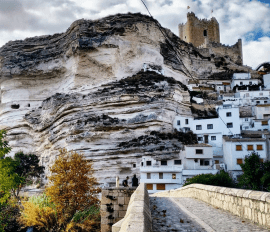
Although Alcalá de Júcar’s Roman Bridge does not date back to Roman times as its name suggests, its construction in the 16th century is a valuable testimony to the historical significance of this region. This Renaissance Bridge, with its twelve semicircular arches in perfect symmetry and its imposing coat of arms of the Pacheco family engraved in stone, stands as a tangible link between two shores and two distinct eras.
LOCAL FESTIVITIES
Alcalá de Júcar has witnessed crucial events throughout the centuries. In 1449, during the Castilian Civil War, the town endured a long siege. This resistance is commemorated in the Fiesta de la Cabalgata, an annual event where locals recreate the arrival of reinforcements that broke the siege. Participants, adorned in period costumes, parade through the cobbled streets, carrying with them the essence of bravery and resilience that characterized their ancestors. The meticulously planned recreation transports spectators to those tumultuous days when the community united in a joint effort to defend their home. The Cabalgata is not just a historical event; it is a vibrant reminder of the collective strength that has marked the spirit of Alcalá de Júcar throughout the centuries.
Another highlight in Alcalá de Júcar’s calendar is the Fair and Festivities in honor of San Lorenzo, celebrated with enthusiasm in August. This event not only has religious roots but also manifests the cultural identity of the town. During this celebration, the streets come alive with colorful processions that traverse the iconic spots of Alcalá de Júcar. Music resonates in the air, and open-air concerts fill the nights with melodies celebrating joy and tradition. Cultural events, from theatrical performances to art exhibitions, offer visitors and locals the opportunity to immerse themselves in the rich heritage of Alcalá de Júcar. Local gastronomy is showcased in its splendor, with fairs of artisanal products and tastings highlighting the traditional flavors of the region.
TIPS:
• As always, I recommend trying local cuisine. Among the typical dishes are Ajo Arriero, a delicious mix of shredded cod, peppers, tomatoes, and egg. This dish highlights the simplicity and freshness of local ingredients, Gazpacho Manchego, a stew with meat (usually rabbit or partridge), bread, and egg, and Migas Manchegas, breadcrumbs sautéed with garlic, peppers, chorizo, and sometimes egg.
• Wear comfortable shoes, as the terrain is somewhat uneven, and a fair amount of walking is necessary.
• Buy leather craftsmanship. The region is known for its leather craftsmanship. Look for handmade products such as bags, belts, or even decorative items made from leather.
• Make a visit to Almansa, its one hour way by car from Alcalá de Júcar.

 all about eve`s journeys
What stunning pictures!!
LikeLike
What stunning pictures!!
LikeLike
What stunning pictures!
LikeLike